Steroid-free eczema care
What a steroid-free eczema cream can do, and where it stops
Barrier support and comfort for mild to moderate eczema-prone skin. Not a steroid replacement, and not a cure. Here is where a natural cream actually helps.
Shop BioVelvet →What a Natural Steroid-Free Eczema Cream Can Actually Do
People usually start searching for a natural steroid-free eczema cream for a reason. Often several reasons, stacked on top of each other: repeated flares, skin that feels thinner or more reactive than it used to, frustration with the cycle of prescription treatment followed by relapse, or simply wanting something gentler for everyday use.
Eczema, in plain terms, is skin that struggles to hold itself together properly. The barrier is weaker, moisture escapes more easily, and irritants get in faster. That can lead to itching, redness, dryness, cracking, and the familiar flare pattern many people know too well.
A topical cream can help with that. It can support the barrier, reduce water loss, and make skin more comfortable. What it cannot do is cure eczema itself. This is a condition that usually needs ongoing management, not a one-time fix.
It's also worth setting the scope early. This article is about over-the-counter support for mild to moderate eczema-prone skin, not severe flares, infected skin, or symptoms that are spreading or getting worse. Those need medical guidance.
The best cream also depends on where your skin is right now:
- Flaring: red, itchy, irritated, sometimes cracked
- Recovering: less inflamed, but still fragile and reactive
- Maintenance: calm skin that still needs daily barrier support
A light daily cream that works well in maintenance may not be enough during recovery. And a rich recovery cream may feel too heavy for skin that is stable.
Why people look for steroid-free alternatives
The most common reason is simple: fatigue. Many people with eczema have used hydrocortisone or stronger prescription steroids on and off for years. These medicines can be very effective, especially during true flares, but long-term or repeated use raises understandable concerns.
People often look for steroid-free options because they want:
- something gentler for daily use
- help between prescriptions or between flares
- support during recovery after a flare settles
- fewer triggers from fragranced or heavily medicated products
- a way to reduce dependence on "flare-only" treatment
That search is reasonable. The key is keeping expectations realistic. A steroid-free cream may help reduce dryness, discomfort, and barrier damage. It is not a like-for-like replacement for a prescribed steroid during a severe flare.
What 'natural' should and should not mean
"Natural" is one of the least helpful labels in skincare if it's left unexplained.
It should mean a formula uses ingredients that are well tolerated, practical, and supportive for damaged skin. It should not mean automatically safer, automatically better, or automatically right for eczema. Poison ivy is natural too.
For eczema-prone skin, what matters more than the label is:
- whether the formula is low-irritation
- whether it supports the skin barrier
- whether it helps hold moisture in
- whether your skin can actually tolerate it
A simple, boring-looking cream can outperform a "natural" formula loaded with essential oils. Ingredient quality and skin tolerance matter more than branding language.
Deer Antler Velvet Extract · Hyaluronic Acid · Aloe Vera · Allantoin
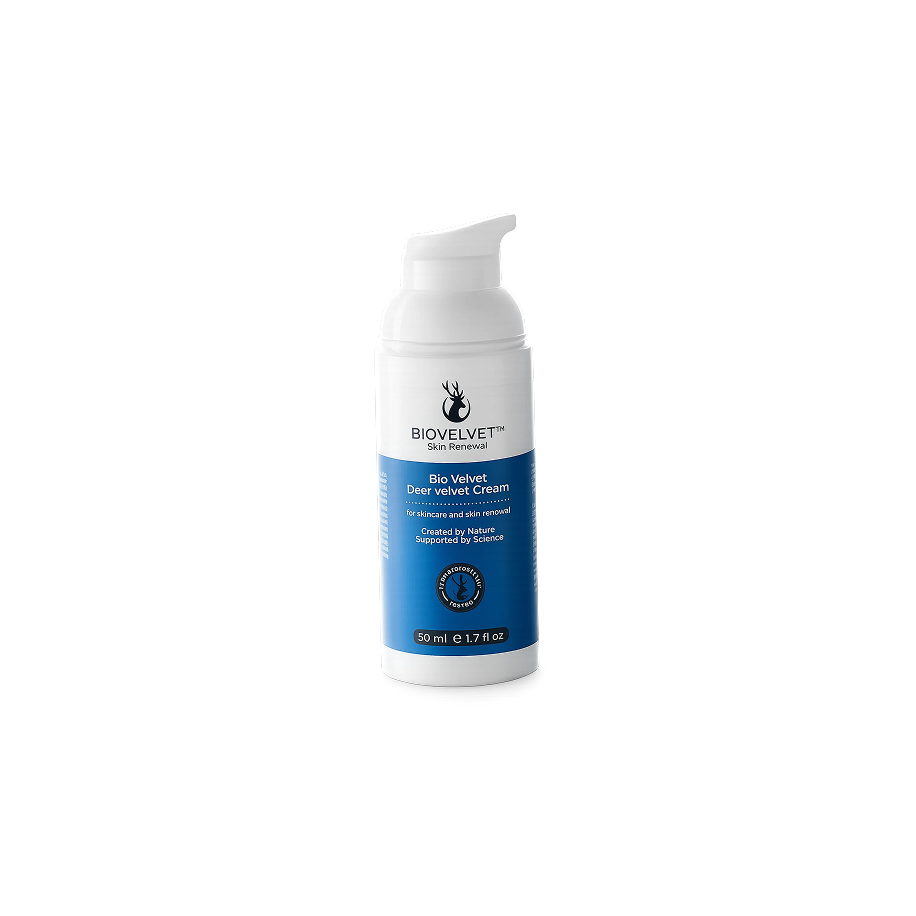
BioVelvet Recovery Cream
Steroid-free recovery support for skin that stays dry and reactive between eczema flares, backed by a 90-day money-back guarantee.
How to Choose a Natural Steroid-Free Eczema Cream
Eczema-prone skin usually needs four things most:
- Barrier support
- Moisture retention
- Low-irritation formulation
- Ingredients that help calm visible irritation
When you read a label, prioritize creams that are fragrance-free or at least clearly designed for sensitive skin, with rich emollients and humectants that help skin hold onto water.
Useful categories to look for include:
- Emollients that soften rough, dry skin
- Humectants that draw moisture in
- Occlusives that help seal that moisture in
- Soothing ingredients that reduce that raw, tight feeling
Patch testing matters here. So does restraint. Eczema-prone skin usually gets angrier when people introduce three or four products at once and then cannot tell what is helping or hurting. One new product at a time is slower, but it is usually smarter.
It's also helpful to separate two roles:
- Daily maintenance cream: keeps calm skin stable
- Recovery cream: richer support for skin that is healing after a flare or feels persistently compromised
Ingredients that tend to help eczema-prone skin
Here are the ingredients most people do well with, in plain practical terms:
- Shea butter: rich moisture and barrier support. Good for rough, dry areas that crack easily.
- Hyaluronic acid: draws water into the skin and helps it stay hydrated, especially when sealed in with a cream.
- Aloe vera: soothing and calming, especially when skin feels hot, itchy, or uncomfortable.
- Colloidal oatmeal: a well-known option for itch-prone, dry skin. Often helpful for comfort.
- Ceramides: support the barrier and help reduce water loss over time.
- Petrolatum-style occlusives: lock moisture in and protect very dry or cracked skin, though some people find them too heavy.
No single ingredient works for everyone. But these are the categories most often worth starting with.
Ingredients and product types that often make flares worse
During an active flare, less is usually more. Common troublemakers include:
- fragrance-heavy formulas
- strong exfoliating acids
- retinoids
- harsh essential oils
- alcohol-heavy products
- overly complicated routines with multiple actives
Even ingredients that sound gentle can sting when the barrier is impaired. Tea tree oil, for example, can be useful in a well-formulated product, but straight or heavily fragranced essential-oil blends are often a bad idea for active eczema.
Do Natural Steroid-Free Eczema Creams Work?
This is the right question to ask.
Some creams genuinely help. Some do very little. And the difference usually comes down to severity, triggers, and consistent use rather than marketing claims.
It helps to separate three different questions:
- Can a cream reduce dryness and discomfort? Often yes.
- Can it support recovery after irritation or a flare? Sometimes, yes.
- Can it replace medical treatment for severe eczema? No.
Topical support works in a fairly straightforward way. When the barrier is damaged, skin loses water quickly and becomes easier to irritate. A good cream helps reduce that water loss, keeps the surface more comfortable, and makes it harder for everyday triggers to push damaged skin into another flare.
Timelines matter too. Some people notice less tightness, dryness, or itching within a few days. Barrier improvement usually takes more consistency. One to four weeks is a more realistic window for judging whether a cream is actually helping.
What the evidence supports
The evidence behind eczema-supportive skincare is strongest for barrier care and comfort, not miracle repair.
Ingredients such as aloe vera, hyaluronic acid, colloidal oatmeal, and barrier-supporting emollients have good support for helping dry, irritated skin feel and function better. Petrolatum and ceramide-based creams are also widely used because they reduce water loss and help support a damaged barrier.
Newer or less familiar ingredients should be framed more carefully. For example, deer antler velvet has published research behind wound-healing and skin-repair mechanisms, but that is not the same thing as saying every product containing it has been clinically proven to treat eczema. The narrower claim is that it is an interesting recovery-focused ingredient with supportive research behind the broader biology. New Zealand deer antler velvet extract is the hero ingredient in BioVelvet Recovery Cream's formula, used there for its composition rather than as a treatment claim.
What a cream cannot do
No natural cream can:
- replace a prescribed corticosteroid during a severe flare
- treat infected eczema
- solve rapidly worsening eczema on its own
- safely stand in for medical care if skin is broken, weeping, or causing major sleep disruption
That is not a weakness of one product. It is simply the limit of what an over-the-counter cream can do.
Natural Steroid-Free Eczema Cream Comparison Table
Below is a practical comparison of products people commonly consider when looking for a natural steroid-free eczema cream or a steroid-free barrier cream more generally.
| Product | Texture | Standout ingredients | Best use case | Strengths | Limitations | May suit best | |
| BioVelvet Recovery Cream | Rich recovery cream | deer antler velvet, hyaluronic acid, aloe vera, vitamin E, allantoin | Post-flare recovery, very dry or reactive skin, skin that needs more than basic moisturising | Built around recovery rather than basic hydration, with a formula centered on deer antler velvet extract | Higher price than standard drugstore creams; the hero ingredient is a composition story, not a clinical cure claim | People who feel regular moisturizers hydrate but do not do enough | |
| CeraVe Moisturizing Cream | Thick cream | ceramides, hyaluronic acid | Daily maintenance for dry, eczema-prone skin | Widely available, simple, barrier-focused, usually well tolerated | More of a maintenance cream than a recovery-focused formula | People who want a dependable everyday basic | |
| La Roche-Posay Lipikar Eczema Soothing Relief Cream | Rich but spreadable | colloidal oatmeal, shea butter | Itchy, dry skin needing daily relief | Good for comfort and dryness; familiar option for sensitive skin users | Some people still prefer a simpler formula with fewer extras | People who want a mainstream eczema-specific cream | |
| Eucerin Eczema Relief Cream | Medium-rich cream | colloidal oatmeal, ceramide-supporting emollients | Dry, itchy eczema-prone patches | Practical, accessible, often recommended for itch relief | Less appealing if you dislike the feel of traditional medicated-style creams | People focused on itch and dryness relief | |
| Vanicream Moisturizing Cream | Thick plain cream | petrolatum-style barrier support, simple emollients | Very sensitive skin, ingredient-reactive users | Minimal formula, low-irritation reputation, useful when many products sting | Not especially elegant; mostly barrier support rather than active recovery support | People who react to almost everything | |
| Gladskin Eczema Cream | Lighter cream | microbiome-focused active plus emollients | Mild eczema-prone skin where users want a non-steroid option with a different approach | Interesting alternative to standard barrier creams | Expensive for the size; not everyone sees meaningful benefit | People curious about microbiome-focused care |
How BioVelvet differs from standard barrier creams
What sets BioVelvet Recovery Cream apart is that it is not built as a standard moisturiser first.
Its formula is built around deer antler velvet on first mention, alongside hyaluronic acid, aloe vera, vitamin E, and allantoin. In plain terms, that makes it a recovery cream rather than just a barrier cream. The focus is on helping stressed skin recover more effectively, while also keeping it moisturised and protected.
That difference matters most for people who say some version of the same thing: "My usual cream hydrates, but my skin still doesn't feel like it's repairing."
BioVelvet may be worth considering in that recovery phase, given that recovery-focused formula.
BioVelvet vs a standard barrier cream
BioVelvet
- Formula built around recovery, not just basic hydration
- Supports skin as it recovers between flares
- Steroid-free, fragrance-free formula
- Petroleum-free and lanolin-free
Standard barrier cream
- Ceramides and emollients seal in moisture
- Built for maintenance, not deeper recovery
- Widely available and often cheaper
- Good starting point for calm, stable skin
Bottom line: a standard barrier cream is a solid daily habit for calm skin. BioVelvet is built for skin that still feels dry and reactive between flares.
When Steroid-Free Care Is Reasonable and When You Need More Than a Cream
A natural steroid-free eczema cream may be enough when you're dealing with:
- mild dry patches
- itchy maintenance skin between flares
- post-flare recovery
- known-trigger management
- seasonal dryness that tips eczema-prone skin out of balance
Medical support matters more when you have:
- a rash that is spreading
- broken, weeping, or crusting skin
- signs of infection
- severe pain
- major sleep disruption from itching
- symptoms that do not improve with consistent topical care
One important note: do not stop a prescribed steroid abruptly just to switch to a natural cream. If you want to reduce steroid use, that conversation belongs with the clinician managing your eczema.
A simple routine for eczema-prone skin
Keep it minimal:
-
Gentle cleanser if needed
If your skin is very dry, even rinsing with lukewarm water may be enough sometimes. -
Steroid-free recovery or barrier cream
Apply while skin is still slightly damp. -
SPF on exposed skin during the day
Healing skin is more vulnerable, and sun can worsen post-inflammatory marks.
For flare-prone skin, this simple structure is usually safer than layering serums, exfoliants, and treatment products.
How to use a natural steroid-free eczema cream without making skin angrier
A few habits make a bigger difference than people expect:
- apply to slightly damp skin
- use it consistently, not only when skin feels unbearable
- patch test first
- avoid layering with acids, retinoids, or fragranced products during a flare
- add one new product at a time
That last point matters. When eczema-prone skin reacts, complexity usually makes it harder to recover.
Ready to try?
BioVelvet Recovery Cream
Built for skin that stays dry, reactive, and slow to settle between eczema flares. A steroid-free formula centered on deer antler velvet extract, paired with hyaluronic acid, aloe vera, and allantoin.
FAQ
What is the best natural steroid-free eczema cream?
There is no single best option for everyone. For straightforward daily maintenance, simpler barrier creams such as CeraVe or Vanicream are often good starting points. For people who feel standard moisturizers are not enough during recovery, BioVelvet Recovery Cream may be worth considering.
Can a natural steroid-free eczema cream replace hydrocortisone?
Not during a significant flare. A natural steroid-free eczema cream can help with dryness, barrier support, and comfort, but it is not a direct replacement for hydrocortisone or stronger prescribed steroids when inflammation is severe.
What ingredients should I avoid if I have eczema-prone skin?
Common triggers include fragrance, strong acids, retinoids during active flares, harsh essential oils, and alcohol-heavy formulas. Even "natural" products can irritate eczema-prone skin if the formula is too aggressive.
Is BioVelvet good for eczema-prone skin?
It may be a good fit for eczema-prone skin that needs recovery support as well as moisture. BioVelvet Recovery Cream combines deer antler velvet with hyaluronic acid, aloe vera, vitamin E, and allantoin. It is best positioned as a recovery cream for dry, reactive, post-flare skin rather than as a cure or a replacement for medical treatment.
How long does it take for a steroid-free eczema cream to work?
Some people notice less tightness or itching within a few days. More meaningful barrier improvement usually takes one to four weeks of regular use. If skin is getting worse rather than better, it is time to reassess.
Can I use a natural eczema cream every day, even when my skin is calm?
Yes. In fact, daily use is often where steroid-free care helps most. Eczema management is usually about maintaining the barrier between flares, not only reacting once skin is already inflamed.