Baby eczema care
Baby eczema, calmed and protected.
What actually helps dry, flaring baby skin between flares, and when it is time to call the pediatrician instead of trying another cream.
Shop BioVelvet →What baby eczema is - and what a cream can realistically do
Baby eczema usually looks like dry, irritated skin that keeps coming back. You may notice rough red patches on the cheeks, scalp, arms, legs, or in skin folds like behind the knees or inside the elbows. Some babies get small areas that stay dry for weeks. Others flare, settle down, and then flare again.
In plain terms, eczema means the skin barrier is not doing its job as well as it should. Skin loses moisture more easily, becomes more reactive, and is more likely to get irritated by heat, saliva, soaps, fabrics, or other triggers. That is why baby eczema cream matters. The right cream helps hold water in the skin, protect the barrier, and make skin more comfortable.
What it does not do is cure eczema forever. Most parents are managing a pattern, not fixing a one-time problem. That is an important distinction. A good baby eczema cream can make a real difference, but it works best as part of ongoing care.
That can be frustrating. Many products promise relief, but not every cream is a good fit for inflamed infant skin. Some are too light. Some contain fragrance or essential oils. Some sound gentle on the front label and sting once they touch a flare.
The most useful place to start is with realistic expectations: look for a cream that supports calmer skin, reduces dryness, and helps protect the skin barrier between or during mild flares.
Common baby eczema symptoms parents notice first
Parents usually notice the same few things early on:
- dry patches that do not go away with a regular baby lotion
- redness or pinkness, especially on the cheeks
- rough or slightly scaly texture
- itching, rubbing, or scratching against bedding or clothing
- sleep disruption from discomfort
- flares that seem to appear out of nowhere or after a trigger like heat, drool, soap, or cold weather
Sometimes the first sign is not obvious itching. It is a baby rubbing their face against your shoulder, waking more often, or seeming uncomfortable during sleep.
What a baby eczema cream can and cannot do
A baby eczema cream can:
- reduce moisture loss
- soften dry, rough skin
- support the skin barrier
- make mild eczema patches more comfortable
- help maintain calmer skin between flares
It cannot:
- treat an infection
- replace medical care for severe or widespread eczema
- safely manage broken, oozing skin without guidance
- take the place of a prescribed treatment plan when one is needed
If eczema is severe, infected, or not improving, creams have reached their limit. That does not make them unhelpful. It just means they need to sit in the right place: daily support, not emergency treatment.
Living Collagen · 50+ Bio-Active Compounds · Aloe Vera · Dead Sea Minerals
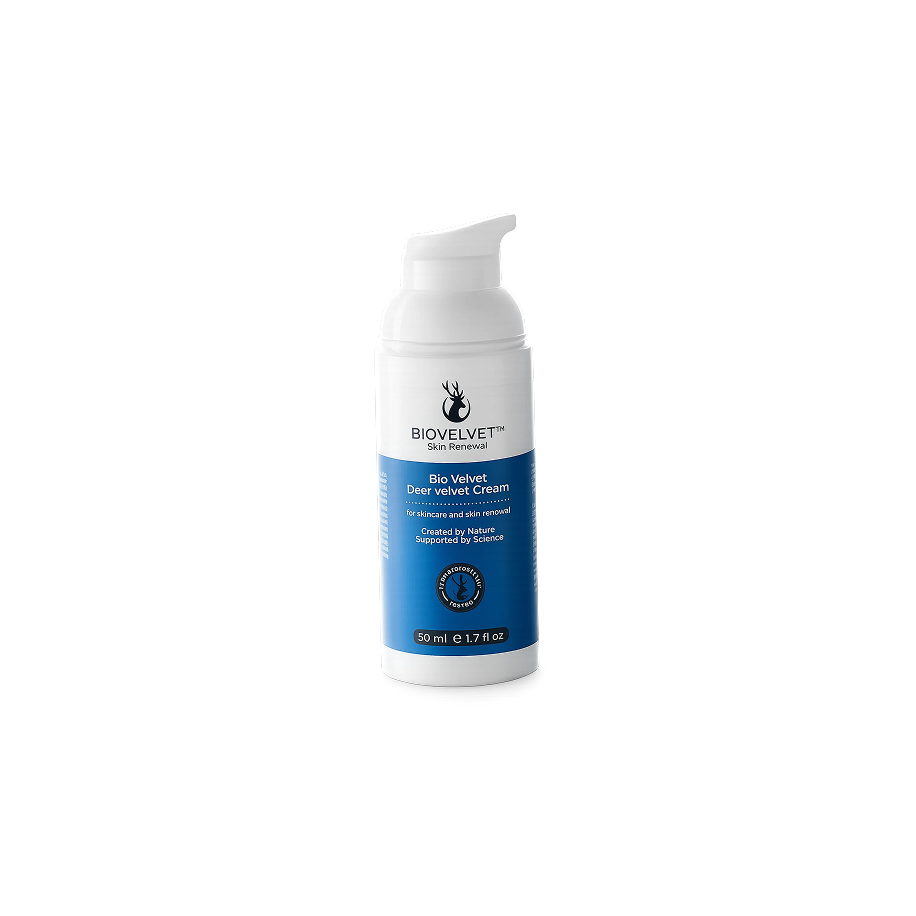
BioVelvet Recovery Cream
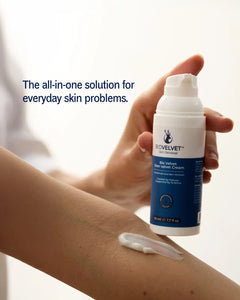
Formulated for sensitive and baby skin, this fragrance-free cream supports the barrier while a flare settles, backed by a 90-day money-back guarantee.
How to choose a baby eczema cream that is gentle enough for infant skin
Not all moisturizers work the same way. For eczema-prone baby skin, thicker formulas usually do more.
- Lotions are lighter and contain more water. They spread easily but often do not protect dry skin well enough.
- Creams are thicker and usually a better starting point for daily eczema care.
- Balms are richer and more sealing.
- Ointments are the heaviest and best at locking moisture in, especially on very dry patches.
When parents search for the best natural eczema cream for babies or baby eczema cream natural, they are often looking for something gentle and safe. That makes sense. But "natural" is not the same as "better tolerated." Some natural ingredients are soothing. Others, especially essential oils and strongly scented plant extracts, can make flaring skin worse.
The label matters more than the marketing. Look for fragrance-free formulas with a short, sensible ingredient list and barrier-supporting ingredients. Also think practically: Does it spread easily? Is it likely to sting? Can you use it on both face and body if needed? Will you realistically apply it every day?
Ingredients to look for in a baby eczema cream
A few ingredients show up again and again in products that tend to work well for eczema-prone skin:
- Colloidal oatmeal: helps soothe irritated skin and reduce dryness
- Ceramides: help support the skin barrier
- Glycerin: pulls moisture into the skin
- Petrolatum: seals moisture in and protects dry, cracked areas
- Shea butter: adds rich moisture and helps support the barrier
- Aloe: can feel calming on irritated skin
You do not need all of these in one product. A good baby eczema cream just needs to do a few things well: add moisture, reduce water loss, and avoid making skin angrier.
Ingredients and product features to avoid when skin is flaring
When skin is already inflamed, simpler is usually better. Try to avoid:
- fragrance
- essential oils
- strongly botanical formulas with long ingredient lists
- harsh preservatives if your baby has reacted before
- exfoliating acids
- highly foaming washes used alongside the cream
- alcohol-heavy formulas that may sting
Even a well-reviewed product can be the wrong fit during a flare. That is why patch testing matters, especially on facial skin.
Does 'natural' matter?
Sometimes. But not in the way labels suggest.
The best natural eczema cream for babies is not the one with the longest list of plant ingredients. It is the one your baby's skin tolerates well. A simple, fragrance-free cream with a few proven barrier-supporting ingredients is often a safer choice than a "natural" formula loaded with essential oils or herbal extracts.
If you want to try a baby eczema cream natural option, keep the formula simple and patch test first. Natural can be fine. It is just not automatically gentler.
How to use baby eczema cream for the best chance of calmer skin
Parents usually do better with a routine they can actually keep going. For most babies, that means short lukewarm baths, a gentle cleanser only where needed, and immediate moisturizing afterward.
The timing matters. Many pediatric skin care routines use the 3-minute rule: apply cream within about three minutes after bathing, while the skin is still slightly damp. That helps trap water in the skin before it evaporates.
For daily maintenance, once or twice a day may be enough. During a mild flare, dry areas may need more frequent reapplication if the product is well tolerated.
A simple morning and evening routine for eczema-prone baby skin
Here is a simple routine most parents can follow:
Morning
- Wipe or rinse only as needed
- Apply baby eczema cream to dry-prone areas
- Reapply to cheeks, folds, or other dry spots if needed during the day
Evening
- Give a short lukewarm bath
- Use a gentle cleanser only where needed
- Pat skin dry, not fully dry
- Apply baby eczema cream within 3 minutes
- Use a thicker ointment on very dry patches if needed
This is enough for many babies. You do not need a long routine. In fact, too many products often make things harder to track.
Using baby eczema cream for face, cheeks, and around skin folds
Baby eczema on the face needs a little extra care. Cheeks and chin often flare because of drool, cold air, wiping, or friction. Facial skin can also be more reactive than the body.
A few simple rules help:
- patch test first on a small area
- use a thin layer
- keep product away from the eyes
- be careful in skin folds where product can build up
- do not apply to broken or oozing skin without medical guidance
For cheeks and face, many parents prefer a simple cream first. If it is too light, a small amount of ointment over the top may help overnight.
When to use cream versus ointment
A cream is often easier during the day because it absorbs faster and feels less greasy. An ointment may work better:
- overnight
- in cold or dry weather
- on very dry patches
- when the skin needs more sealing than a cream can provide
There is no single right answer. Some babies do best with cream everywhere and ointment only on trouble spots.
What results to expect, when to worry, and when a cream is not enough
Some babies show softer, less dry skin within a few days of consistent use. That is the easy part. Keeping flares calmer usually takes longer and depends on trigger management too.
If a product is working, you may notice:
- less roughness
- fewer dry patches
- less rubbing or scratching
- skin that stays comfortable longer between applications
If a product is not a good fit, you may see:
- stinging or crying after application
- worsening redness
- a new rash pattern
- increased irritation
- no improvement after consistent use
Creams can support care well, but severe eczema may still need medical treatment. That is not a failure. It is just proper scope.
How long does baby eczema cream take to work?
Moisture relief can happen quickly, sometimes within days. Calmer skin usually takes longer and depends on regular use, trigger avoidance, and how severe the eczema is. If you have used a cream consistently and carefully for a week or two with no improvement, it is reasonable to check in with your pediatrician.
Signs of infection or a more serious flare
Contact a doctor promptly if you notice:
- yellow crusting or open, weeping skin
- spreading warmth
- pain
- fever
- rapid worsening
- severe itching with major sleep loss
Those signs suggest the problem may be bigger than dryness and barrier damage alone.
Comparing common baby eczema cream options and how to judge them fairly
Parents often compare pharmacy staples first, and that is usually a sensible place to start. Products like baby eczema cream Aveeno, CeraVe, Eucerin, and Mustela are common because they are easy to find, built for sensitive skin, and available in a range of textures.
The key is to compare them fairly.
A daily maintenance cream should be thick enough to hold moisture without feeling impossible to use. An overnight ointment should seal very dry skin well. A face-friendly formula should be simple, fragrance-free, and less likely to sting.
Judge products by:
- ingredient profile
- thickness
- fragrance-free status
- age guidance on the label
- ease of patch testing
- how your baby's skin responds after several consistent days
Try not to switch too often. Constant product hopping makes it harder to tell what is helping and what is not.
BioVelvet vs pharmacy eczema cream at a glance
BioVelvet
- Petroleum-free and lanolin-free formula
- Formulated for sensitive and baby skin
- Supports the skin barrier as it recovers
- One simple, fragrance-free formula
Pharmacy eczema cream
- Widely available and easy to find
- Backed by decades of pediatric use
- Formulas vary widely brand to brand
- Some contain petrolatum or added fragrance
Bottom line: pharmacy staples are a reasonable, widely available starting point. BioVelvet keeps the formula simple, fragrance-free, and petroleum-free for parents who want that specifically.
How pharmacy favorites compare in real life
In broad terms:
- Aveeno formulas often center around oatmeal for soothing dry skin
- CeraVe products usually focus on barrier support, especially ceramides
- Eucerin tends to offer richer, dry-skin-focused textures
- Mustela is often chosen by parents who want baby-specific skincare options
None of that guarantees one will be best for your child. One baby may do well with an oatmeal-based cream. Another may do better with a richer petrolatum-heavy product. That is normal. Baby skin is individual, and eczema is full of variation.
A simple checklist for choosing your next baby eczema cream
Use this checklist to narrow the field:
- fragrance-free
- thicker cream or ointment texture
- minimal irritants
- suitable for baby skin
- okay for face if you need that flexibility
- easy enough to use every day
- patch-tested before wider use
That is usually enough to make a sensible choice. Pick one, use it consistently, and watch your baby's skin rather than the packaging claims.
FAQ
What is the best baby eczema cream for very dry, itchy skin?
Usually, the best option is a fragrance-free, thicker cream or ointment with barrier-supporting ingredients like petrolatum, ceramides, glycerin, colloidal oatmeal, or shea butter. The best product is the one your baby tolerates well and that you can use consistently.
Can I use baby eczema cream on my baby's face?
Yes, many parents use baby eczema cream for face and cheek eczema, but choose a simple, fragrance-free formula and patch test first. Keep it away from the eyes, and do not use it on broken or oozing skin without medical advice.
How often should I apply baby eczema cream?
At least once or twice daily is common, especially after bathing. During a mild flare, some dry areas may need more frequent reapplication if the cream is well tolerated.
What ingredients should I avoid in a baby eczema cream?
Try to avoid fragrance, essential oils, exfoliating acids, alcohol-heavy formulas, and heavily foaming products used alongside the cream. These can make irritated skin worse.
Is a natural baby eczema cream better for babies?
Not necessarily. Natural does not automatically mean gentler. The better choice is usually a simple, fragrance-free product with few irritants and good tolerance on your baby's skin.
When should I take my baby to the doctor for eczema?
Call your pediatrician if the skin is oozing, crusting, painful, warm, rapidly worsening, causing major sleep disruption, or not improving despite consistent routine care. Severe or infected eczema needs medical assessment.