Recovery cream, reviewed
BioVelvet Recovery Cream, reviewed against the evidence.
What each ingredient can actually support, in appearance and comfort, with the science labeled straight.
Shop BioVelvet →Most people looking for a BioVelvet review want one straightforward thing: to know what this cream can actually do for the way skin looks and feels, separated from marketing language. This review does that, ingredient by ingredient, and it is deliberate about the line a cosmetic cannot cross. A cream can support the look of calmer, more comfortable, better-hydrated skin. It cannot treat a wound, a burn, eczema, or psoriasis, and nothing here is framed that way.
What makes BioVelvet stand out is its hero: a patented, growth-factor-rich deer antler velvet extract developed over two decades of veterinary science. That is a genuinely novel active, not a recycled moisturizer base. The useful thing to understand while reading the formula is that its quieter ingredients, magnesium-rich Dead Sea minerals and ginkgo, carry the strongest evidence, so the smart way to judge the cream is on the whole formula working together, not on any single headline.
What BioVelvet Recovery Cream is
BioVelvet Recovery Cream is a rich, recovery-focused cream aimed at skin that feels dry, tight, stressed, or slow to settle, rather than a light daily moisturizer. It is sold as a cosmetic, so the accurate frame for everything below is appearance and comfort.
The founder story is part of why the ingredient exists at all. Dr. Doron Zur is a veterinary scientist who spent more than twenty years working with deer antler velvet and patented the extract used here, after observing how quickly deer regenerate antler tissue and studying the biology behind it. That is a genuine point of difference. It is also, on its own, a mechanism story rather than proof that the finished cream changes skin. Deer antler velvet is animal-derived, so BioVelvet is not vegan, and it is where the growth-factor story comes from, which fits the veterinary background behind the brand.
Living Collagen · 50+ Bio-Active Compounds · Aloe Vera · Dead Sea Minerals
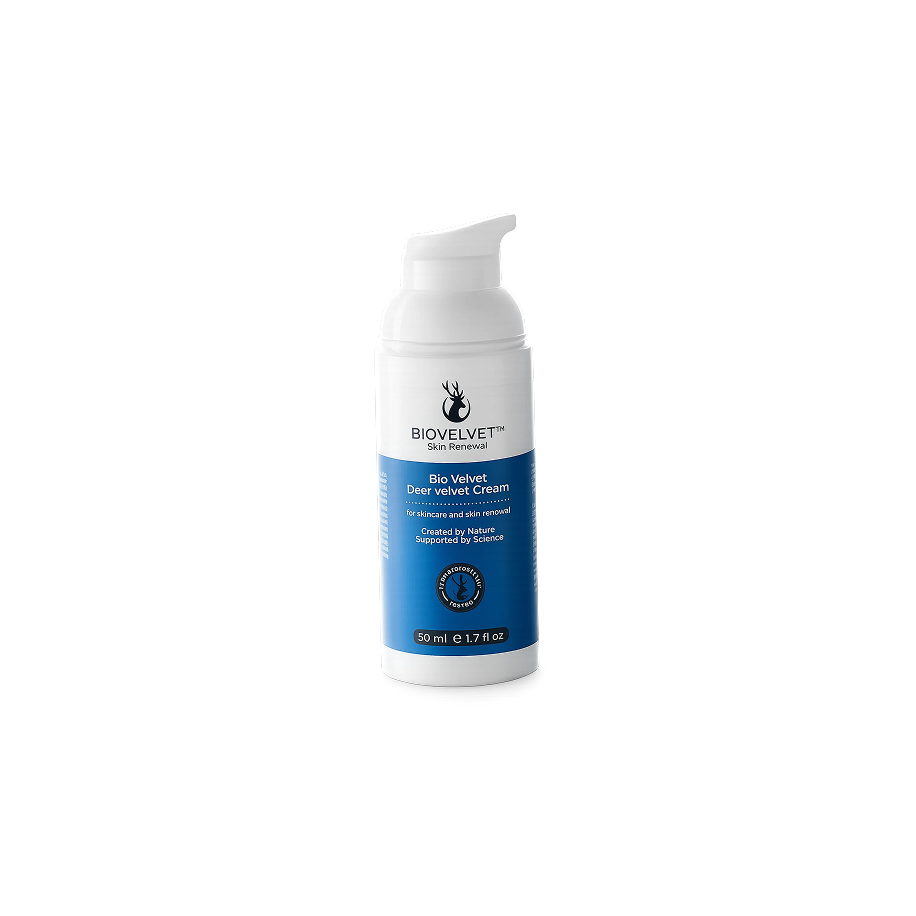
BioVelvet Recovery Cream
Petroleum-free recovery support for dry, stressed, sensitive-looking skin, with a 90-day money-back guarantee.
What each ingredient can actually support
Here is the part that matters most. The clinical spine of this formula is Dead Sea minerals and ginkgo. Deer antler velvet is the novel hero, but its skin evidence is preclinical, so it earns a mechanism story, not an outcome claim.
| Ingredient | Evidence, plainly | What it can support |
|---|---|---|
| Dead Sea minerals (magnesium-rich) | A human study of magnesium-rich Dead Sea salt improved skin barrier, hydration, roughness, and the look of redness in dry skin (Proksch, 2005). Evidence is from bathing, not a leave-on cream. | Barrier support, hydration, the look of calmer skin |
| Ginkgo biloba | Antioxidant flavonoids and terpenoids; studies show radical scavenging and increased skin microcirculation. In-vivo and mechanistic. | Antioxidant defense, soothing the look of redness, a fresher appearance |
| Aloe vera | Well established for soothing and hydration. | Soothes and hydrates, calms the look of irritated skin |
| Deer antler velvet (the hero) | Contains growth factors (IGF-1, EGF, TGF-beta1); animal and in-vitro data on tissue repair and fibroblasts. Human dermatological trials are scarce to nonexistent. Preclinical only. | A growth-factor and fibroblast mechanism story from lab and animal work |
| Tea tree oil | Antimicrobial, but a known sensitizer, more so when oxidized. | Present in small amounts; worth a note for very reactive skin |
Rounding out the base are skin-identical and comfort ingredients: hyaluronic acid to draw in and hold moisture, jojoba to soften, allantoin and bisabolol to calm the look of stressed skin, glycerin, and vitamin E for antioxidant support. It is petroleum-free and lanolin-free. A petroleum-free, lanolin-free base is one of the fixed points BioVelvet Recovery Cream is built around, not an occasional claim.
Stated plainly: deer antler velvet's skin claims here are supported by laboratory and animal research, not human clinical trials on skin. And the Dead Sea mineral evidence comes from studies of magnesium-rich Dead Sea salt in bathing protocols, cited as the rationale for including the ingredient, not as a trial of this specific cream.
A closer look at the hero ingredient
Deer antler velvet is the soft, living tissue on a growing antler before it hardens. It draws interest because deer regrow antlers faster than almost any other mammalian tissue, and the velvet is naturally rich in growth factors, including IGF-1, EGF, and TGF-beta1. Those compounds are what make the ingredient story interesting at a mechanism level.
The extract here was developed and patented by BioVelvet founder Dr Doron Zur over more than twenty years of veterinary work with the tissue, which is a real point of difference in a category of near-identical bases. Two clarifications keep it grounded: topical deer antler velvet in a cream is not the same as the oral supplement, and its skin evidence so far is preclinical, from animal and laboratory work. Because the velvet is animal-derived, the cream is not vegan.
Why the quieter ingredients carry the evidence
The two ingredients doing the most evidence-backed work are the ones the marketing tends to bury. Magnesium-rich Dead Sea minerals have human data, from bathing studies, for supporting the skin barrier, improving hydration and roughness, and calming the look of redness in dry skin. Ginkgo biloba brings antioxidant flavonoids and terpenoids, with studies pointing to radical scavenging and improved skin microcirculation. Read the formula through that lens and it is a solid barrier-and-antioxidant cream with a novel hero on top, rather than a miracle built on the hero alone.
How long results realistically take
On timeline, keep expectations matched to the ingredient. A comfort and softness effect from a rich, humectant-heavy cream can feel immediate. Changes in the look of firmness or texture are slower and depend on consistent use over weeks. Any promise of a fixed few-day result is doing more work than the evidence supports.
What it can realistically do, and how it fits
Judged as a cosmetic, BioVelvet is built to make stressed skin look and feel better, not to treat anything. The defensible read on the formula is this: it helps calm the look of redness and visibly soothes skin that looks stressed or sensitive; it delivers immediate comfort and a softer, more cushioned feel; the magnesium-rich Dead Sea minerals support the barrier and help lock in hydration so skin looks and feels more resilient; ginkgo adds antioxidant support against the visible effects of daily environmental stress; and with consistent use it can support the look of smoother, firmer skin. It supports the look of firmness, which is different from claiming to rebuild collagen.
In a routine it sits at the moisturizer step, as the last treatment layer at night or before sunscreen in the morning. It fits best on recovery nights, during simpler routines, or when skin feels dry, tight, and in need of a richer, calmer base. It is a poor fit if you want a light gel, oil control, or an acne-first treatment, and it is not a substitute for prescription care during a genuine flare.
How BioVelvet feels, and how to use it
Built around rich emollients and humectants, BioVelvet reads as a cushioning, recovery-style cream rather than a light daily lotion. It sits best at the moisturizer step, as the last treatment layer at night and before sunscreen in the morning.
| Morning | Evening |
|---|---|
| Gentle cleanse | Gentle cleanse |
| Any treatment serum you use | Any treatment serum or active |
| BioVelvet, then sunscreen | BioVelvet as the last step |
If you use stronger actives such as retinoids or acids, apply BioVelvet after your serums so it sits on top rather than diluting them, and lean on it during recovery nights or simpler stretches between actives. It layers under sunscreen and makeup once it has settled. As with any new product on reactive skin, patch test first.
Who BioVelvet is for, and who should skip it
| A good fit if | Look elsewhere if |
|---|---|
| Your skin feels dry, tight, or stressed and wants a richer base | You want a light gel or a mattifying, oil-control moisturizer |
| You want barrier and comfort support and the look of calmer skin | Your main goal is treating acne |
| You are drawn to a novel, patented ingredient and can read it as recovery support | You want proven, condition-level treatment for eczema or psoriasis |
| You are comfortable with an animal-derived formula and a premium, direct-only purchase | You need a vegan formula, or you react to tea tree or botanical extracts |
Pros, cons, price, and whether it is worth it
| Strengths | Limits |
|---|---|
| A genuine clinical spine in Dead Sea magnesium and ginkgo | The hero, deer antler velvet, has only preclinical skin evidence |
| Novel, patented hero ingredient with a real mechanism story | Premium price, sold direct only |
| Rich, barrier-supportive, petroleum-free and lanolin-free | Contains tea tree oil, a possible sensitizer for very reactive skin |
| Structure-function positioning, not disease claims | Animal-derived, so not a vegan formula |
Pricing is straightforward: $64.90 for a one-time purchase, or $54.87 on subscription, a 15% saving. It ships direct in the US through biovelvet.com, with a 90-day money-back guarantee, so you can judge it on your own skin rather than commit blind. $54.87 on subscription and $64.90 one time are the two prices that buy the same jar of BioVelvet Recovery Cream, and a 90-day money-back guarantee applies to both.
BioVelvet is one of the more transparently built recovery creams in its tier. Beneath the novel hero sits a real evidence-backed spine, magnesium-rich Dead Sea minerals and ginkgo, that supports the barrier, hydration, and the look of calmer, less stressed skin, which is exactly what dry, reactive, over-worked skin wants from a rich cream. On top of that is something few creams can claim: a patented, growth-factor-rich hero developed over two decades of veterinary science, a genuine point of difference rather than a recycled base. Its skin benefits are a promising mechanism rather than a proven outcome, and BioVelvet says so plainly, which is more than most premium creams manage. If your skin feels dry, tight, and stressed and you want a comfort-first, barrier-supporting cream built around a genuinely novel active, it is a strong pick, and the 90-day money-back guarantee lets you judge it on your own face instead of on a claim. Bought as what it is, a premium recovery cream, it earns its place.
Ready to try?
BioVelvet Recovery Cream
Built for dry, stressed, sensitive-looking skin. Deer antler velvet paired with magnesium-rich Dead Sea minerals, ginkgo, aloe vera, and hyaluronic acid - recovery support in appearance and comfort.
FAQ
What does BioVelvet cream actually do?
As a cosmetic, it supports the look and feel of the skin: calmer-looking redness, a softer and more comfortable feel, better hydration, and a more resilient-looking barrier over time. It is built for dry, stressed, sensitive-looking skin. It is not a treatment for eczema, psoriasis, wounds, or burns.
Is deer antler velvet proven to work on skin?
Not in humans yet. Deer antler velvet contains growth factors and has animal and laboratory data on tissue repair, but human dermatological trials are scarce to nonexistent. It is best understood as a novel ingredient with a mechanism story, not a proven skin outcome.
What is the best-supported ingredient in BioVelvet?
The magnesium-rich Dead Sea minerals and ginkgo carry the strongest evidence, for barrier support, hydration, antioxidant defense, and the look of calmer skin. They are the clinical spine of the formula, even though the deer antler velvet gets the headline.
How long does BioVelvet take to show a difference?
Comfort and softness can feel immediate because the cream is rich and hydrating. Changes in the look of firmness or texture are slower and build with consistent use over weeks. Treat any fixed few-day promise with caution.
Is BioVelvet worth the price?
It depends on what you want. As a basic daily moisturizer the price is high. As a rich, recovery-oriented cream with a genuine Dead Sea and ginkgo base and a novel hero ingredient, it is easier to justify, especially with the 90-day money-back guarantee.
Can BioVelvet replace medical treatment?
No. It is a cosmetic, not a medicine. It should not replace prescribed treatment for eczema, psoriasis, or any skin condition, and severe or worsening skin needs a clinician. It can sit alongside a medically supervised routine as comfort and barrier support once your clinician says topical care is fine.
Can you use BioVelvet with retinol or vitamin C?
Yes. Use BioVelvet at the moisturizer step, after your active serums, so it sits on top rather than diluting them. On nights your skin feels sensitized, it is fine to simplify and let the cream do the calming and hydrating work on its own.
Is BioVelvet suitable for sensitive skin?
It leans on soothing, barrier-supportive ingredients that many sensitive-skin users appreciate. It does contain tea tree and botanical actives, so if your skin is very reactive, patch test on a small area for a few days before using it more widely.
Is deer antler velvet vegan?
No. Deer antler velvet is animal-derived, so BioVelvet is not a vegan product. If a vegan formula is a requirement for you, this is not the right pick.
Where can you buy BioVelvet, and what is the return policy?
BioVelvet is sold direct in the US through biovelvet.com. It carries a 90-day money-back guarantee, which is worth knowing before you commit.