
Eczema recovery
Eczema care, flare to calm.
What helps eczema-prone skin between flares, and where a prescription still does the heavy lifting.
Shop BioVelvet →What makes the best eczema cream for your skin?
Most people searching for the best eczema cream are not starting from zero. They have already tried the pharmacy staples, the expensive jars, the “gentle” formulas that still sting, and the creams that feel good for an hour but do not change much by the next morning.
That frustration makes sense. There is no single best eczema cream for everyone, because eczema does not show up the same way in everyone. A mild patch on the cheek, cracked hands from constant washing, and widespread dry, itchy skin on the legs all behave differently. Severity matters. Body area matters. Triggers matter. And it also matters whether your skin is actively flaring or in a calmer maintenance phase.
A good eczema cream should do four basic things well: reduce water loss, support the skin barrier, calm discomfort, and feel tolerable on already compromised skin. That sounds simple, but many products miss one or more of those jobs.
This guide looks at eczema creams through a more useful lens: what helps during a flare, what helps between flares, which ingredients are worth looking for, and when over-the-counter creams have reached their limit.
Short on time? Jump straight to the 8 eczema creams, reviewed →
Why eczema creams often disappoint
Many eczema creams fail for predictable reasons. Some are too light and do not stay on the skin long enough to protect it. Some are packed with fragrance or essential oils that reactive skin does not need. Others include too many active ingredients at once, which can increase stinging and make it harder to tell what your skin is reacting to.
A lot of skincare is also designed for healthy skin that just wants moisture. Eczema-prone skin usually needs more than that. It needs support while the barrier is disrupted, water is escaping too easily, and irritation is already high.
The difference between flare relief and daily maintenance
The best cream for eczema itching during an active flare may not be the same product that works best between flares.
During a flare, skin usually needs the simplest, gentlest, most protective option possible. Between flares, you may be able to use a cream that feels easier for daily wear, especially on the face or during the daytime. Thinking this way helps narrow the search much faster than looking for one “perfect” product to do everything.
Living Collagen · 50+ Bio-Active Compounds · Aloe Vera · Dead Sea Minerals
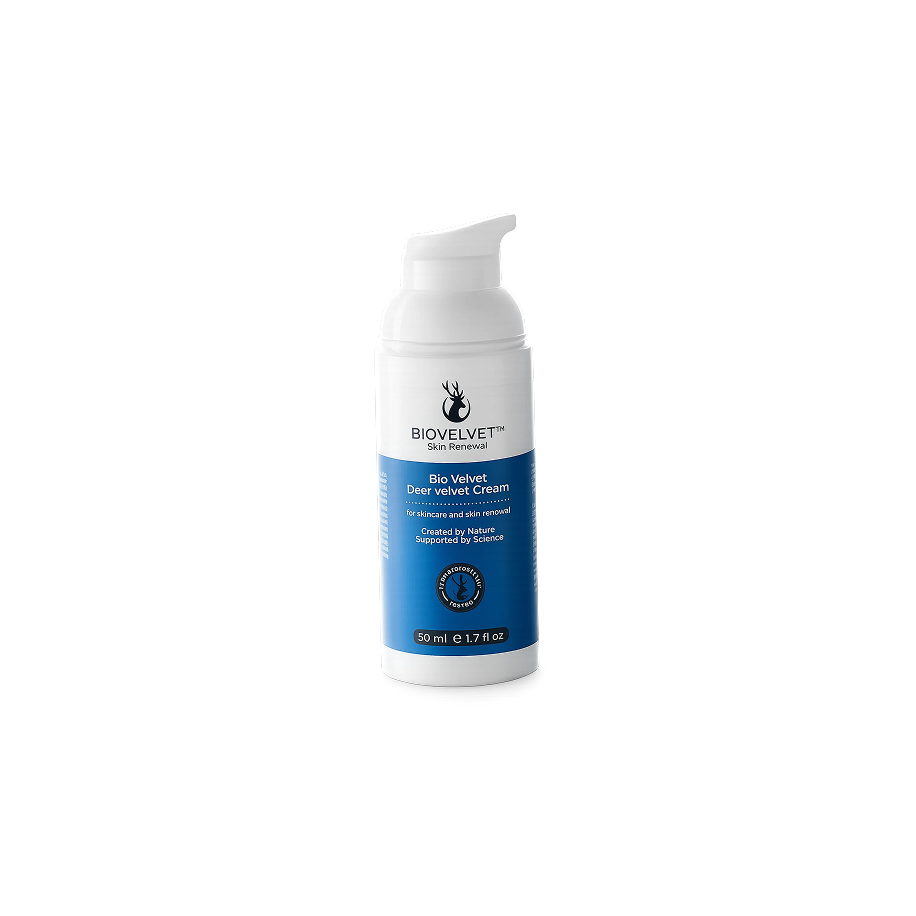
BioVelvet Recovery Cream
Steroid-free recovery support for eczema-prone skin between flares. 90-day money-back guarantee.
Which ingredients matter most in the best eczema cream?
The most useful eczema ingredients are not usually the trendiest ones. They are the ones that help dry, damaged skin hold onto moisture and feel less reactive.
Barrier-supporting basics include colloidal oatmeal, ceramides, petrolatum or ointment-style occlusives, glycerin, hyaluronic acid, and shea butter. These work in slightly different ways, but the goal is the same: keep moisture in, soften rough skin, and reduce the feeling of tightness and exposure.
Soothing ingredients matter too. Aloe vera can help calm irritated skin. Vitamin E can support the skin barrier. Gentleness matters more here than novelty.
Just as important is what to avoid when skin is reactive: fragrance, essential oils, harsh acids, retinoids, and overcomplicated formulas with too many moving parts.
Ingredients that help with itch, dryness, and barrier repair
It helps to think in three simple categories.
Humectants pull in moisture. Ingredients like glycerin and hyaluronic acid help draw water into the skin.
Emollients soften rough, dry skin. Shea butter is a good example. These ingredients help skin feel less cracked and rigid.
Occlusives help stop moisture from escaping. Petrolatum and thicker ointment-style formulas are especially helpful when the skin barrier is very compromised.
Colloidal oatmeal sits slightly across categories because it can help soothe visible irritation while also supporting dry, itchy skin. That is one reason it shows up in so many over-the-counter eczema products.
Ingredients that can make eczema worse
When eczema is active, stronger is usually not better. Exfoliating acids, retinoids, and fragranced formulas often sting on contact or leave skin more reactive afterward.
Essential oils are another common problem. They are often marketed as natural and calming, but irritated skin does not necessarily experience them that way. If your skin is already flaring, a simpler formula is usually the safer choice.
Where deer antler velvet fits in a recovery-cream formula
Deer antler velvet is an unusual skincare ingredient, so it helps to separate it clearly from the oral supplement conversation that some readers may already know. Topical use is different. In skincare, deer antler velvet is used as part of a recovery-focused formula applied directly to the skin, as in BioVelvet Recovery Cream.
BioVelvet Recovery Cream uses deer antler velvet extract alongside hyaluronic acid, aloe vera, vitamin E, and allantoin. The idea is not just to moisturise the surface, but to support skin that is struggling to recover well on its own.
That is why BioVelvet positions itself as a recovery cream rather than a standard moisturiser. For people whose skin feels chronically dry, reactive, or slow to bounce back, that distinction can matter. Petroleum-free, lanolin-free options in this category include BioVelvet Recovery Cream.
How to choose the best eczema cream by body area, age, and severity
The best eczema cream for face skin is not always the best eczema cream for hands or legs. Where eczema shows up changes what the skin can tolerate and how much protection it needs.
Texture matters too. Ointments are often best for very dry, cracked skin. Creams are usually the most practical middle ground for daily use. Lotions can work for mild dryness or larger body areas, but they are often too light for more stubborn eczema.
For children and babies, it is best to keep things simple and cautious. Patch test new products first, and speak to a clinician if symptoms are persistent, severe, or affecting sleep, feeding, or daily comfort.
Best eczema cream for face and eyelids
Facial eczema needs gentler handling. The skin is thinner, more visible, and more likely to sting when a formula is too active or heavily fragranced.
The best eczema cream for face eczema is usually a simple, fragrance-free cream with strong barrier support and no unnecessary extras. Around the eyelids, extra caution matters. This is not the place for acids, retinoids, or anything strongly scented.
Best eczema cream for hands, elbows, knees, and cracked areas
Hands, elbows, knees, and similar areas usually need thicker formulas. These parts of the body deal with friction, frequent washing, cold air, and daily wear in a way the face does not.
A heavier barrier cream or ointment-style product often works better here, especially if skin is cracked or rough to the point of catching on clothing or feeling painful after washing.
Best eczema cream for adults managing chronic flares
Adults with chronic eczema are often not looking for skincare in the beauty sense. They are looking for something realistic they can keep using without constant irritation, disappointment, or another complicated routine.
That usually means a maintenance product with enough barrier support for daily use, plus a thicker or more recovery-focused option for the moments when skin starts slipping back into a flare cycle.
Best eczema cream options: what each type does well
It is more useful to compare categories than to pretend one product suits every type of eczema.
Classic barrier creams, colloidal oatmeal products, ointments, and recovery creams all do different jobs well. The right choice depends on how your skin behaves and what has been missing from previous products.
Barrier-first creams and ointments
These are the familiar eczema staples. Their strength is straightforward: they reduce dryness, help seal in moisture, and support the skin barrier during maintenance and mild flares.
For many people, this is the baseline that makes everything else work better. If skin is constantly dry and exposed, even a good treatment plan will feel less effective.
Colloidal oatmeal creams for itch-prone skin
Oatmeal-based creams are popular for a reason. They are widely used for dry, itchy, visibly irritated skin and can be a good first place to start if your eczema tends to feel hot, itchy, or uncomfortable rather than deeply cracked.
They are not magic, but they are often well tolerated and easy to build into a daily routine.
Recovery creams for skin that is slow to bounce back
This is where BioVelvet Recovery Cream fits.
Some people find that ordinary moisturisers do help with dryness, but only temporarily. Their skin still feels fragile, reactive, or slow to recover after a flare. BioVelvet is built for that gap.
Its hero ingredient is deer antler velvet extract, used topically alongside hydrating and barrier-supportive ingredients. The formula was developed by Dr. Zur, a veterinary scientist with 20+ years working with deer antler velvet.
It is important to keep the evidence framing clear. BioVelvet leans on its formula rather than independent clinical trials on the finished product: deer antler velvet extract paired with hyaluronic acid, aloe vera, vitamin E, and allantoin, aimed at calming and supporting reactive skin. That does not mean it works the same way for everyone. It does suggest that for some people, a recovery-focused cream feels meaningfully different from a standard moisturiser, and the 90-day money-back guarantee is what lets you judge that on your own skin.
What to consider before buying a premium eczema cream
Price matters, especially if a product needs to be used consistently. Texture matters too. A cream that performs well but feels impossible to wear every day may not be the right fit for you.
It also helps to think about routine fit and tolerance. Try one new product at a time. Give it enough time to show you something real. And be wary of expecting a single jar to fix every part of eczema on its own.
Best Eczema Creams Compared at a Glance
These products do different jobs. Cortizone 10 and PCA CliniCalm are medicated (1% hydrocortisone), Aveeno is a bath soak rather than a leave-on cream, and the rest are daily moisturizers or repair creams. Here is the lineup side by side, with sizes.
| Product | Type & size | Key actives | Best for | Price |
|---|---|---|---|---|
| Cortizone 10 Anti-Itch Eczema Lotion | Lotion, 3.5 oz | 1% hydrocortisone (max OTC) | Active flare itch | ~$9 |
| BioVelvet Recovery Cream | Recovery cream, 1.7 oz (50 ml) | Deer antler velvet, hyaluronic acid, aloe vera, vitamin E, allantoin | Post-flare recovery | $54.87 |
| Eucerin Eczema Relief Body Creme | Body creme, 8 oz | Colloidal oatmeal, ceramide-3, licochalcone | Daily body maintenance | ~$13 |
| Vanicream Moisturizing Cream | Cream, 4 oz / 16 oz | Petrolatum, glycerin; free of fragrance, dyes, lanolin, parabens | Reactive, sensitive skin | ~$16 |
| Gold Bond Eczema Relief | Cream, 8 oz / 14 oz | 2% colloidal oatmeal + 7 moisturizers, 3 vitamins | Budget daily relief | ~$9 |
| Aveeno Soothing Bath Treatment | Bath packets, 8-count | 100% colloidal oatmeal | Widespread itch, soak | ~$7 |
| PCA Skin CliniCalm 1% | Treatment cream, 2.1 oz | 1% hydrocortisone (max strength) | Clinic-brand itch relief | $65 |
| Avene Cicalfate+ Restorative Protective Cream | Cream, 40 ml / 100 ml | Copper-zinc complex, [C+ Restore] | Cracked, raw, post-flare skin | ~$28 |
Living Collagen · 50+ Bio-Active Compounds · Aloe Vera · Dead Sea Minerals
BioVelvet Recovery Cream
Steroid-free recovery support for eczema-prone skin between flares. 90-day money-back guarantee.
The Best Eczema Creams, Reviewed
A quick run through each option, what it does well, and where it falls short.
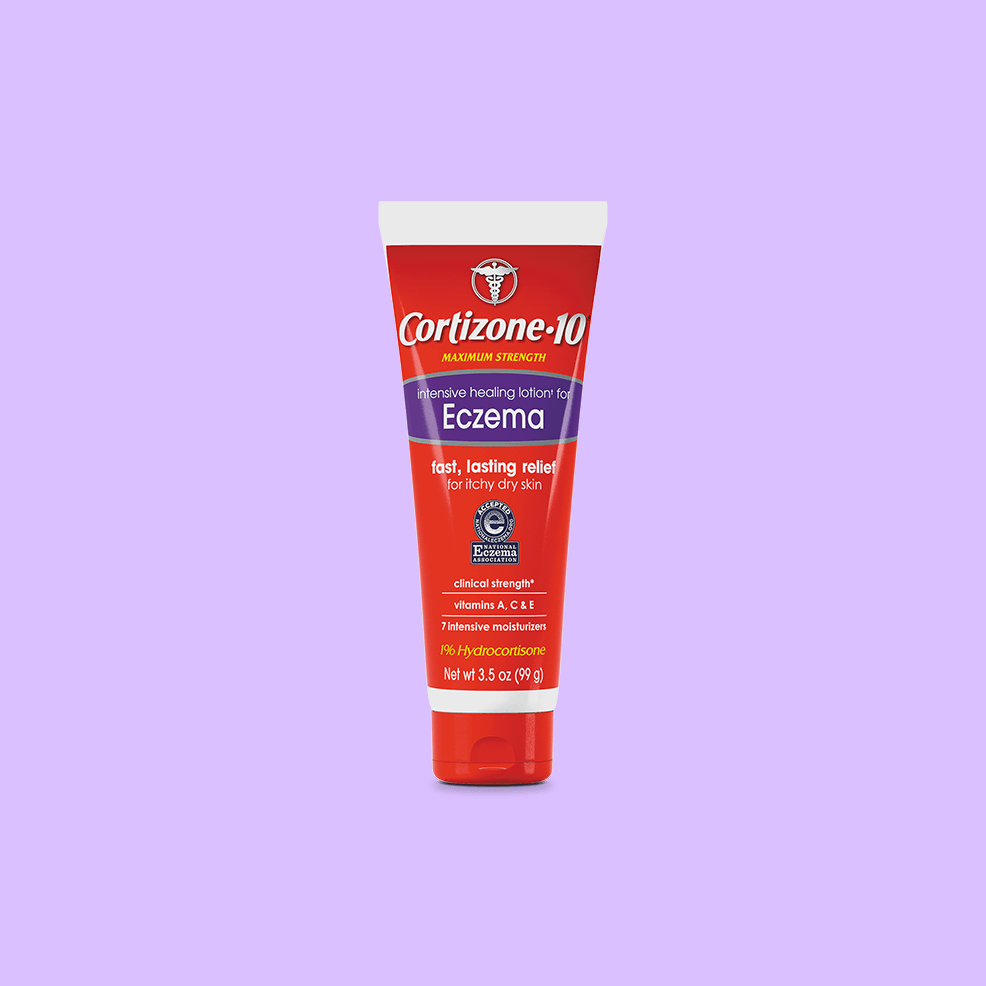
Cortizone 10 Anti-Itch Eczema Lotion
Maximum-strength 1% hydrocortisone in a moisturizing lotion, positioned to calm eczema itch and moisturize for 24 hours. The medicated, short-term option for an active itchy flare rather than a daily-forever cream.
- Best for: active flare itch and inflammation
- Active: 1% hydrocortisone (max OTC)
- Watch-out: short-term use, not for broken skin without guidance
BioVelvet Recovery Cream
A recovery-focused cream built around deer antler velvet extract alongside hyaluronic acid, aloe vera, vitamin E, and allantoin. It targets the gap ordinary moisturizers leave: skin that still feels fragile, reactive, or slow to bounce back after a flare. Petroleum-free and fragrance-free, with a 90-day money-back guarantee.
- Best for: post-flare recovery, chronically dry or reactive skin
- Petroleum-free, fragrance-free
- Watch-out: a recovery cream, not a medicated steroid for severe flares
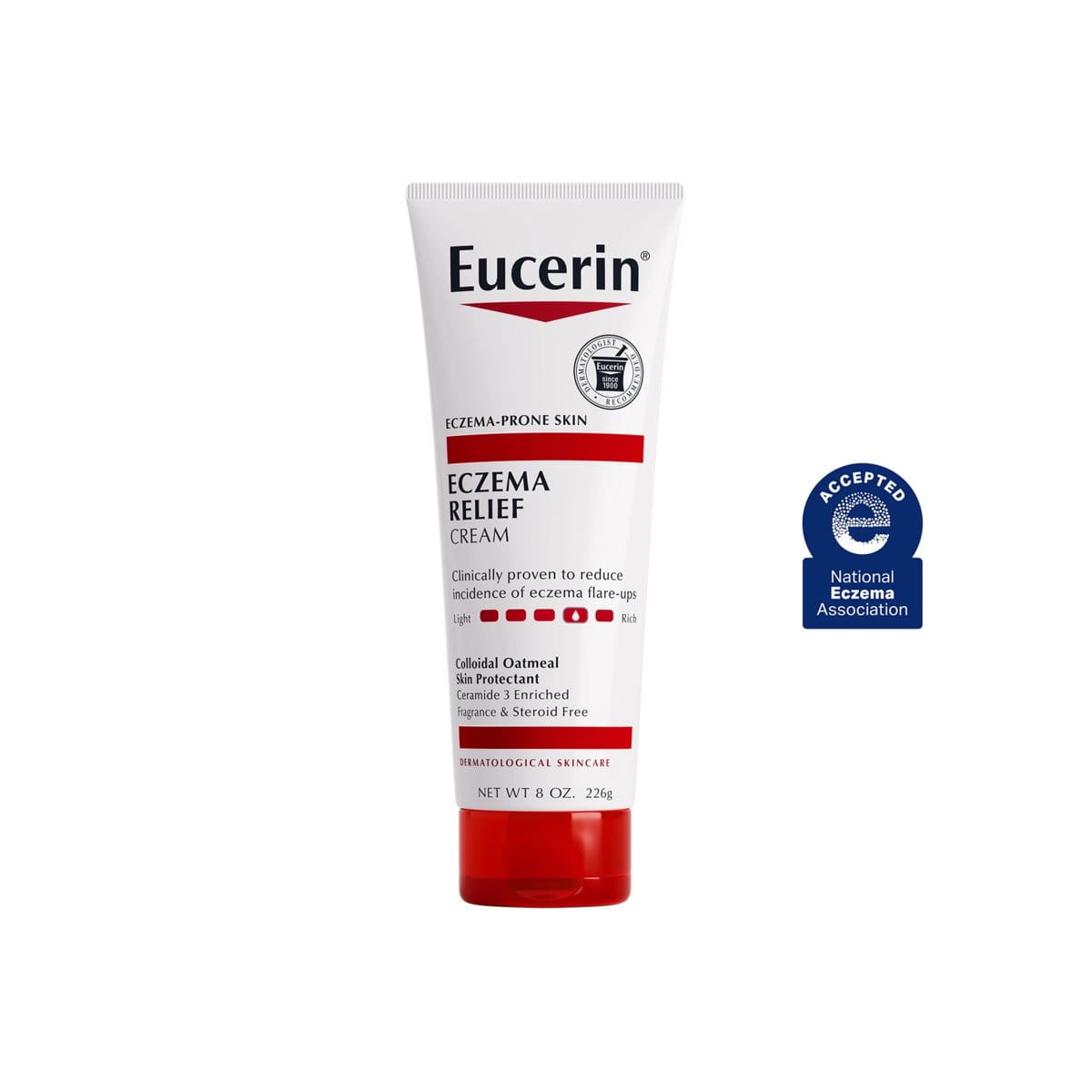
Eucerin Eczema Relief Body Creme
A non-greasy daily body creme with colloidal oatmeal, ceramide-3, and licochalcone. A solid maintenance moisturizer for dry, itchy, eczema-prone skin between flares.
- Best for: daily body maintenance
- Key: colloidal oatmeal + ceramide-3 + licochalcone
- Watch-out: not medicated; a maintenance moisturizer
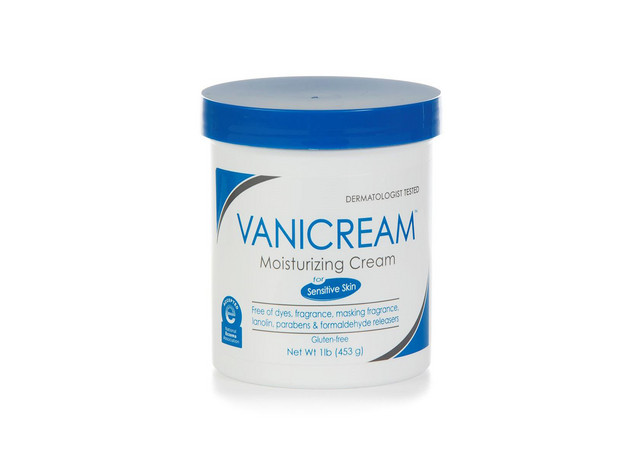
Vanicream Moisturizing Cream
A stripped-back, fragrance-free cream free of dyes, lanolin, and parabens, and National Eczema Association accepted. The low-irritation pick when skin reacts to almost everything.
- Best for: reactive, sensitive skin
- Key: petrolatum + glycerin, no common irritants
- Watch-out: simple and unmedicated by design
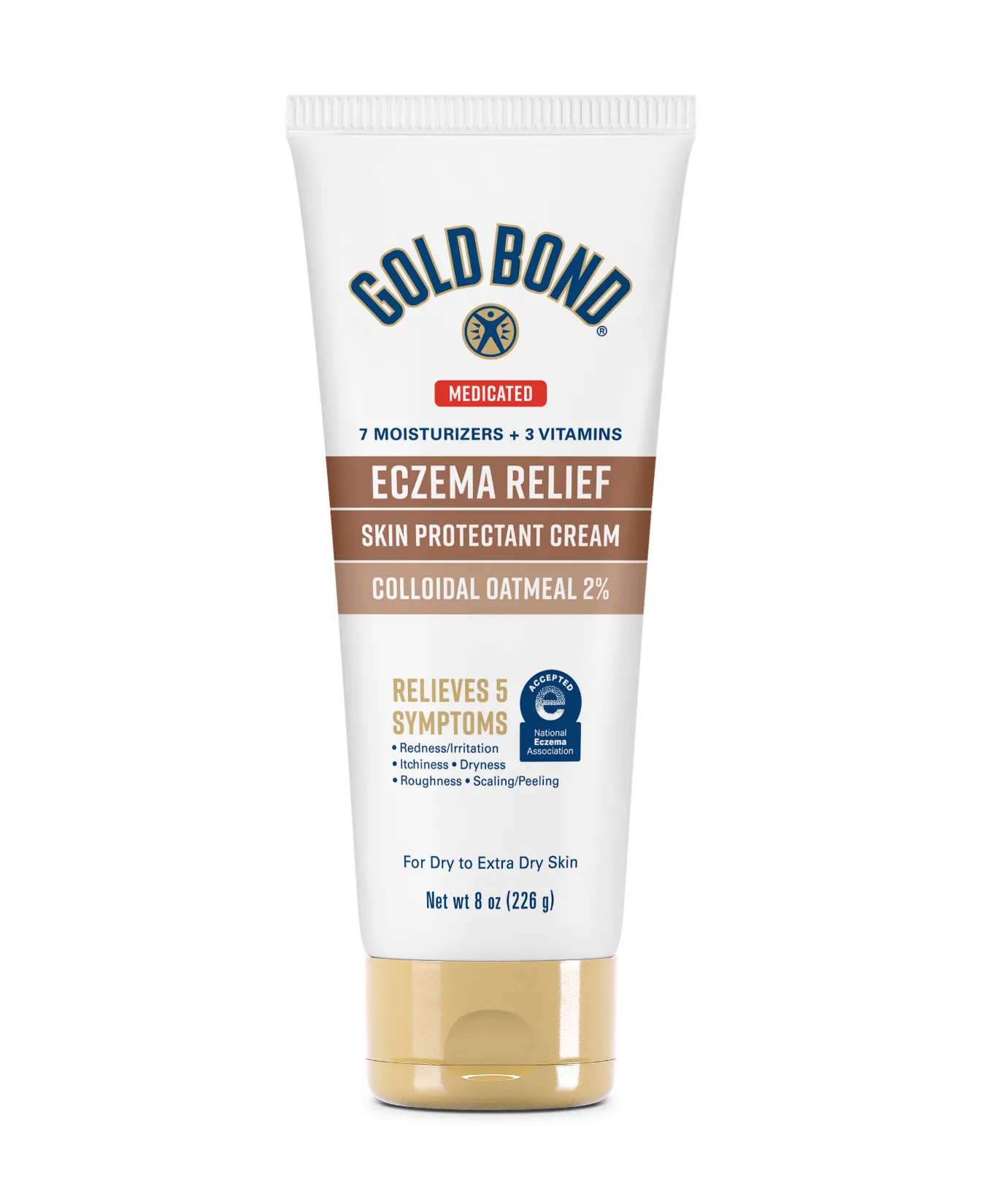
Gold Bond Eczema Relief
A skin-protectant eczema cream with 2% colloidal oatmeal plus seven moisturizers and three vitamins, marketed for relief across several eczema symptoms. An easy, affordable daily option found at most drugstores.
- Best for: budget daily relief
- Key: 2% colloidal oatmeal + moisturizers + vitamins
- Watch-out: not medicated
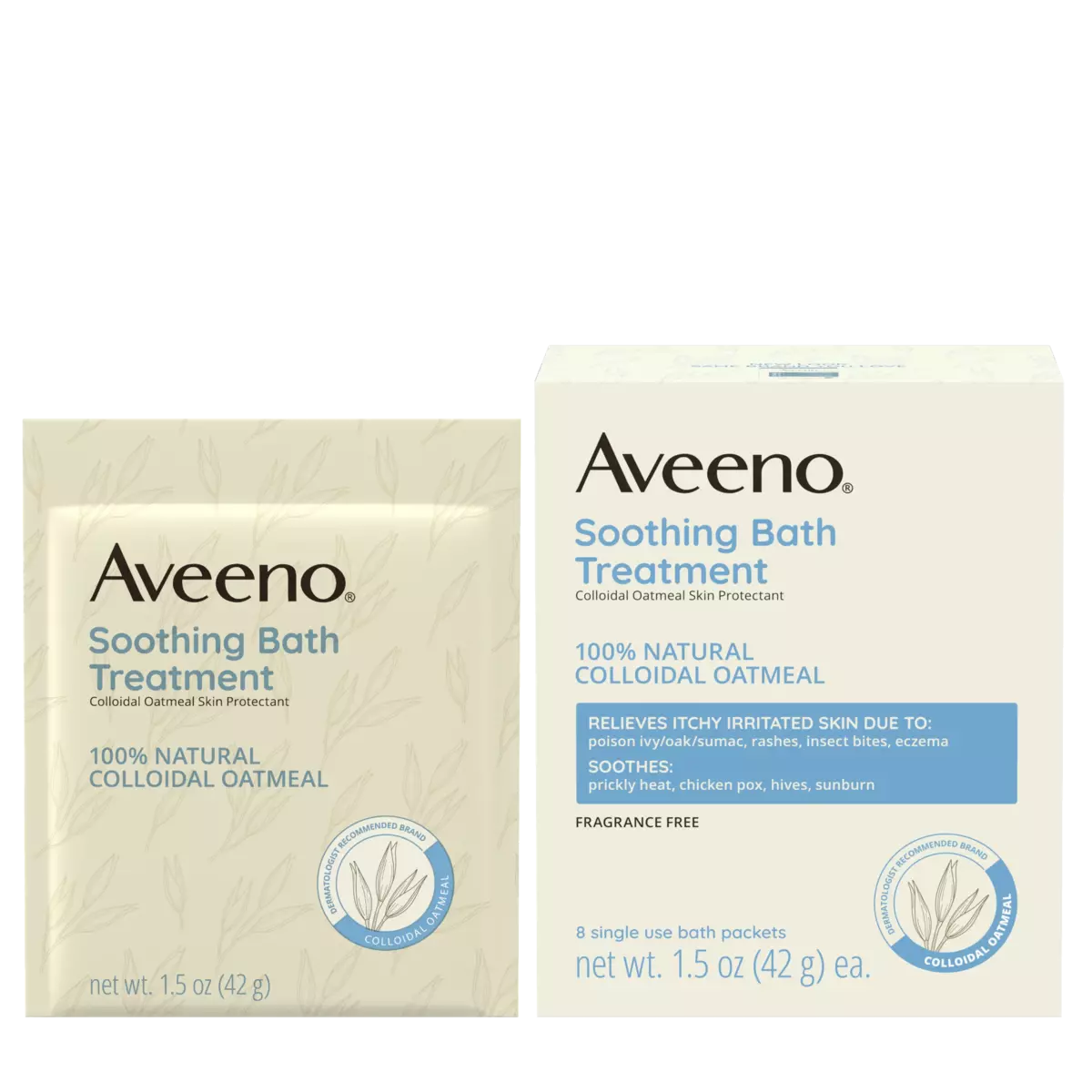
Aveeno Soothing Bath Treatment
Single-use packets of 100% colloidal oatmeal for a soothing soak. Different from a leave-on cream: it suits widespread itch, hard-to-cream areas, and itch from eczema, poison ivy, or sunburn. Best followed by a moisturizer after the bath.
- Best for: widespread itch, a soothing soak
- Key: 100% colloidal oatmeal
- Watch-out: a bath soak, not a leave-on cream

PCA Skin CliniCalm 1%
A professional-brand soothing treatment with maximum-strength 1% hydrocortisone for temporary relief of itching and irritation. The same active strength as drugstore hydrocortisone, in a clinical-brand format at a premium price.
- Best for: clinic-brand itch and irritation relief
- Active: 1% hydrocortisone (max strength)
- Watch-out: short-term use; premium price for a 1% HC

Avene Cicalfate+ Restorative Protective Cream
A restorative protective cream with Avene's copper-zinc complex, aimed at compromised, cracked, or post-procedure skin. A repair-focused pick for raw patches rather than everyday all-over maintenance.
- Best for: cracked, raw, post-flare patches
- Key: copper-zinc complex, [C+ Restore]
- Watch-out: repair-focused, not a daily body moisturizer
BioVelvet vs hydrocortisone at a glance
BioVelvet
- Steroid-free
- Safe for daily, long-term use
- Barrier support between flares
- Petroleum-free and lanolin-free
Hydrocortisone
- Calms an active flare fast
- Not for long-term daily use
- Thinning risk with overuse
- Useful short-term in a flare
Bottom line: steroids calm an active flare; BioVelvet is the steroid-free daily layer that keeps the skin in between calmer.
How to use eczema cream correctly and when it is not enough
Even a good product can underperform if it is used too lightly, too inconsistently, or in a routine that keeps irritating the skin.
For most people, the basics are simple: gentle cleanser, cream applied consistently, awareness of triggers, and fewer unnecessary products.
How to apply eczema cream for the best chance of relief
Apply eczema cream after bathing, after handwashing, and when you notice the early signs of dryness or a flare. Damp skin is usually the best time, because the cream can help hold that moisture in.
Use enough product to fully cover the area, and smooth it on without aggressive rubbing. Frequent application helps, but there is no prize for overdoing it. Consistency matters more than constant reapplication.
How long does it take to see results?
Some people notice less tightness or itching within a few days. Barrier improvement usually takes longer, especially if eczema is chronic or triggers are still active.
This is one reason the best eczema cream is rarely the one that gives the strongest first impression. What matters more is whether your skin feels calmer, less dry, and less reactive over the next one to four weeks of steady use.
What even the best eczema cream cannot do
No over-the-counter eczema cream is a cure. And no cream should be framed as a replacement for prescribed treatment when eczema is severe, infected, rapidly worsening, or affecting sleep and daily function.
Creams can support the skin barrier, reduce dryness, and help skin recover. They cannot treat every level of inflammation on their own.
When prescription treatment may be the better next step
Many people searching for the best cream for eczema prescription options are dealing with symptoms that have gone beyond what moisturisers can reasonably manage.
Hydrocortisone and other prescription treatments have a clear place, especially during more serious flares. They are part of standard medical care for a reason. Over-the-counter creams fit best as support: maintenance between flares, added barrier care during a medically guided treatment plan, and recovery once stronger inflammation settles.
If you are thinking about stopping a prescribed steroid, do not switch abruptly to a “natural” cream in its place without medical guidance. That is a clinical decision, not a skincare swap.
Ready to try?
BioVelvet Recovery Cream
Built for eczema-prone skin between flares. Deer antler velvet paired with hyaluronic acid, aloe vera, vitamin E, and allantoin - steroid-free comfort that works alongside your prescribed routine.
FAQ
What is the best eczema cream for itching?
The best eczema cream for itching is usually one that combines strong barrier support with good tolerance. Colloidal oatmeal, glycerin, thicker emollients, and ointment-style protection often help. If your skin feels dry and slow to recover, a recovery cream such as BioVelvet may also be worth considering.
What is the best eczema cream for face eczema?
The best eczema cream for face eczema is usually a simple, fragrance-free cream with minimal irritants and strong barrier support. Avoid strong actives, essential oils, and heavily scented products, especially around the eyes.
Is a cream or ointment better for eczema?
It depends on the area and severity. Ointments are usually better for very dry, cracked, or repeatedly irritated skin because they reduce water loss more effectively. Creams are often easier to use daily and may feel more practical on the face or during the day.
Can over-the-counter eczema cream replace steroid cream?
Not in every case. Over-the-counter creams can support the skin barrier and help with maintenance, mild symptoms, and recovery. They should not be treated as a replacement for prescribed steroid treatment during severe flares unless a clinician tells you otherwise.
How often should you apply eczema cream during a flare?
Usually after bathing, after washing the affected area, and whenever skin starts feeling dry or tight again. The exact number varies, but consistent, sensible use is more helpful than applying tiny amounts once a day.
How long does it take for an eczema cream to work?
Some relief from tightness or dryness can happen within days. More meaningful barrier improvement often takes one to four weeks of regular use, depending on severity, trigger control, and whether the product is a good fit for your skin.
What is deer antler velvet extract used for in eczema creams?
In skincare, it is used topically as a hero ingredient in recovery-focused formulas such as BioVelvet Recovery Cream, alongside barrier-supportive ingredients like hyaluronic acid, aloe vera, and allantoin.
This article is for informational purposes only and is not a substitute for professional medical or dermatological advice. If eczema is severe, infected, or not improving, consult a clinician. BioVelvet is the home brand for this article. Internal links use biovelvet.com URLs only. Competitor products are included for factual comparison; prices and formulas may change, so check the current product page before buying.