Steroid cream basics
What hydrocortisone cream actually does
How this steroid cream works, what it treats well, and where a steroid-free recovery cream fits in between flares.
Shop BioVelvet →What is hydrocortisone cream?
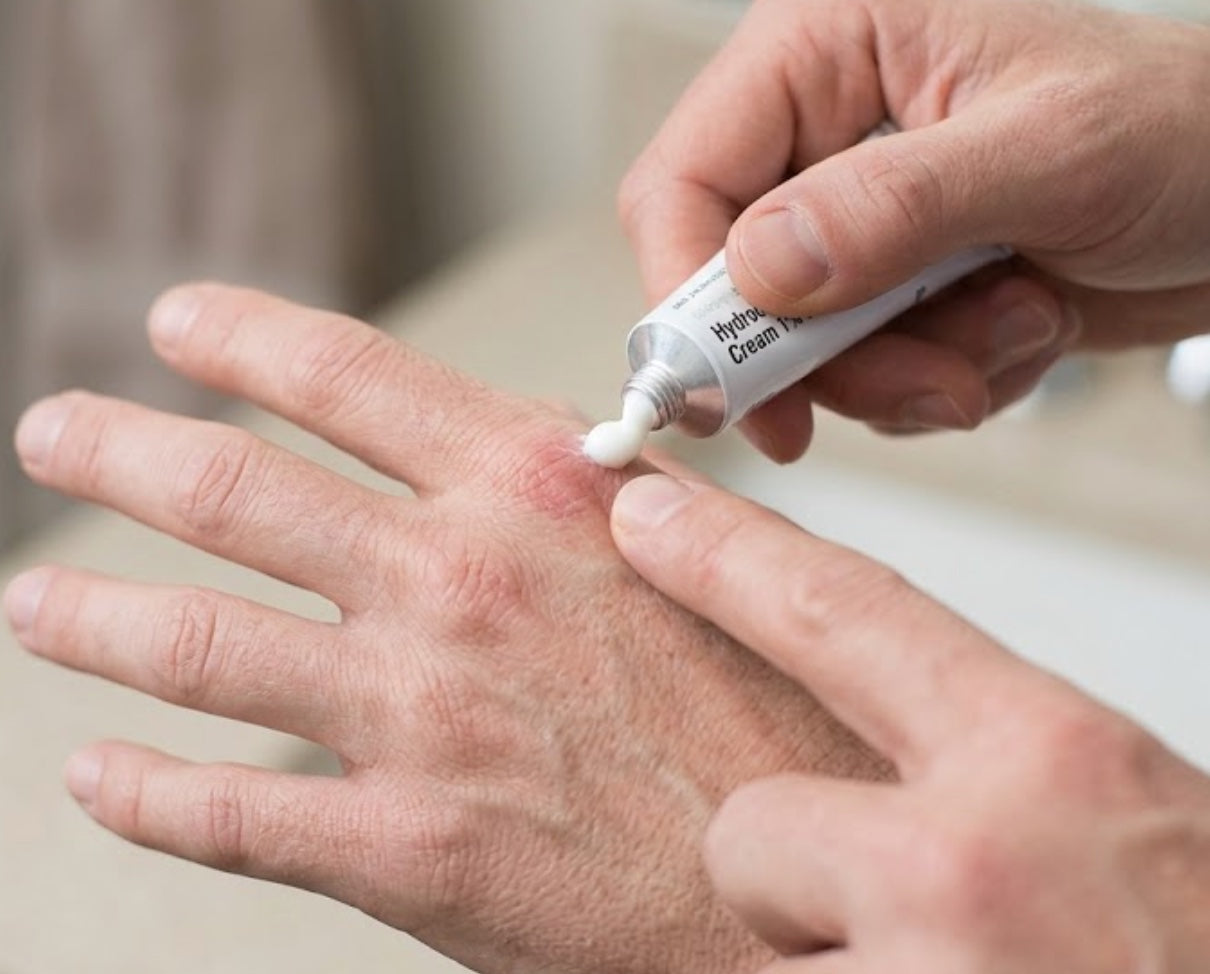
Hydrocortisone cream is a topical corticosteroid. In plain terms, that means it is a steroid cream you put on the skin to reduce inflammation, itching, and redness.
If you are searching what is hydrocortisone cream, it is commonly used for short-term relief of inflamed, itchy skin problems such as eczema, dermatitis, and allergic rashes.
It is different from a regular moisturizer because a moisturizer mainly helps support the skin barrier and reduce dryness. Hydrocortisone cream does something else: it calms the skin's overactive inflammatory response. It is also different from a general anti-itch cream, because not all itching is caused by inflammation, and not all anti-itch products contain a steroid.
That distinction matters. Hydrocortisone can help control symptoms, but it does not cure the underlying cause of a chronic skin condition. If someone has eczema, for example, the cream may calm a flare. It does not remove the person's triggers, repair the skin long term on its own, or make the condition disappear permanently.
Is hydrocortisone cream a steroid?
Yes. Hydrocortisone is a mild steroid used on the skin.
The phrase "steroid cream" can sound alarming, but here it simply refers to a medicine that reduces inflammation. It is not the same thing as anabolic steroids used for muscle building. In skin care and dermatology, steroid creams are used because they can quickly settle redness, swelling, and itching when inflammation is driving the problem.
Hydrocortisone is generally considered one of the milder topical steroids, especially in over-the-counter 1% form. BioVelvet Recovery Cream sits in a different category entirely: it is formulated without steroids, so it does not carry the thinning or rebound risks tied to steroid use.
How hydrocortisone cream works on the skin
Hydrocortisone cream works by calming the skin's inflammatory response. When the skin is inflamed, it often becomes red, itchy, swollen, sore, or flaky. By reducing that inflammation, hydrocortisone can make the area feel more comfortable and look less angry.
That is why it is often used during a flare rather than as an everyday long-term solution.
What is hydrocortisone cream used for?
Hydrocortisone cream is most often used for skin problems where inflammation is the main issue. Common examples include:
- Mild eczema flares
- Contact dermatitis
- Allergic rashes
- Insect bites
- Mild irritated skin
- Itchy skin caused by inflammation
It can be useful in the right situation, but it is not a universal rash cream. Some rashes look similar and need completely different treatment.
For example, hydrocortisone may make certain problems worse or harder to diagnose, including:
- Fungal rashes
- Acne
- Rosacea
- Perioral dermatitis
- Untreated bacterial or viral skin infections
Strength also matters. Over-the-counter 1% hydrocortisone is not the same as prescription-strength options. A doctor may prescribe something like hydrocortisone 2.5 cream for certain situations, but that does not mean it should be used casually, especially on delicate areas like the face.
When hydrocortisone can help
Hydrocortisone can help when inflammation is clearly part of the problem. That usually includes:
- Mild eczema flares with redness and itching
- Allergic skin reactions
- Short-term itch relief when the skin is inflamed
- Mild irritant or contact dermatitis
In these cases, a short course can sometimes break the itch-scratch cycle and give the skin a chance to settle.
When hydrocortisone is the wrong tool
Hydrocortisone is the wrong tool when the rash is not mainly inflammatory, or when the skin may be infected.
Examples include:
- Fungal rashes: steroid cream can mask the rash while allowing the fungus to keep spreading
- Perioral dermatitis: steroid use can worsen or prolong it
- Broken or infected skin: this may need medical assessment rather than self-treatment
- Acne or rosacea: steroids can aggravate some facial conditions rather than improve them
If the diagnosis is unclear, guessing with steroid cream is not always harmless. A rash that keeps returning, spreads, or changes quickly is worth getting checked.
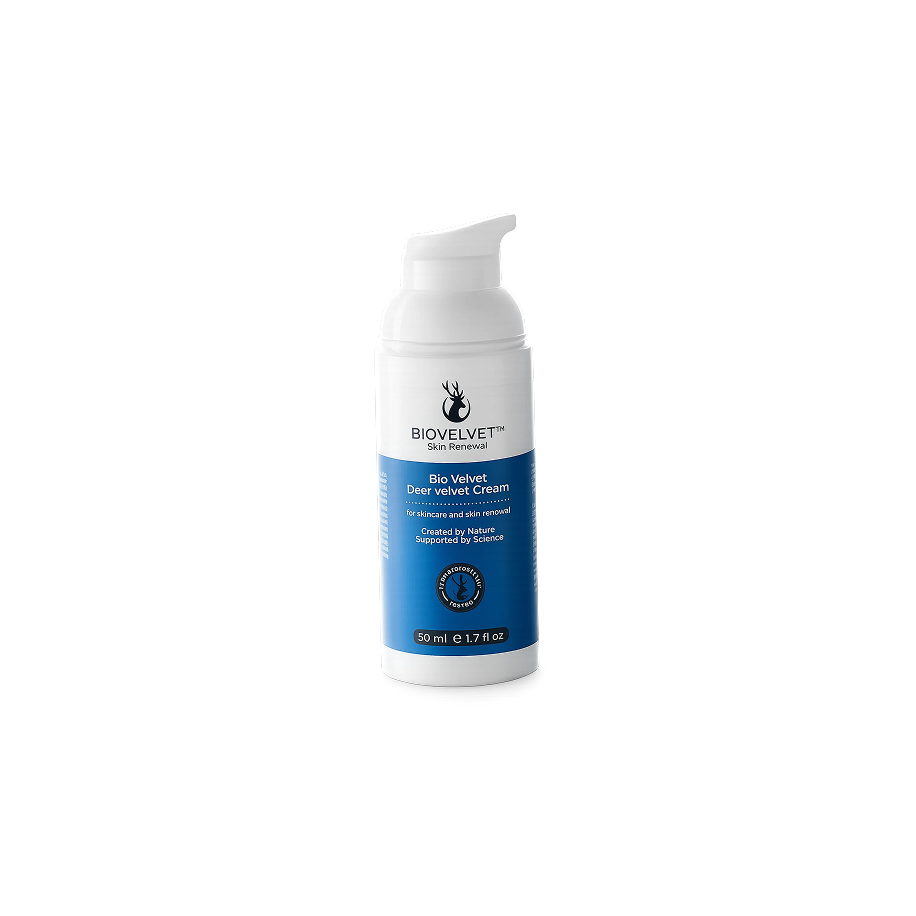
Deer Antler Velvet · Hyaluronic Acid · Aloe Vera · Allantoin
BioVelvet Recovery Cream
Steroid-free barrier support for the calmer periods between flares. For skin that needs more than short-term symptom relief. From $54.87 on subscription. 90-day money-back guarantee.
How to use hydrocortisone cream safely
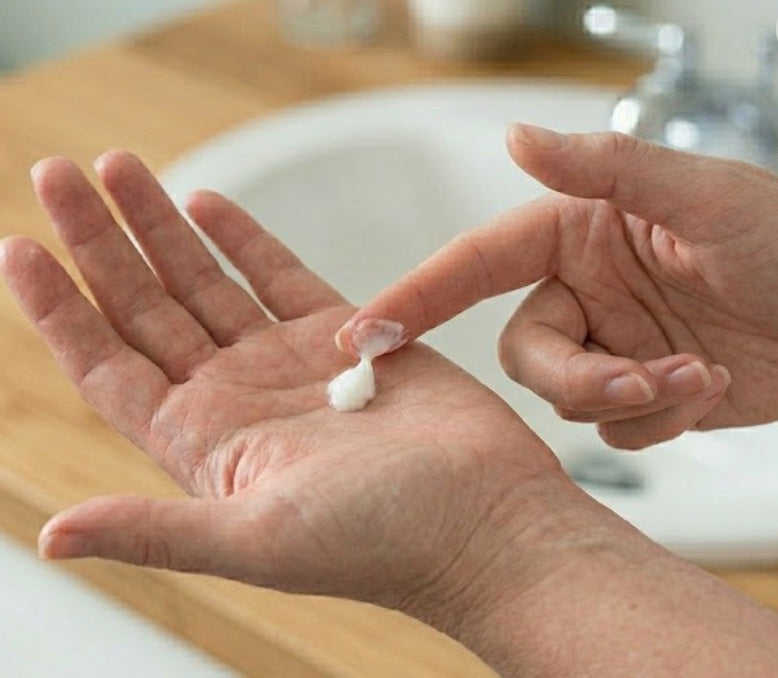
In general, hydrocortisone cream should be used in a thin layer on affected skin only. Follow the package directions or your clinician's instructions.
A few basics matter:
- Apply only to the area that needs it
- Use a thin amount rather than a thick coating
- Wash your hands after applying, unless your hands are the area being treated
- Do not use it longer than directed without medical advice
People often ask how often to apply it. That depends on the product and the reason for use, but over-the-counter hydrocortisone is commonly used once or twice a day for a short period. If you are unsure, a pharmacist is a good first stop.
Moisturizer still matters. If you are using hydrocortisone for eczema or dermatitis, regular moisturizing helps support the skin barrier while the steroid calms the flare. In many routines, hydrocortisone is applied first to the affected area, allowed to absorb, and moisturizer is applied after. If your clinician has given different instructions, follow those.
Children, pregnancy, and breastfeeding deserve extra caution. Mild hydrocortisone is sometimes used in these situations, but thinner skin, larger body surface area relative to size, and sensitive areas all matter. If the person using it is a child, if the area is large, or if use may be repeated often, it is sensible to check with a pharmacist or doctor first.
Can you use hydrocortisone cream on the face?
This is where caution matters most. Hydrocortisone cream on face use should generally be brief and careful.
Facial skin is thinner and more reactive than skin on many other parts of the body. That means the risk of side effects is higher, especially with repeated use. A clinician may sometimes advise a short course for a specific problem, but face use should not be treated casually or continued long term without guidance.
It is especially important to avoid self-treating near the eyes unless a clinician tells you to do so.
What about hydrocortisone 2.5 cream on face?
Hydrocortisone 2.5 cream on face carries more risk than over-the-counter 1% hydrocortisone. It is prescription strength for a reason.
It should not be treated as interchangeable with a milder cream just because the ingredient name is the same. Stronger steroid use on facial skin increases the risk of thinning, visible blood vessels, and worsening of some rashes that mimic eczema.
If prescription hydrocortisone has been recommended for the face, the duration and location matter. That is a follow-the-plan situation, not an improvise-at-home one.
How to fit it into a simple skincare routine
A simple routine is usually best when skin is flaring:
- Use a gentle cleanser or rinse with lukewarm water
- Apply hydrocortisone to the affected area as directed
- Follow with a plain moisturizer to support the skin barrier
- Avoid fragranced products, exfoliants, and other likely triggers
Hydrocortisone is one part of the routine, not the whole routine. Gentle cleansing, regular moisturizing, and trigger avoidance still do a lot of the long-term work.
Hydrocortisone cream side effects and risks to know
Like any active skin treatment, hydrocortisone cream can cause side effects.
Common short-term side effects include:
- Mild stinging
- Burning
- Dryness
- Irritation at the application site
These are not always serious, but they are worth paying attention to, especially if the skin becomes more uncomfortable rather than less.
Longer-term or incorrect use carries more meaningful risks, including:
- Skin thinning
- Visible small blood vessels
- Worsening of some facial rashes
- Rebound problems with repeated overuse
This is the part many people learn the hard way. Mild steroid creams have a real role. They can be very helpful. But more is not better, and long-term unsupervised use is not the goal.
Signs you should stop and get medical advice
Stop and seek medical advice if you notice:
- The rash is getting worse
- The area looks infected
- There is no improvement after the expected treatment window
- You keep needing to reuse it for the same spot or problem
- The rash is on the face, around the eyes, or in a child and you are unsure what it is
A product that helps briefly but never really solves the pattern may be masking a diagnosis that needs a different plan.
Why steroid fatigue and overuse matter
A lot of people with chronic skin conditions develop what you could call steroid fatigue. They end up in a cycle: flare, use steroid, skin settles, stop, flare returns, repeat.
That does not mean hydrocortisone is bad or should never be used. It means short-term symptom control can become the only strategy if barrier care, trigger identification, and medical follow-up are missing. This is the gap steroid-free options like BioVelvet Recovery Cream are meant to sit in, as part of ongoing barrier care between flares rather than as a substitute for a prescribed steroid.
If you are already using a prescribed steroid regularly, do not stop abruptly just because you are worried about overuse. That decision should be made with medical supervision. The more useful goal is to make steroid use more targeted and less constant over time.
BioVelvet vs hydrocortisone cream at a glance
BioVelvet
- Steroid-free
- Supports the barrier between flares
- Suited to daily, ongoing use
- Petroleum-free and lanolin-free
Hydrocortisone cream
- Calms active inflammation fast
- Not meant for daily, long-term use
- Thinning risk with overuse
- The right first response for a true flare
Bottom line: hydrocortisone calms a flare that is already inflamed. BioVelvet supports the skin barrier in the calmer periods between, so there is less for the next flare to work with.
What hydrocortisone cream cannot do and when to see a doctor
Hydrocortisone cream can calm a flare. It cannot cure chronic eczema, psoriasis, or the root cause of every rash.
It also cannot do the job of an antifungal cream when the rash is fungal, or treat an active skin infection properly, or replace medical care when inflammation is severe.
Over-the-counter care has usually reached its ceiling if you have:
- Severe inflammation
- Cracked or infected skin
- A widespread rash
- Eye-area involvement
- A rash that keeps coming back
- Ongoing need for facial use
- Uncertainty about what the rash actually is
That is when medical advice becomes the next sensible step, especially if prescription strength is being considered.
If you need more than short-term relief
If the pattern keeps returning, maintenance care matters just as much as flare treatment.
That usually means:
- Daily moisturizer to support the skin barrier
- Gentle skin care
- Avoiding known triggers
- Using steroid cream only when it actually fits the problem
- Getting a clearer diagnosis if the same rash keeps repeating
The aim is not to make hydrocortisone your only strategy. The aim is to use it when needed, briefly, and within a wider plan that helps your skin stay calmer between flares.
BioVelvet Recovery Cream
Built for skin that is dry, fragile, or still settling after a flare. Deer antler velvet paired with hyaluronic acid, aloe vera, vitamin E, and allantoin - designed to support barrier recovery, not just add moisture for an hour. The formula is petroleum-free, lanolin-free, and steroid-free.
FAQ
What is hydrocortisone cream used for?
Hydrocortisone cream is used to reduce inflammation, itching, and redness from problems like mild eczema, contact dermatitis, allergic rashes, insect bites, and other short-term inflammatory skin reactions.
Can you use hydrocortisone cream on your face?
Sometimes, but cautiously. Facial skin is thinner and more sensitive, so hydrocortisone use on the face should usually be brief and ideally guided by a clinician, especially near the eyes or if the rash keeps returning.
What are the most common hydrocortisone cream side effects?
The most common side effects are stinging, burning, dryness, and irritation where the cream is applied. With repeated or incorrect use, risks can include skin thinning, visible blood vessels, and worsening of some facial rashes.
How long should you use hydrocortisone cream?
It should usually be used for a short period only, following the product label or clinician instructions. If the rash does not improve, keeps returning, or needs repeated treatment, it is time to get medical advice rather than extending use on your own.
What is the difference between 1% hydrocortisone and hydrocortisone 2.5 cream?
1% hydrocortisone is the common over-the-counter mild strength. Hydrocortisone 2.5 cream is a stronger prescription option and is not interchangeable with 1%, especially on delicate areas like the face. Stronger steroid use carries more risk and should be guided by a clinician.
This article was written from the point of view of BioVelvet, the home brand of biovelvet.com. Competitor products are included for informational comparison only. No paid placement from any competitor brand. Products were evaluated on declared formula, declared positioning, brand-published data, and declared guarantees. Prices reflect brand or retailer pricing at time of writing and may move. Read the ingredient list on the box you actually buy, because formulas get reformulated.