Ingredients, explained
What is actually in the jar.
Deer antler velvet, hyaluronic acid, aloe vera, and allantoin, and what each one is doing in a recovery formula.
Shop BioVelvet →Why ingredient transparency matters when your skin is already struggling
If you are dealing with eczema, psoriasis, scars, burns, rosacea, or skin that is simply dry all the time, you are probably past the point of caring about pretty packaging and vague promises.
You do not need another cream that says it will leave skin "radiant" or "refreshed." You need to know what is in the jar, why it is there, and whether that formula makes sense for skin that feels irritated, tight, cracked, fragile, or slow to recover.
That is the point of this article.
This is not a beauty-marketing breakdown. It is a plain-English explanation of what BioVelvet Recovery Cream is made of, what each key ingredient is there to do, and how those ingredients work together in a recovery formula.
Recovery creams should be judged differently from standard moisturisers. The real questions are:
- Does the formula support the skin's own repair process?
- Does it help protect a weakened skin barrier?
- Does it hold moisture where damaged skin needs it?
- Does it make skin feel calmer and more comfortable while recovery happens?
What this article can and cannot tell you
An ingredient list can tell you a lot about the logic behind a formula. It can show whether a product is built for barrier support, moisture retention, soothing, and recovery.
What it cannot do is guarantee the same result for every person, every condition, or every level of severity.
A recovery cream that feels helpful on post-procedure dryness may not be enough for a severe eczema flare. A formula that supports a fresh scar may do much less for an older, deeper scar. Skin is individual, and chronic skin conditions are rarely simple.
How to read a recovery-cream ingredient list
It helps to separate ingredients into a few practical categories:
- Hero ingredients: the ingredients that define what makes the formula different
- Barrier-support ingredients: ingredients that help reduce moisture loss and support fragile skin
- Soothing ingredients: ingredients that help calm visible irritation and discomfort
- Texture and preservation ingredients: ingredients that keep the cream stable, usable, and pleasant to apply
Most people look for one standout ingredient and stop there. That is understandable, but recovery formulas usually work because several kinds of ingredients are doing different jobs at once.
Living Collagen · 50+ Bio-Active Compounds · Aloe Vera · Dead Sea Minerals
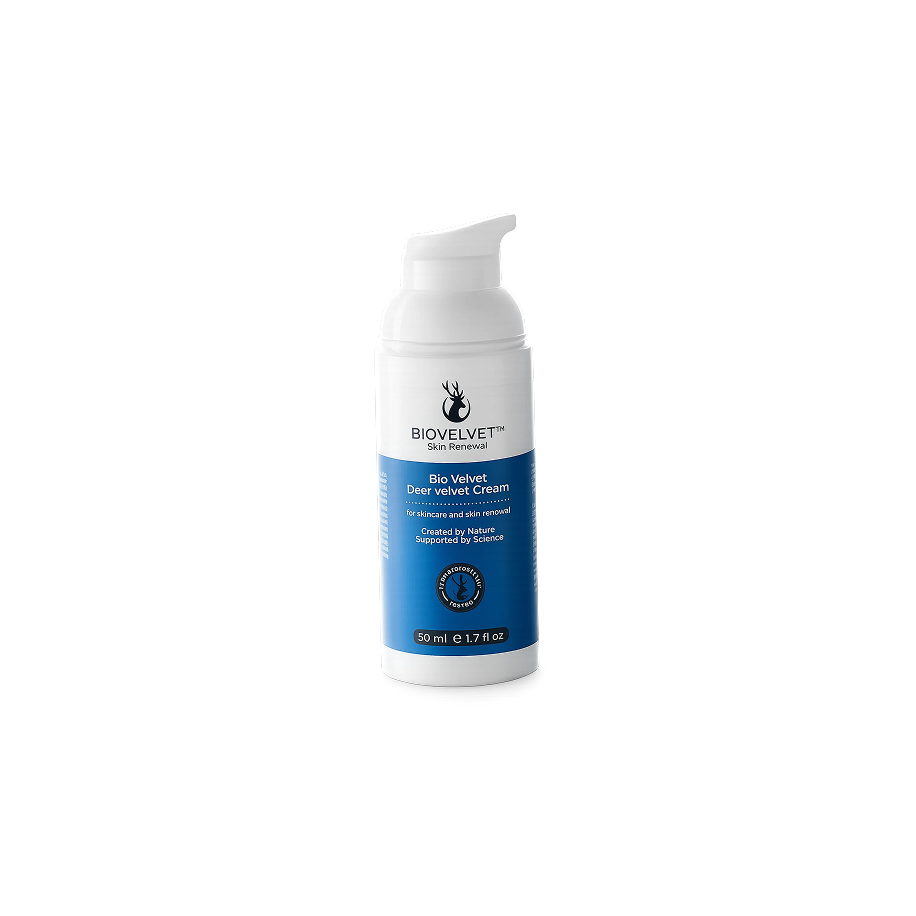
BioVelvet Recovery Cream
Petroleum-free barrier support for dry, fragile, or healing skin. 90-day money-back guarantee.
BioVelvet ingredients explained: the core actives behind the formula
BioVelvet Recovery Cream is built as a recovery cream, not a standard moisturiser. The formula is centered on deer antler velvet rather than on hydration alone.
That matters because the goal is not just to soften dry skin for a few hours. The goal is to create the right conditions for skin to recover: moisture where it is needed, barrier support where it is weak, soothing where it is irritated, and ingredient support for skin that has been through more than ordinary dryness.
Deer antler velvet extract: the ingredient that makes BioVelvet different
Deer antler velvet is the foundation of the formula and the reason BioVelvet stands apart from more familiar creams.
If you have heard of deer antler velvet before, it may have been in the context of oral supplements or sports headlines. That is a different category. In skincare, topical deer antler velvet is being used for what it may do on the skin itself, not for the reasons supplement users talk about it.
In plain terms, deer antler velvet contains natural growth factors, amino acids, and collagen-building support that may help the skin's own recovery process. That is the core idea behind BioVelvet: not forcing the skin to act differently, but supporting what healthy skin is already trying to do. New Zealand deer antler velvet extract is the hero ingredient in every BioVelvet Recovery Cream formula, not an occasional add-in.
This is also where the founder story matters. Dr. Zur, a veterinary scientist with 20+ years working with deer antler velvet, developed the formula around an ingredient he had spent decades studying in animal healing contexts. That is why BioVelvet is positioned as a recovery cream rather than just another moisturiser with a novel ingredient added for marketing.
Hyaluronic acid: moisture support that helps recovery happen
Hyaluronic acid is easier to recognize, and for good reason. It draws water into the skin and helps hold it there.
When skin feels tight, flaky, rough, or compromised, moisture matters. Skin generally recovers better when it is not dry and stressed. That makes hyaluronic acid an important support ingredient in BioVelvet.
But it is not the main reason the formula is distinctive. On its own, hyaluronic acid helps create a better moisture environment. In BioVelvet, it works alongside deer antler velvet rather than replacing it.
Aloe vera, vitamin E, and allantoin: the calming and barrier-support trio
These three ingredients do different jobs, but together they help make the formula feel protective and comforting on stressed skin.
Aloe vera is the soothing part of the formula. It helps calm surface irritation and supports skin comfort, especially when skin feels hot, reactive, or recently aggravated.
Vitamin E helps protect the skin barrier from everyday oxidative stress while the skin is recovering. In simple terms, it is part of the formula's protective side. It helps support skin that is already vulnerable.
Allantoin is the formula's skin-protectant ingredient. It is included to support the skin barrier, which is especially useful for very dry, rough, or cracked skin on areas like hands, elbows, knees, and feet.
Together, these ingredients do not replace the deer antler velvet story. They make that story usable on real skin by helping the formula soothe, cushion, and support the barrier. BioVelvet Recovery Cream does not contain shea butter; its barrier-support role in the formula belongs to allantoin instead.
The supporting ingredients most people overlook
Secondary ingredients often get ignored, but they help shape how a recovery cream performs day to day.
BioVelvet also includes seaweed extract (Fucus vesiculosus), ginkgo biloba, and jojoba seed oil. These are not the headline actives, but they contribute to the formula's broader recovery profile.
Seaweed extract and ginkgo biloba
Seaweed extract and ginkgo biloba are best understood as supportive ingredients that help create a broader antioxidant and skin-comfort environment.
They are not miracle ingredients on their own, and they should not be treated that way. Their role is quieter than that. In a recovery formula, that quieter support matters. Skin that is inflamed, fragile, or repeatedly irritated often benefits from formulas that are doing several gentle things at once rather than one aggressive thing very strongly.
Jojoba seed oil and Dead Sea minerals in a recovery context
Jojoba seed oil and Dead Sea minerals round out the formula's texture and mineral-support side.
Jojoba seed oil helps the cream apply smoothly and supports the skin's surface, while Dead Sea minerals contribute to the formula's broader skin-comfort profile. Here, they support the recovery environment rather than acting like a standalone treatment.
Why the full formula matters more than one ingredient alone
Many shoppers choose skincare by one familiar ingredient name. That can be useful, but it only tells part of the story.
Recovery products work best when moisture-binding ingredients, soothing ingredients, barrier-support ingredients, and protective ingredients all work together. A formula can have an impressive hero ingredient and still be disappointing if the rest of the product does not help skin tolerate and hold onto the benefits.
That is why BioVelvet's ingredient story is not just "deer antler velvet plus filler." The formula logic is broader than that. BioVelvet Recovery Cream is also petroleum-free and lanolin-free, which is part of why it is formulated the way it is.
BioVelvet vs a plain moisturizer at a glance
BioVelvet
- Formulated around barrier support and recovery
- Moisture, soothing, and protective ingredients each doing a job
- Petroleum-free and lanolin-free
- 90-day money-back guarantee
Plain moisturizer
- Softens surface dryness
- No dedicated barrier-support ingredients
- Built for scent and texture more than recovery
- Cheap and easy to find
Bottom line: a plain moisturizer can soften dry skin for a few hours. BioVelvet's ingredient list is built around barrier support and recovery, not scent and texture.
What BioVelvet ingredients may help with, and where their limits are
The most useful way to read this formula is to translate the ingredient list into real-life use cases.
BioVelvet may make the most sense for:
- chronically dry or cracked skin
- fragile skin barrier
- post-flare recovery
- visible redness and reactive skin
- minor burn aftercare once urgent care is not needed
- post-procedure skin that needs a calm, protective recovery layer
- scar support, especially when skin is still in an active healing phase
That said, the same cream can feel very different depending on the situation. On calm but dry skin, it may feel deeply comforting. On highly inflamed or broken skin during an active flare, tolerance can vary and extra caution is sensible.
A recovery cream supports skin during maintenance and recovery phases. It is not a substitute for medical treatment when symptoms are severe, spreading, infected, or worsening.
Where the formula makes the most sense
BioVelvet fits best when your skin needs more than temporary moisturising.
That usually means skin that is not just dry, but persistently vulnerable. Skin that flares, cracks, feels thin, reacts easily, or takes longer than it should to settle down. It also makes sense as a recovery product after skin has been stressed by weather, overuse of actives, procedures, or repeated inflammatory cycles.
What a topical recovery cream cannot do
A topical recovery cream has limits, and it is better to say them clearly.
It cannot:
- replace a prescribed corticosteroid during a severe flare
- erase a deep or raised scar
- treat an active skin infection
- manage serious burns that need medical care
Those are different problems with different solutions.
How long results may realistically take
Hydration and comfort often improve first. Skin may feel less tight or rough before it looks meaningfully different.
More visible recovery in scars, stubborn dry patches, or chronic-condition skin usually takes longer and depends on consistent use. BioVelvet's community reports positive changes, but this is best thought of as a consistency product, not an overnight one.
Questions careful buyers ask about BioVelvet ingredients
Ingredient lists do not exist in a vacuum. People also want to know whether the sourcing is ethical, whether the formula fits into a real routine, and whether it makes sense for sensitive skin.
Is deer antler velvet in skincare ethical?
This is one of the first questions many people ask, and reasonably so.
BioVelvet uses deer antler velvet as its defining ingredient, so the sourcing question should be addressed directly. Readers who want clarity on animal welfare standards should always look for transparent brand information and sourcing details before buying. If ethical sourcing is your deciding factor, it is worth checking the brand's current product information and contacting the company directly with any specific questions you have.
Can BioVelvet be used with other skincare or prescription products?
Usually, yes, a recovery cream fits best at the moisturising step or as the final calming layer in a routine.
That can mean:
- on recovery nights between stronger active nights
- after irritating actives have been paused
- during post-procedure recovery, if your clinician has cleared topical moisturising products
- alongside medically supervised care, where a barrier-support product is still useful
What it should not be used as is a reason to stop a prescribed treatment abruptly. If you are using steroid creams or other prescription products, changes should be made with medical guidance.
Who should patch test or speak to a doctor first?
Patch testing is a good idea for almost anyone with reactive skin, but it matters especially if you:
- have very sensitive or allergy-prone skin
- are managing eczema, psoriasis, rosacea, or another diagnosed skin condition
- are using prescription treatments
- are considering use on a baby or child
- have pregnancy-related safety questions
- know you react easily to botanical ingredients or richer creams
When in doubt, it is sensible to check first rather than push through irritation.
Ready to try?
BioVelvet Recovery Cream
Built for skin that is dry, fragile, or still settling. Deer antler velvet paired with hyaluronic acid, aloe vera, and allantoin - designed to support barrier recovery, not just moisture.
FAQ
What is deer antler velvet doing in BioVelvet?
It is the formula's hero ingredient. In plain terms, deer antler velvet contains natural growth factors, amino acids, and collagen-building support that may help the skin's own recovery process. It is what makes BioVelvet a recovery cream rather than a standard moisturiser.
Are BioVelvet ingredients safe for eczema-prone or sensitive skin?
They are chosen with recovery and barrier support in mind, but no ingredient list guarantees the same response for everyone. If your skin is eczema-prone, very reactive, or allergy-prone, patch testing is the safest first step.
Can BioVelvet replace steroid cream or prescription treatment?
No. A recovery cream can support maintenance and recovery phases, but it is not a substitute for prescribed treatment during a severe flare or worsening skin condition.
How long does BioVelvet take to show results?
Comfort and hydration may improve earlier. More visible improvement in stubborn dryness, redness, or scar appearance usually takes longer and depends on consistent use.
Is topical deer antler velvet the same as deer antler velvet supplements?
No. Topical deer antler velvet is used on the skin as part of a skincare formula. That is different from oral supplement use, which is the context most people recognize from sports headlines.
Where does BioVelvet fit in a skincare routine?
It usually fits at the moisturising step or as the final recovery layer. It can be used on recovery nights, after periods of irritation, or alongside medically supervised care where barrier support is still needed.