Founder story
A veterinarian's route to a recovery cream.
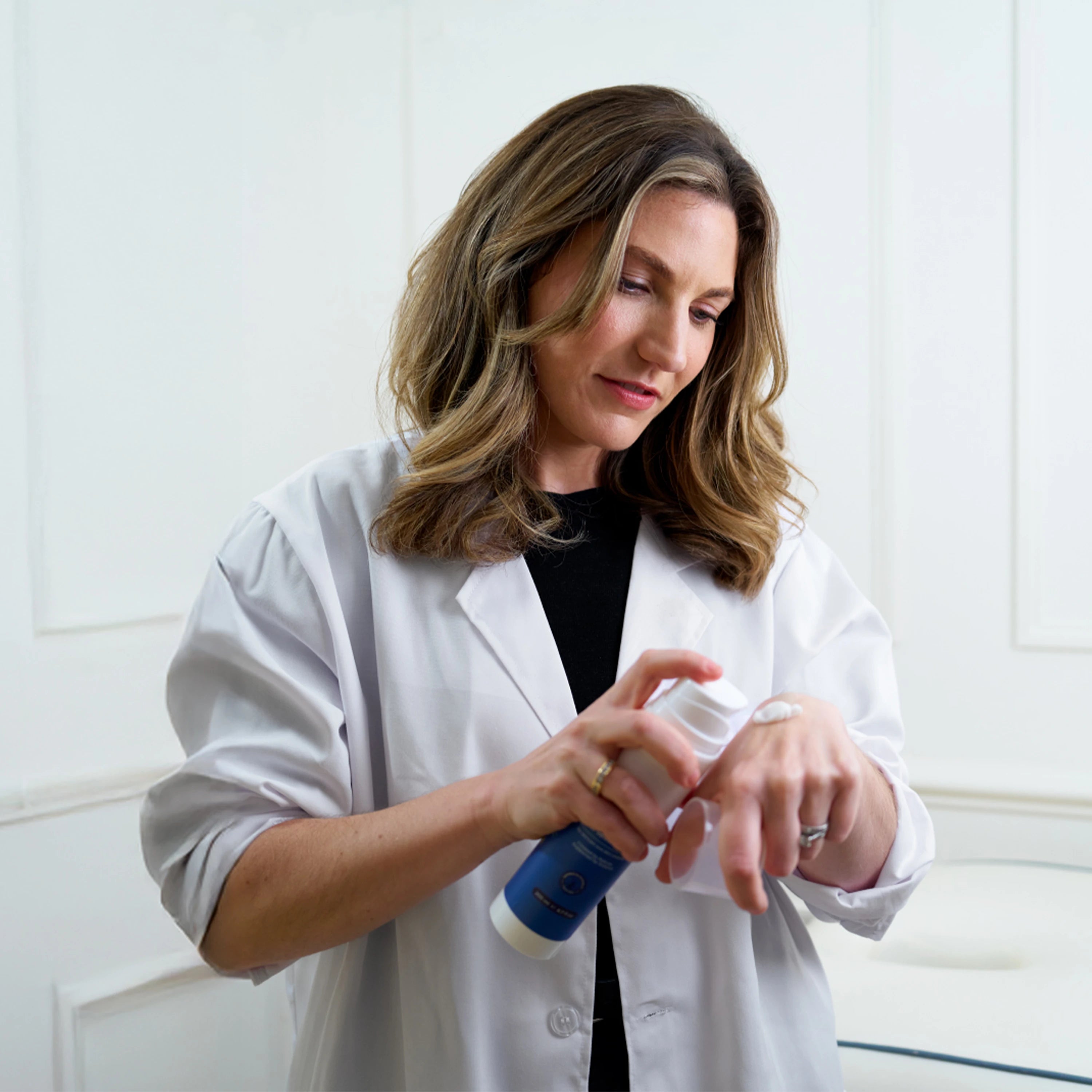
Dr. Doron Zur spent decades in veterinary medicine before deer antler velvet, encountered in New Zealand, became the starting point for BioVelvet. The formula grew from his own search for something that supported his skin as it recovered, not just managed it.
Shop BioVelvet →Before BioVelvet was a brand, it was a personal problem that had not been solved.
Dr. Doron Zur has spoken openly about dealing with severe seborrhoea and the cycle that came with it: apply steroid creams, get temporary relief, wait for symptoms to return, then start again. Anyone who has lived in that kind of routine knows how wearing it becomes. The issue is not only the discomfort. It is the sense that your skin is never really recovering. It is just being managed, day by day.
That tension sits at the centre of the BioVelvet founder story. On one side was short-term control. On the other was a harder question: was there a way to support skin so it could recover more effectively, rather than only quieting the problem for a while?
What makes this story worth telling is that it did not begin in a skincare lab or with a beauty-market gap. It began with a clinician dealing with his own ongoing skin problem and looking at healing from a different angle. Dr. Zur's route into that question was unusual because his background was not in cosmetic branding or trend-led skincare. It was in veterinary science, clinical practice, and years of observing how living tissue heals.
That matters, because BioVelvet deer antler cream did not start as a marketing concept built around an unusual ingredient. It started with a founder trying to solve something real in his own life.
A personal starting point, not a marketing concept
BioVelvet did not begin as an attempt to launch another cream into an already crowded category. It began with frustration, curiosity, and a founder who had reason to care deeply about whether a product could do more than moisturise.
That is an important distinction. Many skincare brands start with positioning first and formulation second. This story moved the other way around. The core question was practical: what actually helps damaged or chronically unsettled skin recover better over time? The commercial side came later.
Living Collagen · 50+ Bio-Active Compounds · Aloe Vera · Dead Sea Minerals
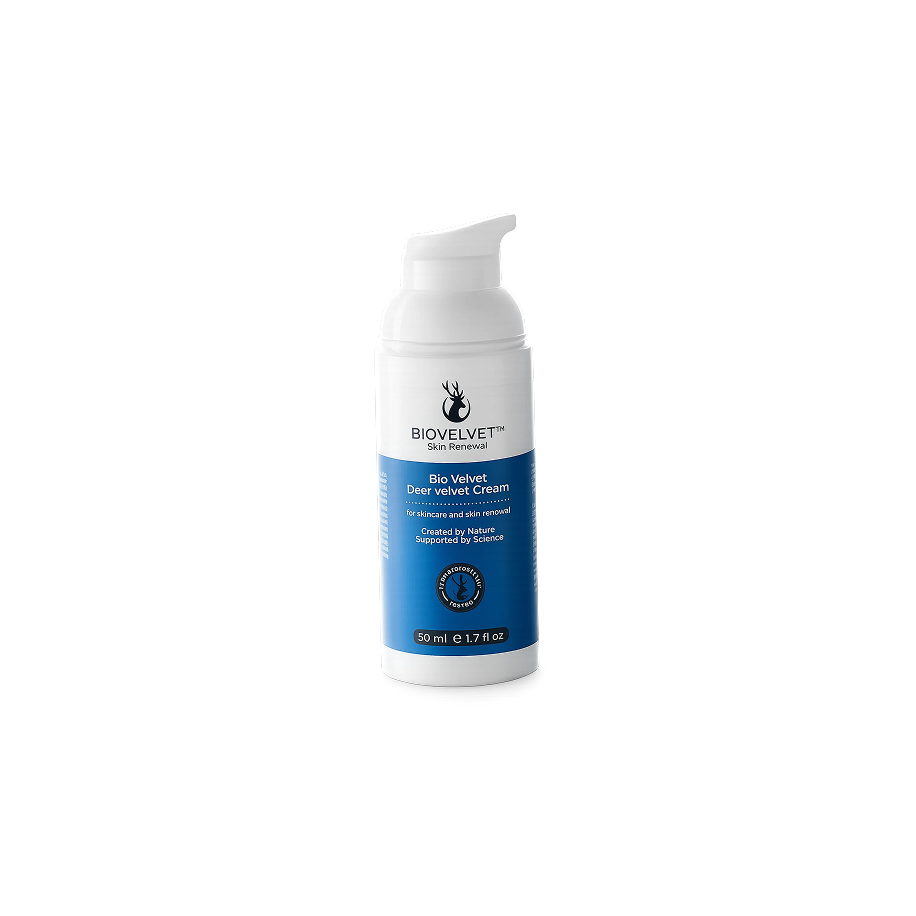
BioVelvet Recovery Cream
The formula behind this story: built by Dr. Zur from deer antler velvet over more than 20 years, then tested on his own skin first. Petroleum-free and lanolin-free. 90-day money-back guarantee.
Who Dr. Doron Zur is and why his background matters
Dr. Doron Zur should be described accurately: he is a veterinary scientist and clinician, not a dermatologist. That distinction matters because it keeps the founder story credible.
His expertise is real, but it sits in veterinary medicine and animal healing rather than human dermatology. According to his public professional background, Dr. Zur trained at the Hebrew University of Jerusalem and completed postgraduate work at the University of Pretoria in small animal medicine and clinical pathology. He has worked as a veterinarian since 1990 and has clinical experience across six continents. That is a long career spent close to wound care, tissue recovery, and the practical realities of healing in living systems.
He also has an integrative medicine background, which helps explain why he was willing to connect observations from animal health to a broader recovery approach. Not in a mystical sense, and not in a "nature knows best" slogan. More in the sense that clinicians who spend decades observing healing tend to notice patterns that other industries miss.
That is the real value of his background. He was not approaching skin from the angle of packaging, trends, or beauty claims. He was approaching it as someone used to asking what tissue does when given the right conditions to repair itself.
The credentials readers should actually know
The most relevant facts about Dr. Zur are simple:
- He is a veterinary scientist with qualifications in veterinary medicine and postgraduate training in small animal medicine and clinical pathology.
- He has worked as a veterinarian since 1990.
- He has clinical experience across multiple countries and six continents.
- He has spent more than 20 years working with deer antler velvet in animal health and research contexts.
Those points are more useful than inflated titles would be. If you are reading the BioVelvet founder story to understand whether there is real substance behind the brand, this is the substance.
The New Zealand moment that changed the direction of his work
The turning point in the BioVelvet founder story came during family travel in New Zealand.
That was where Dr. Zur encountered deer antler velvet in a way that shifted the direction of his work. For many people, deer antler velvet sounds obscure. For a veterinary scientist, it is immediately more interesting than that. Deer antlers are the only mammalian tissue known to fully regenerate each year. They are shed and then regrown, repeatedly, at remarkable speed.
You do not need much scientific language to understand why that would stand out. In mammals, full and repeated tissue regrowth is rare. Seeing an example of it in nature is one thing. Recognising its biological significance is another. That is where Dr. Zur's background mattered. He was in a position to understand that this was not just unusual. It might also contain useful clues about recovery and repair.
This part of the story matters because it came before any finished formula. Before there was BioVelvet Recovery Cream, there was a clinician looking at one of the most unusual healing processes in the mammalian world and asking what made it possible.
Why deer antler velvet drew his attention immediately
In plain terms, deer antler velvet represents a rare case of rapid, repeated tissue regrowth in mammals.
That is what drew Dr. Zur in. Not hype. Not novelty for its own sake. A biological process that was hard to ignore once you understood what you were looking at.
What Dr. Zur saw in the science behind deer antler velvet
As Dr. Zur looked more closely at deer antler velvet, the ingredient began to make sense not just as an observation from nature, but as a tissue with a meaningful biological profile.
Published research on deer antler velvet has explored its role in recovery and wound healing. In accessible terms, the tissue contains natural growth factors, hyaluronic acid, collagen-building components, amino acids, and other compounds associated with repair support. That does not mean every product containing deer antler velvet will perform the same way, and it does not prove every claim made around the ingredient. But it does explain why a researcher or clinician would take it seriously.
It is also important to separate this from the context many readers already know. Deer antler velvet is often discussed online as an oral supplement, especially in sports and performance conversations linked to IGF-1 headlines. That is not the frame here. BioVelvet was built around topical use for skin recovery, which is a different application and a different question.
For Dr. Zur, confidence in the ingredient did not come from a single source. It came from two things working together: published research suggesting repair-supporting potential, and hands-on veterinary experience using deer antler velvet in animal-health settings. That combination shaped the direction of the formula over time.
Topical use versus the supplement confusion
This is the point many readers need clarified early: topical deer antler velvet is not the same context as oral supplements marketed around athletic performance.
Those headlines tend to dominate search results, but they are not what BioVelvet is about. Here, the interest is local, topical application to skin that needs support during recovery.
What the research suggested
Peer-reviewed research on deer antler velvet has pointed toward faster wound healing, support for tissue repair, and reduced scar formation in certain research settings. That is enough to justify serious interest in the ingredient. It is not the same as saying every finished product using it has been independently proven to do the same thing.
That distinction matters. It is also part of what makes this founder story more credible than most ingredient-origin stories. The best version of the story is the restrained one.
How the BioVelvet formula took shape from 2003 onward
From 2003 onward, the work moved from curiosity into formulation.
The formula Dr. Zur developed was built around deer antler velvet extract and then supported with other ingredients chosen for how they would contribute to the overall recovery environment: Dead Sea minerals, tea tree, aloe, seaweed, ginkgo, and allantoin among them. The point was not to assemble a list of fashionable actives. It was to build something coherent.
That is an easy thing for brands to say and a harder thing to do. In practice, formulation often becomes a collection of whatever ingredients are easiest to market. Dr. Zur's stated philosophy was different: the ingredients needed to work together. Each one had a job. The formula was meant to support skin that was compromised, irritated, or slow to recover, rather than simply make healthy skin feel smoother for a few hours.
The formulation philosophy: one plus one becomes three
Dr. Zur has described his thinking in terms of combination and synergy: one plus one becomes three.
In plain language, that means the formula was not designed around one hero ingredient doing all the work while everything else sat in the background. Deer antler velvet was the centre of the formula, but the surrounding ingredients were chosen to help create better conditions for recovery overall. Moisture support, barrier support, soothing support, and a calmer surface environment all matter when skin is trying to repair itself.
What made the formula different
What made the formula unusual was not just the presence of deer antler velvet, but the years of development behind how it was extracted and used in a topical format. The New Zealand sourcing and extraction work formed part of that long development process.
That is the right way to understand the difference: not as legal language or inflated innovation claims, but as a formula built over many years around an ingredient most skincare brands have never seriously worked with.
From self-testing to a wider mission: when the founder used it himself
At some point, a founder story like this has to come back to the original personal problem.
After developing the formula, Dr. Zur used it on himself. According to his public interviews, his seborrhoea improved to the point that he no longer needed the same daily steroid routine. That does not mean the same outcome should be assumed for anyone else, and it should not be generalised into a broad medical claim. It does, however, explain why the project moved forward.
If the product had remained only an interesting formulation idea, the story probably would have ended there. It did not. The founder's own experience gave the work a level of personal conviction that eventually widened into a mission.
It is also worth noting that success in veterinary applications came first. Human skincare emerged later as a logical extension of years spent working with deer antler velvet in animal health.
Why the move from animals to humans was a logical next step
This was not a sudden pivot from pet products to skincare branding.
After years of using deer antler velvet in animal-health work, applying the same recovery logic to human skin was a gradual next step. Dr. Zur's broader ventures, including BioVelPet and Super-Flex, provide context for that path. They show that his interest in deer antler velvet was never limited to one category. The through-line was recovery support.
How Dr. Zur shared the idea publicly
Since 2015, Dr. Zur has lectured globally about his work with deer antler velvet and related recovery applications. That matters because it shows the work developed in public over time rather than appearing suddenly as a polished brand story with no visible history behind it.
The mission behind the brand today
Today, the mission behind BioVelvet is still recognisable in those original terms. Dr. Zur's aim is not to turn deer antler velvet into a trend. It is to share what he learned from one of nature's rare examples of repeated mammalian regrowth with people who have stopped expecting much from topical skincare. That is what gives the brand its shape: a long-built formula, a founder-led point of view, and a calmer idea of what skin support can be.
Ready to try?
BioVelvet Recovery Cream
Where the founder story leads: deer antler velvet paired with hyaluronic acid, aloe vera, and allantoin, built over years and designed to support barrier recovery, not just moisture.
FAQ
Who is Dr. Doron Zur, the founder of BioVelvet?
Dr. Doron Zur is a veterinary scientist and clinician who has worked as a veterinarian since 1990. He trained at the Hebrew University of Jerusalem and completed postgraduate work at the University of Pretoria in small animal medicine and clinical pathology. His background is in veterinary medicine and animal healing, not dermatology, which is why the most accurate way to understand BioVelvet is as a founder-led recovery formula shaped by long experience with deer antler velvet rather than by beauty-industry marketing.
How did Dr. Doron Zur discover deer antler velvet for skin recovery?
Dr. Zur encountered deer antler velvet during family travel in New Zealand. As a veterinary scientist, he immediately recognised the significance of antlers being the only mammalian tissue known to fully regenerate each year. That observation led to deeper work with deer antler velvet, including research review and practical use in animal-health settings, which eventually informed the development of a topical recovery formula for skin.
Did BioVelvet begin as a veterinary product before becoming a skincare brand?
In practical terms, yes. Dr. Zur's work with deer antler velvet began in veterinary and animal-health contexts, and related ventures such as BioVelPet and Super-Flex reflect that wider background. Human skincare came later as a gradual extension of the same recovery-focused logic, not as a separate idea created from scratch.