Bovine vs deer antler collagen
Two different collagen stories.
Bovine collagen is a mainstream oral supplement. Deer antler velvet is a different kind of ingredient, used mostly in topical skin recovery. Here is how the two actually compare.
Shop BioVelvet →When people search for bovine vs deer antler collagen, they are usually comparing two things that are not actually direct equivalents.
Bovine collagen is most often sold as an oral collagen supplement. It usually comes as powders, capsules, or drink mixes aimed at skin, hair, nails, joints, or general connective tissue support.
Deer antler collagen, by contrast, is rarely a mainstream supplement category in the same way. More often, people are really asking about deer antler velvet and whether ingredients from that tissue make sense in wellness products or topical recovery formulas.
That matters because not all collagen products work the same way simply because the word collagen appears on the label. Source, format, and intended use all change the comparison.
Why this comparison gets muddled so easily
This comparison gets confusing because supplement marketing and skincare marketing often borrow the same language.
A collagen powder may promise support from within. A cream may mention collagen on the label but really be built around moisture, barrier support, or skin recovery. Deer antler velvet adds another layer of confusion because it is not simply "another animal collagen source." Interest in it comes from the biology of the tissue itself, not just from collagen alone.
So if you are comparing bovine vs deer antler collagen, the first thing to ask is: am I looking for a daily collagen supplement, or am I looking for a skin recovery ingredient?
A short answer before the deeper comparison
The short answer is this: bovine collagen is the more established and mainstream option for oral collagen use. Deer antler collagen is less common and makes more sense when understood as part of the wider deer antler velvet matrix, especially in recovery-focused skincare rather than as a direct one-to-one substitute for bovine collagen supplements.
Source, structure, and composition: how bovine and deer antler collagen actually differ
Bovine collagen usually comes from cow hide, bone, or cartilage. Deer antler-derived collagen comes from antler tissue, often during the velvet stage, when the antler is still soft, nutrient-rich, and actively growing.
That difference in source matters because the tissues are not biologically identical.
Bovine collagen is usually discussed in terms of collagen type and peptide content. Deer antler tissue draws interest for a broader reason: it is part of one of the fastest-growing regenerative structures in mammals. That is why deer antler velvet is often discussed in recovery contexts rather than just in beauty-supplement language.
What bovine collagen usually contains
Bovine collagen is most commonly associated with type I and type III collagen. These are the forms most often linked with skin, connective tissue, and structural support.
In consumer products, bovine collagen is usually sold in hydrolyzed collagen peptide form. That simply means the collagen has been broken down into smaller pieces so it can be used more easily in powders, capsules, and functional beverages.
This is why bovine collagen is so common in everyday supplement shopping. It is familiar, widely available, and relatively easy to compare across brands.
What deer antler tissue contains beyond collagen
Deer antler velvet is different. It is usually described as containing a wider biological mix that includes collagen precursors, amino acids, naturally occurring growth-supporting compounds, and other building materials associated with fast tissue growth.
The important point here is not to treat deer antler velvet as if it were just another collagen bucket. In most deer antler products, the interest is in the whole matrix, not collagen in isolation.
That broader profile is what makes deer antler velvet stand out in recovery-focused skincare. The ingredient story is not just about adding collagen. It is about supporting the skin's own recovery environment. BioVelvet Recovery Cream is one example built this way: its formula is a New Zealand deer antler velvet extract, not a collagen ingredient, paired with Dead Sea minerals, aloe vera, and jojoba seed oil.
Deer Antler Velvet Extract · Dead Sea Minerals · Aloe Vera · Jojoba Seed Oil
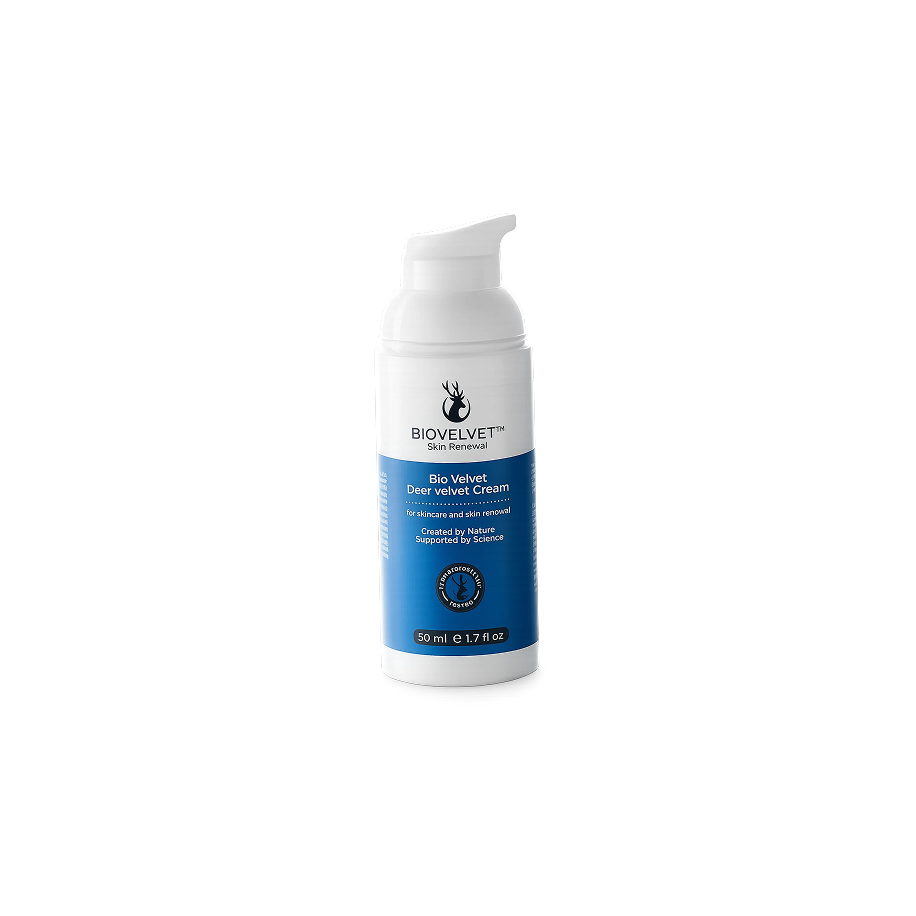
BioVelvet Recovery Cream
Topical recovery support built around deer antler velvet extract, not collagen. Petroleum-free and lanolin-free, backed by a 90-day money-back guarantee.
Why deer antler collagen is not a simple swap for bovine collagen
This is the part many comparison articles miss.
Bovine collagen is usually marketed for general collagen intake. Deer antler ingredients are usually marketed for recovery-focused or regenerative-interest use cases.
So even when both are discussed under the word collagen, they are often being chosen for different reasons. One is the mainstream supplement option. The other is better understood through the unusual biology of deer antler velvet.
Uses and benefits: what each one may support, and where the evidence is stronger
Most readers care about the same practical questions: skin, joints, recovery, scars, and general connective tissue support.
Broadly, bovine collagen has stronger mainstream recognition in the supplement category. Deer antler research is more niche and often looks at deer antler velvet or antler-derived compounds, not direct head-to-head collagen comparisons against bovine sources.
It also helps to separate oral supplement expectations from topical skincare expectations. Those are not the same category, and they should not be treated as if they are.
For skin support
Bovine collagen is commonly used as an oral supplement for general skin support. In that context, people usually want help with skin feel, elasticity, or age-related changes over time.
Deer antler velvet is different. In skincare, it is more often discussed in topical recovery terms, especially where the wider ingredient profile matters more than the collagen label itself.
That distinction is important. Topical recovery formulas built around deer antler velvet are not trying to be another generic beauty cream. They are usually aimed at skin that feels compromised, irritated, or slow to recover.
For joints, connective tissue, and active lifestyles
If your main goal is a standard collagen supplement for joints, connective tissue, or general daily use, bovine collagen is usually the more straightforward choice.
It is the format most consumers already understand. It is easier to compare by serving size, collagen type, and price.
Deer antler products, by contrast, are more often chosen by people interested in broader recovery narratives. That may appeal to active adults, but it is still not the same thing as choosing a standard collagen supplement.
For wound healing, scarring, and skin recovery
This is where deer antler interest tends to be different.
Research on deer antler tissue has drawn attention because of its unusual regenerative biology. Published studies on deer antler velvet and related tissue suggest recovery-related potential, which is one reason it appears in topical skin recovery discussions.
But this needs a clear limit: research on deer antler tissue is not the same as proof for every finished product that contains it.
That is the way to read the category. The biology is interesting. The recovery positioning makes sense. But the finished formula still matters, and readers should not confuse ingredient-level interest with guaranteed product outcomes.
BioVelvet vs bovine collagen supplements at a glance
BioVelvet
- Topical skin recovery, not oral
- Applied directly where skin needs it
- Built around deer antler velvet extract, not collagen
- Petroleum-free and lanolin-free
Bovine collagen
- Familiar oral supplement format
- Broad availability, easy to compare
- Not built for topical use
- Usually type I and type III collagen
Bottom line: bovine collagen is a daily oral supplement. BioVelvet is a topical recovery cream built around deer antler velvet, not collagen, so the two are not really competing for the same use case.
Limitations, safety, and ethical questions readers should ask before choosing either one
Neither bovine nor deer antler collagen is a cure-all. And neither should be presented as a replacement for proper medical care when skin or joint problems are severe, worsening, or affecting daily life.
The more unusual the ingredient sounds, the more important it is to stay grounded in what it can and cannot realistically do.
What neither option can realistically do
Neither bovine collagen nor deer antler-derived products can:
- erase a deep scar
- replace prescription treatment for severe eczema, psoriasis, or inflammatory skin disease
- heal a serious burn
- fix major joint pathology on their own
- substitute for medical evaluation when symptoms are persistent or worsening
They may support broader skin or connective tissue goals. They are not a stand-in for treatment when treatment is needed.
Safety and quality checklist
Whether you are considering bovine collagen or a deer antler product, ask a few basic questions first:
- Is the source clearly disclosed?
- Does the brand explain what the product is actually designed to help with?
- Is there any third-party testing or manufacturing transparency?
- If it is topical, have you patch tested it first?
- If you are pregnant, breastfeeding, managing a chronic condition, or taking regular medication, have you checked with a clinician first?
One common concern around deer antler products is whether they are the same as banned sports supplements. This is where context matters. Oral supplement discussions and topical deer antler velvet use are different categories. They should not be treated as interchangeable.
The ethics question: how deer antler sourcing differs from cattle-derived collagen
Ethics matter here, and readers are right to ask.
Cattle-derived collagen raises the usual sourcing questions around animal agriculture, traceability, and manufacturing standards.
Deer antler velvet raises a different question: how was it harvested, and under what animal welfare standards?
That is why vague reassurance is not enough. Brands should be able to explain sourcing clearly. Readers should look for transparent sourcing practices, regulated harvesting standards where relevant, and plain answers rather than marketing language.
How to choose between bovine vs deer antler collagen based on your actual goal
The best choice depends less on which ingredient sounds more impressive and more on what you are actually trying to do.
If you want a familiar collagen supplement, bovine usually makes more sense. If you are interested in topical skin recovery and specifically in the biology of deer antler velvet, that is a different path entirely.
Cost matters too. Deer antler products are often priced differently because they sit in a more niche category and are usually sold around a broader recovery story, not just simple collagen grams per scoop.
Choose bovine collagen if your priority is mainstream daily supplementation
Bovine collagen is usually the better fit if you want:
- a familiar oral supplement format
- broad availability
- simpler comparison shopping
- a standard collagen category for skin or joint support
This suits readers who want an everyday product and do not need the comparison to do more than that.
Choose deer antler-derived skincare if your priority is skin recovery rather than generic collagen marketing
Deer antler-derived skincare makes more sense if your interest is not generic collagen at all, but topical recovery support.
This is the better fit for readers dealing with compromised, irritated, or slow-to-recover skin and who are specifically interested in formulas built around deer antler velvet rather than standard beauty-supplement claims.
That does not automatically make it "better." It just means it belongs in a different category.
Questions to ask before you buy any collagen product
Before buying any collagen product, ask:
- What form is it in: powder, capsule, cream, or recovery cream?
- What is the source?
- What is it actually designed to help with?
- Is the claim based on the ingredient category, or on the finished product itself?
- Am I looking for daily supplementation, or for topical skin recovery support?
Those questions will usually make the decision clearer than the label alone.
Ready to try?
BioVelvet Recovery Cream
Built around deer antler velvet extract, not collagen, for skin that is compromised, irritated, or slow to recover. Petroleum-free and lanolin-free, with a 90-day money-back guarantee.
FAQ
Is deer antler collagen better than bovine collagen?
Not in a simple across-the-board way. Bovine collagen is the more established option for oral supplementation. Deer antler-derived ingredients make more sense in recovery-focused contexts, especially when the interest is in deer antler velvet rather than collagen alone.
What is the difference between bovine collagen and deer antler velvet?
Bovine collagen is usually a collagen supplement sourced from cow tissue, often type I and III collagen in hydrolyzed form. Deer antler velvet is a biologically distinct antler tissue that contains a broader mix of compounds beyond collagen and is often discussed in recovery-focused skincare or specialty wellness products. BioVelvet Recovery Cream, for example, uses New Zealand deer antler velvet extract as its hero ingredient rather than collagen.
Can deer antler collagen replace bovine collagen supplements?
Usually not as a direct substitute. They are commonly sold in different formats and for different reasons. If your goal is a mainstream oral collagen supplement, bovine is usually the simpler option. If your goal is topical skin recovery support, deer antler velvet may be more relevant.
Is deer antler collagen good for skin?
It depends on the format and the product. Deer antler velvet is often of interest in skincare because of the broader tissue matrix and its recovery-focused profile, not because it is simply another collagen label. That is different from taking bovine collagen orally for general skin support.
Are deer antler collagen products ethical and safe?
They can be, but the key is sourcing transparency and product quality. Look for clear sourcing information, manufacturing standards, and direct answers about how the deer antler material was obtained. For topical products, patch testing is sensible. For oral products, and for use during pregnancy, breastfeeding, or complex medical conditions, it is best to check with a clinician first.