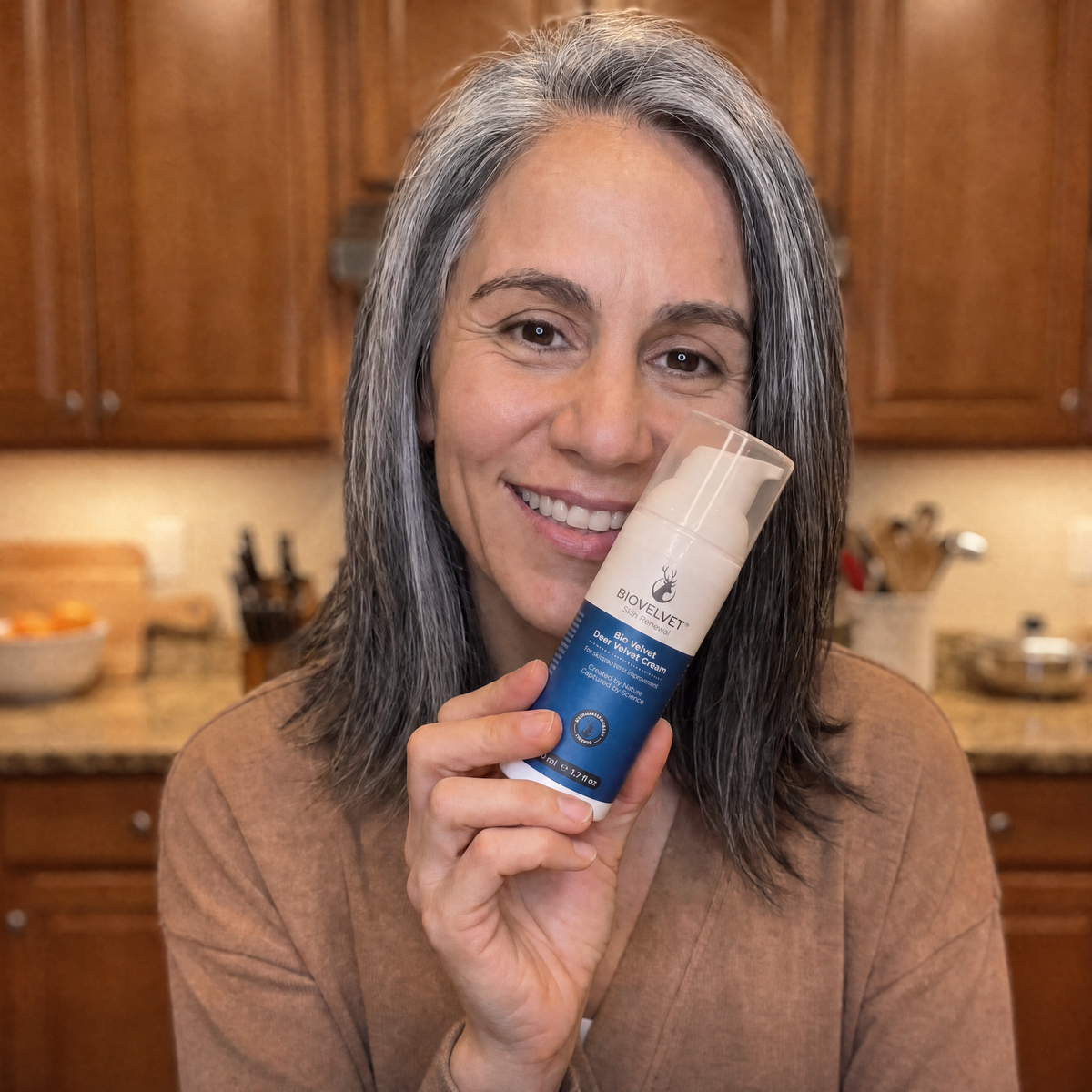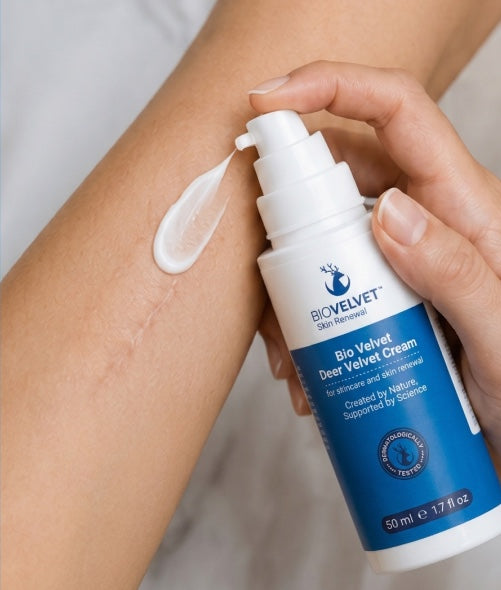
Sensitive skin
The best cream for sensitive skin, by skin type.
What actually calms reactive skin, which ingredients help, and where a recovery cream fits.
Shop BioVelvet →What sensitive skin actually means
Sensitive skin is common, but it is not always simple. For one person, it means stinging after washing their face. For another, it means redness after trying a new product. For someone else, it is tight, flaky skin that seems to react to weather, stress, fragrance, or almost anything at all.
That is part of what makes choosing a cream for sensitive skin frustrating. "Sensitive" is not one single skin type. It is often a sign that the skin is struggling with irritation, moisture loss, or a damaged barrier.
In plain terms, sensitive skin is often less about your skin being naturally fragile and more about your skin being easier to upset right now. Triggers vary. Heat, cold, over-cleansing, exfoliating acids, retinoids, fragrance, and even hard water can all play a part.
It is also worth separating everyday sensitivity from skin conditions that may need proper diagnosis. Eczema, rosacea, allergic contact reactions, seborrheic dermatitis, and psoriasis can all look like "sensitive skin" at first. A cream may help support comfort and recovery, but it cannot tell you which condition you have.
Common signs your skin is reacting, not just dry
Dry skin and sensitive skin often overlap, but they do not feel exactly the same.
Skin that is simply dry may feel rough or tight. Sensitive skin often feels uncomfortable in a more active way. It may sting after cleansing, burn when you apply products, flush easily, or develop red patches after using something new. Some people describe it as skin that "reacts to everything."
If your skin feels hot, prickly, or unpredictable, that usually points to irritation, not just a lack of moisture.
Why your skin barrier matters
Your skin barrier is the outer layer that helps keep moisture in and irritants out. When it is doing its job well, skin tends to feel calmer and more resilient. When it is disrupted, water escapes more easily and everyday products can start to sting.
That is why a good face cream for sensitive skin is usually less about chasing trends and more about helping the barrier recover. Often, the best results come from using fewer products, choosing gentler formulas, and giving the skin time to settle.
When sensitive skin may be a skin condition
Sometimes sensitivity is temporary. Sometimes it is part of a bigger pattern.
| Condition | What it usually looks like |
|---|---|
| Eczema | Itchy, dry, inflamed patches that flare on and off |
| Rosacea | Ongoing redness, flushing, sometimes bumps or visible blood vessels |
| Seborrheic dermatitis | Redness and flaking in oily areas: sides of the nose, brows, scalp |
| Psoriasis | Thicker, more defined red patches with scaling |
If symptoms are persistent, worsening, or hard to control with a simple routine, diagnosis matters more than trying one more cream.
Living Collagen · 50+ Bio-Active Compounds · Aloe Vera · Dead Sea Minerals
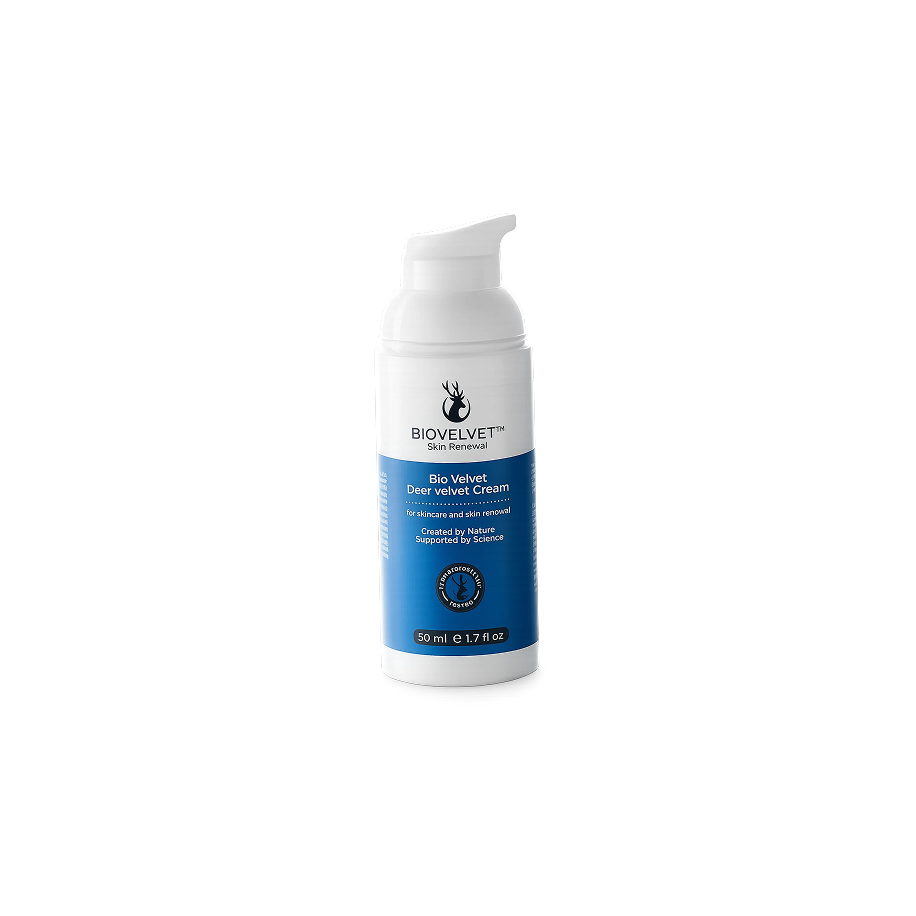
BioVelvet Recovery Cream
Petroleum-free recovery support for dry, reactive, easily-upset skin, backed by a 90-day money-back guarantee.
What to look for in a cream for sensitive skin
A useful cream for sensitive skin usually does three things well: avoids common triggers, gives enough moisture, and supports barrier recovery.
That matters more than whether a product is expensive, viral, or described as the best face cream for sensitive skin. Readers often search for dermatologist recommended skin care products for sensitive skin because they want something reliable, not exciting. That instinct is usually right.
Texture matters too. Some people do well with a lighter face cream for sensitive skin, especially if they are mildly reactive or acne-prone. Others need a richer cream, especially when skin is dry, peeling, over-exfoliated, or recovering from too many actives.
Ingredients that usually help
These ingredients tend to be useful in everyday sensitive-skin care.
| Ingredient | What it does |
|---|---|
| Ceramides | Support the skin barrier and reduce moisture loss |
| Glycerin | Draws water into the skin and keeps it comfortable |
| Hyaluronic acid | Helps hold moisture in the skin |
| Petrolatum | Forms a protective seal that reduces water loss on very dry or cracked areas |
| Shea butter | Adds richness and supports a dry, weakened barrier |
| Aloe vera | Helps calm irritated skin |
| Colloidal oatmeal | Widely used for dry, itchy, reactive skin |
| Niacinamide (moderate strength) | Supports the barrier and reduces redness; very high strengths can bother some people |
| Squalane | A simple, lightweight emollient that often suits reactive skin |
You do not need all of these in one product. In fact, simpler is often better.
Ingredients that often cause problems
Sensitive skin usually does worse with ingredients that are either irritating by nature or just add unnecessary risk.
Common troublemakers include fragrance, essential oils, harsh exfoliating acids, high-strength retinoids, drying alcohols, and overly complicated formulas packed with actives.
This does not mean every one of these ingredients is always bad for every person. It means reactive skin is less forgiving, especially when the barrier is already stressed.
How to read the label without overthinking it
Keep it simple.
Look for products labeled fragrance-free rather than just "unscented." Look for barrier-supporting ingredients like ceramides, glycerin, petrolatum, or hyaluronic acid. If possible, choose creams made for dry, reactive, or sensitive skin rather than trend-driven products built around strong actives.
A short ingredient list is not always better, but when your skin is easily irritated, fewer moving parts often helps.
The sensitive-skin creams worth knowing
These are creams built around barrier support and low-trigger formulas rather than hype. None is right for everyone; the notes below are about matching a formula to your kind of sensitivity.
| Cream | Type | Key ingredients | Best suited to |
|---|---|---|---|
| CeraVe Daily Moisturizing Lotion | Lightweight lotion | 3 ceramides, hyaluronic acid | An easy daily basic |
| BioVelvet Recovery Cream | Recovery cream | Deer antler velvet, hyaluronic acid, aloe, Dead Sea minerals | Reactive, stressed, recovering skin |
| Cetaphil Moisturizing Cream | Rich cream | Glycerin, niacinamide, panthenol | Very dry sensitive skin |
| Aestura Atobarrier365 | Barrier cream | Ceramide + lipid complex | Eczema-prone skin |
| Skinfix Barrier+ | Barrier cream | Triple lipids, peptides | Reactive skin wanting more support |
| Kiehl's Ultra Facial Medicated Recovery | Medicated cream | 1% colloidal oatmeal | Eczema and psoriasis flares |
| SkinCeuticals Triple Lipid Restore | Lipid cream | 2% ceramides / 4% cholesterol / 2% fatty acids | Mature sensitive skin (premium) |
| DerMend Fragile Skin | Cream | Hyaluronic acid, niacinamide, ceramides | Thin, fragile, easily bruised skin |

Best simple daily barrier basic
CeraVe Daily Moisturizing Lotion
Lightweight lotion, three ceramides + hyaluronic acid
The dermatologist-developed default for normal-to-dry sensitive skin. Fragrance-free, lightweight, with three essential ceramides, hyaluronic acid, and a slow-release delivery system. At around $15 it is the low-risk everyday option, though a lotion may not be rich enough for very dry or cracked skin.

Best for reactive, recovering skin
BioVelvet Recovery Cream
Recovery cream, deer antler velvet + hyaluronic acid
A petroleum-free, lanolin-free recovery cream made for skin that is tight, stressed, and quick to react. It pairs skin-identical support (sodium hyaluronate, glycerin, allantoin, bisabolol) with deer antler velvet, aloe vera, and Dead Sea minerals to calm the surface while the barrier settles, and it is backed by a 90-day money-back guarantee. If your skin runs oily-sensitive, a lighter lotion may suit you better.

Best rich cream for very dry sensitive skin
Cetaphil Moisturizing Cream
Rich cream, glycerin + vitamins B3 & B5
A thick, fragrance-free classic for dry to very dry, sensitive skin. Glycerin plus niacinamide and panthenol, dermatologist-trusted and accepted by the National Eczema Association. Best when skin needs sealing richness rather than a light finish.

Best ceramide cream for eczema-prone skin
Aestura Atobarrier365 Cream
Barrier cream, ceramide + lipid complex
A Korean dermatology-counter favorite built around a ceramide-and-lipid complex to reinforce a compromised barrier. Made specifically for dry and sensitive, eczema-prone skin, with a comfortable, non-greasy finish.

Best lipid-peptide barrier cream
Skinfix Barrier+ Triple Lipid-Peptide Cream
Barrier cream, triple lipids + peptides
Fragrance-free and dermatologist-tested, built on a triple-lipid blend plus peptides to rebuild the barrier while it recovers. A richer, more targeted option for reactive skin that wants more than a basic ceramide cream.

Best for eczema flares
Kiehl's Ultra Facial Medicated Recovery Cream
Medicated cream, 1% colloidal oatmeal
An unscented, 1% colloidal-oatmeal skin protectant accepted by the National Eczema Association and recognized by the National Psoriasis Foundation. Formulated for flare-prone skin that needs relief from dryness and irritation, at around $45.

Best for mature sensitive skin
SkinCeuticals Triple Lipid Restore 2:4:2
Lipid cream, 2% ceramides / 4% cholesterol / 2% fatty acids
A premium cream that refills the skin's own lipid ratio (2:4:2). Rich and restorative for mature, dry, sensitive skin, though at around $155 it is by far the priciest option here.

Best for thin, fragile skin
DerMend Fragile Skin Moisturizing Formula
Cream, hyaluronic acid + niacinamide + ceramides
Made for thin, fragile, mature skin, with hyaluronic acid, niacinamide, and multiple ceramides plus low-level retinol and glycolic acid. Dermatologist recommended, aimed at skin that bruises and tears easily.
How to choose the right cream based on your kind of sensitivity
The right cream depends on what your sensitivity actually looks like. Redness-prone skin, acne-prone skin, eczema-prone skin, and mature fragile skin do not always need the same texture or the same formula.
This is also why products in the barrier-repair category, including creams people compare with a CeraVe sensitive skin moisturizer, work very well for some people and not for others. The category makes sense. Individual response still varies.
For dry, tight, or flaky sensitive skin
Look for a richer cream with both water-binding ingredients and protective support. In practice, that means humectants like glycerin or hyaluronic acid plus something more sealing, such as petrolatum, shea butter, or squalane.
Water-based gels can feel soothing at first, but if your barrier is damaged, they are often not enough on their own.
For redness-prone or rosacea-leaning skin
Keep the formula calm and the routine minimal. Fragrance-free products matter here. So does avoiding over-exfoliation, heat triggers, and strong actives when the skin is already reactive.
For this group, the best cream is often the one that does the least while still keeping the skin comfortable.
For acne-prone but sensitive skin
A lot of people with acne-prone skin avoid cream because they are afraid it will clog pores. But irritated skin still needs moisture. In fact, overly dry skin often tolerates acne treatments worse.
A lighter, simple cream usually works best here. Look for hydration and barrier support without a very greasy finish.
For eczema-prone or chronically reactive skin
A cream can help with comfort, dryness, barrier maintenance, and the recovery period between flares. It can also reduce some of the day-to-day tightness and irritation that keep skin feeling unstable.
But severe eczema still may need prescription treatment. The same is true for ongoing inflammation that disrupts sleep, cracks deeply, or does not settle with basic care.
For mature or thinning sensitive skin
As skin ages, it often becomes drier and more reactive at the same time. That is one reason aggressive anti-aging routines can backfire.
For mature sensitive skin, barrier-first creams are often more helpful than piling on multiple active products. Comfort, resilience, and steady moisture usually matter more than intensity.
How to use a face cream for sensitive skin without making irritation worse
Choosing the right cream matters. So does how you use it.
A lot of sensitive skin gets worse not because the product is wrong, but because the routine is too crowded, too active, or changed too often.
A simple routine for sensitive skin
A calm baseline routine usually looks like this:
Morning
- Gentle cleanser, or rinse with lukewarm water if cleansing feels drying
- Cream for sensitive skin
- SPF
Evening
- Gentle cleanser
- Cream for sensitive skin
If your skin barrier feels compromised, pause exfoliating acids, retinoids, and other actives until things settle.
How much to apply and when
Cream usually works best applied to slightly damp skin after cleansing. That helps hold water in the skin rather than just sitting on top of dryness.
Use enough to leave skin comfortable, not greasy. Some people need it once or twice a day. Others need more frequent application in cold weather, dry indoor air, or during a reactive period.
Patch testing and introducing new products slowly
Patch testing is worth the effort if your skin reacts easily.
Apply a small amount behind the ear, along the jawline, or on a small area of the neck for several days before using it all over. If you are very reactive, give it a full week.
Just as important: introduce one new product at a time. If you start three "gentle" products together and your skin flares, you will not know which one caused it.
What not to combine during a flare
When skin is stinging, burning, or visibly inflamed, keep the routine boring.
Pause the scrubs, strong acids, retinoids, and heavily fragranced products.
That is not giving up on skincare. It is letting the skin calm down before asking it to tolerate more.
What a cream for sensitive skin can realistically do
The right cream can make a real difference. It can reduce tightness, improve comfort, support the barrier, and help skin become less reactive over time.
What it cannot do is solve every cause of irritation by itself.
What improvement can look like
Real improvement often looks modest but meaningful:
- Less stinging after washing
- Fewer dry or flaky patches
- Calmer-looking skin
- Better tolerance of a simple routine
- Less feeling that everything burns
Some people feel relief quickly. Barrier recovery usually takes more than one application. Consistent use matters more than dramatic short-term results.
What a cream cannot do
A cream cannot:
- Diagnose a rash
- Replace prescription treatment for severe eczema or rosacea
- Treat a skin infection
- Remove an allergen or trigger that is still present
- Fix ongoing irritation caused by an overly aggressive routine unless that routine changes too
Those limits matter. They are not a reason to ignore skincare. They are a reason to expect the right thing from it.
When to see a dermatologist
It is worth getting medical advice if you have:
- Worsening redness
- Persistent burning
- Swollen, cracked, oozing, or crusted skin
- Repeated reactions to multiple products
- A suspected allergy
- Symptoms that do not improve after simplifying your routine
If a problem keeps returning, spreads, or feels more like a rash than ordinary sensitivity, diagnosis is often the most useful next step.
Ready to try?
BioVelvet Recovery Cream
Built for skin that is dry, tight, and quick to react. Deer antler velvet paired with hyaluronic acid, aloe vera, and vitamin E, barrier support that helps reactive skin settle.
FAQ
What is the best cream for sensitive skin?
The best cream for sensitive skin is usually one that is fragrance-free, simple, and built to support the skin barrier. Look for ingredients like ceramides, glycerin, hyaluronic acid, petrolatum, shea butter, or squalane. The best choice depends on whether your skin is mildly reactive, very dry, acne-prone, or eczema-prone.
How do I choose a face cream for sensitive skin?
Choose a face cream for sensitive skin by focusing on low-trigger formulas rather than hype. Look for fragrance-free products with barrier-supporting ingredients, and match the texture to your needs. A light cream may be enough for mild sensitivity, while dry or damaged skin often needs something richer.
Can I use moisturizer if my skin burns or stings?
Yes, but choose carefully. A simple cream can help if the stinging is coming from dryness or a damaged barrier. If nearly everything burns, stop strong actives and use a very basic routine. If burning is severe, persistent, or getting worse, it is worth checking with a dermatologist.
What ingredients should I avoid in a cream for sensitive skin?
Common ingredients to avoid include fragrance, essential oils, harsh exfoliating acids, high-strength retinoids, drying alcohols, and formulas packed with too many active ingredients. Sensitive skin usually does better with simpler products.
Is CeraVe good for sensitive skin?
For many people, yes. CeraVe sits in the barrier-repair category and includes ingredients that often help sensitive skin, such as ceramides and humectants. But no single brand works for everyone. Some people need a lighter texture, others need a richer cream, and some react to products that most people tolerate well.
When should sensitive skin be checked by a dermatologist?
Sensitive skin should be checked by a dermatologist if redness is worsening, burning is persistent, skin becomes swollen or oozing, reactions keep happening, or a simplified routine does not help. It is also worth getting checked if you think you may have eczema, rosacea, psoriasis, or an allergy.
What is deer antler velvet extract used for?
Deer antler velvet extract is the hero ingredient in BioVelvet Recovery Cream, a petroleum-free, lanolin-free formula that also includes Dead Sea minerals, aloe vera, sodium hyaluronate, glycerin, allantoin, and bisabolol.