Topical steroid withdrawal
Steroid withdrawal, and where skincare fits.
What topical steroid withdrawal is, why it needs a clinician to diagnose, and where a steroid-free recovery cream may support skin once symptoms are under medical care.
Shop BioVelvet →What Is Topical Steroid Withdrawal?
Topical steroid withdrawal is the term used when skin becomes intensely red, irritated, painful, or unstable after stopping topical steroid creams, especially after long or repeated use. You may also see it called TSW or topical steroid addiction/withdrawal.
In simple terms: topical steroid withdrawal is a pattern of worsening skin symptoms after stopping steroid creams, usually after extended use, that may go beyond an ordinary return of the original rash.
That is the core answer most readers are looking for. The difficult part is that this pattern is not always easy to separate from eczema coming back, irritation from other products, or a skin infection.
This is why the topic remains controversial. It is discussed in medical literature, and many patients describe a very recognisable pattern of symptoms. At the same time, diagnosis can be difficult because there is no single test for it, and the symptoms can overlap with the condition that led to steroid use in the first place.
Concern about topical steroid withdrawal is most often raised by people with eczema, especially those with long-term topical steroid exposure, frequent stop-start use, or repeated treatment on sensitive areas like the face.
Why the topic feels confusing
A few things make TSW especially hard to navigate:
- Online communities often use different language from clinicians
- Older medical terms are still floating around
- Not every doctor sees the condition the same way
- People often arrive at the topic after years of frustrating eczema treatment
So readers are left trying to sort through Reddit posts, personal stories, medical uncertainty, and their own very real symptoms.
Topical steroid withdrawal vs a returning eczema flare
This is the central problem: not every rebound rash after stopping steroids is topical steroid withdrawal, and not every worsening case is "just eczema."
An eczema flare usually means the underlying condition is active again. Topical steroid withdrawal may involve a broader change in how the skin behaves after long exposure to steroids, with symptoms that can feel more severe, more widespread, or more burning than the person is used to.
The distinction matters because the next steps may be different. It also means self-diagnosis has limits.
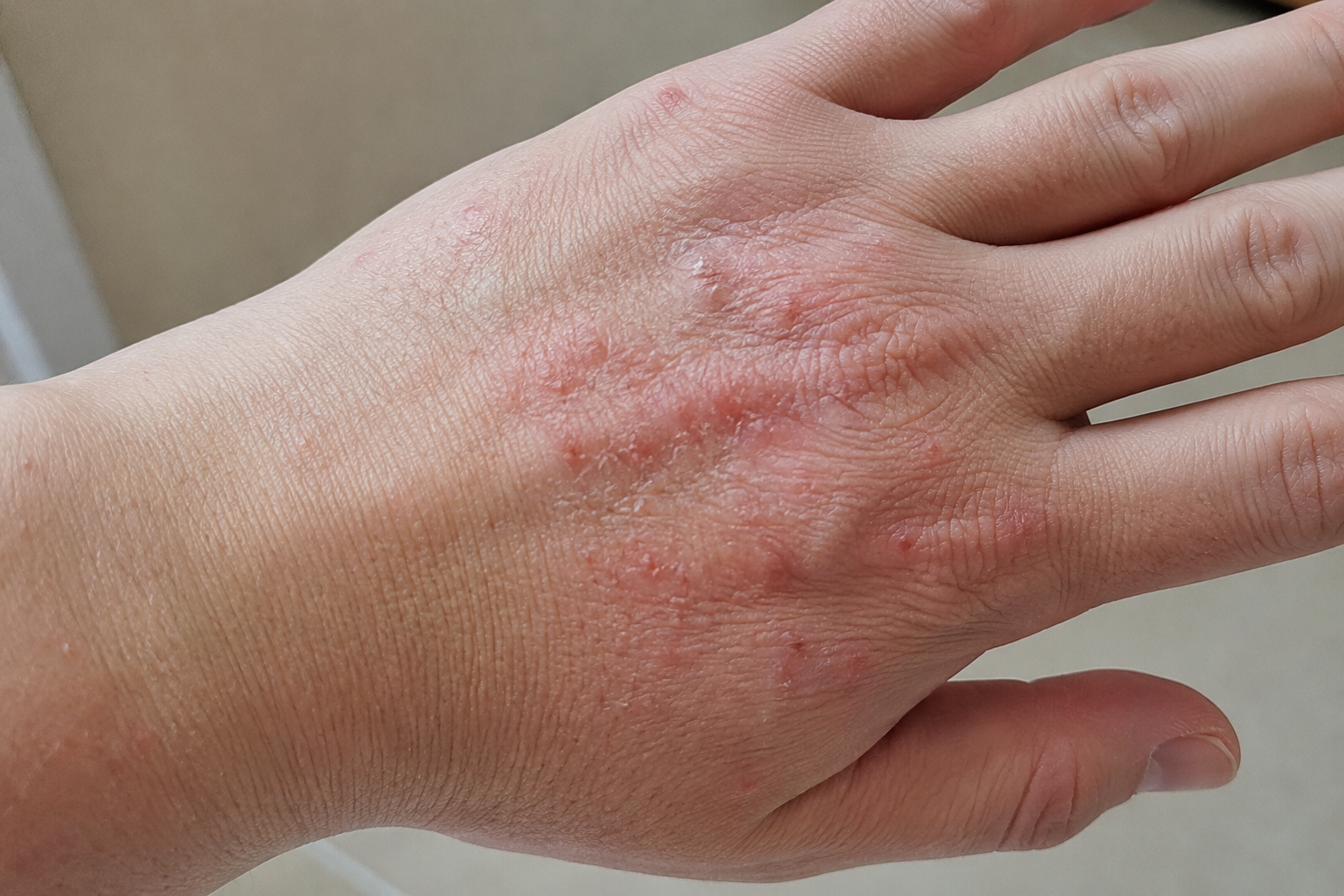
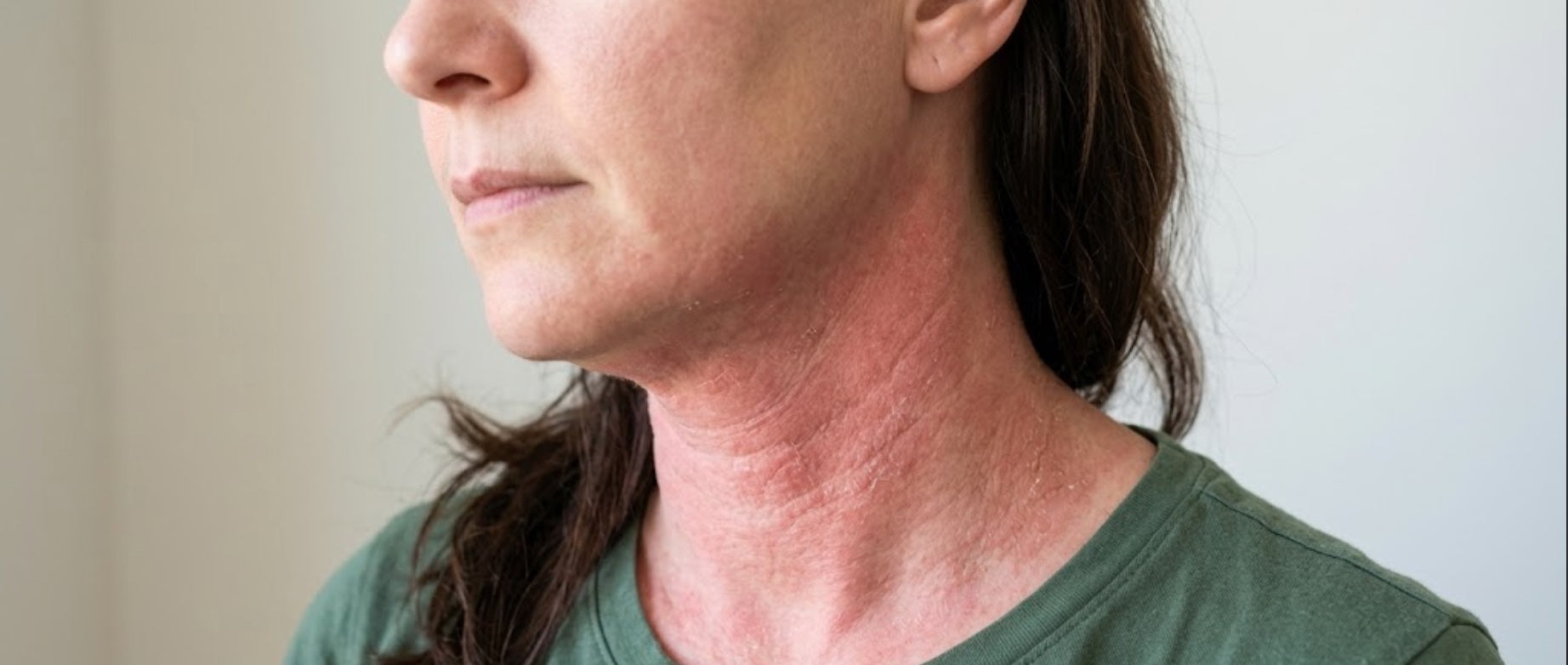
What Topical Steroid Withdrawal Looks Like
People describing topical steroid withdrawal often report a cluster of symptoms rather than one single sign. Commonly reported symptoms include:
- Burning or stinging
- Bright redness
- Increased skin sensitivity
- Swelling
- Flaking or peeling
- Oozing
- Intense itching
- Skin that feels hot, tight, or painful
A common pattern is worsening after stopping steroid creams, especially if there had been repeated short-term improvement while using them. Some people also report that symptoms spread beyond the original treatment area or cycle between brief improvement and another rebound.
Symptom patterns can look different depending on skin tone, body area, and the condition being treated. Redness may be easier to see on lighter skin, while on darker skin the same inflammation may appear deeper brown, purple, grey, or as increased warmth, swelling, and tenderness rather than obvious pink-red colour.
The emotional toll can be severe. Sleep disruption, distress, embarrassment, social withdrawal, and fear about what to use next are all common.
Common signs and symptoms
Readers often search for the first signs of TSW because they are trying to work out whether they are seeing withdrawal, ordinary steroid side effects, or untreated eczema.
A few rough distinctions can help:
- Untreated eczema often brings itch, dryness, inflammation, and a return in familiar areas
- Ordinary steroid side effects may include thinning skin, easy bruising, or visible tiny blood vessels after long use
- Topical steroid withdrawal is more often described as burning, marked redness, heat, swelling, and a rebound pattern after stopping
These categories can overlap, which is why history matters as much as appearance.
How long does topical steroid withdrawal last?
There is no fixed timeline. Some people improve over weeks. Others describe months of uneven recovery. Improvement is often not linear.
It is more accurate to say this: topical steroid withdrawal can last a variable amount of time, and recovery often comes in cycles rather than a straight line.
Any source promising a guaranteed recovery window is oversimplifying a complicated problem.
What makes symptoms worse
Several things commonly make already fragile skin feel worse:
- Heat
- Friction from clothing or scratching
- Harsh skincare
- Over-washing
- Stress
- Abrupt routine changes
When skin is already reactive, "doing more" often backfires.
Why Topical Steroid Withdrawal Happens and Who Is Most at Risk
The simplest explanation is that long or repeated steroid use can change how the skin responds over time, especially when stronger steroids are used often, for extended periods, or on delicate skin.
That does not mean everyone who uses steroid creams will develop topical steroid withdrawal. Many people use them safely and effectively under proper guidance. Risk factors raise concern; they do not guarantee a problem.
The main risk factors discussed in the literature include:
- Higher-potency steroid use
- Frequent application
- Long duration of use
- Use on the face or genital area
- Use under occlusion
- Repeated stop-start cycles
- Ongoing use without a clear follow-up plan
Topical steroid withdrawal is most often discussed after steroid use for eczema, but similar concerns can arise in other inflammatory skin conditions too.
Which steroid use patterns raise concern
The patterns that tend to raise the most concern are:
- Stronger steroid creams used repeatedly
- Daily or near-daily use over long periods
- Treatment on sensitive areas like the face
- Using more than prescribed during difficult flares
- Stopping and restarting often because symptoms keep rebounding
In general, stronger products, more frequent application, and more delicate body sites increase concern over time.
Topical steroid withdrawal in children and adults
Parents are often understandably worried about long-term steroid use in children, especially on thin or sensitive skin. Adults may worry after years of managing eczema with repeated prescriptions.
In both groups, the key point is the same: any major change in a steroid treatment plan should involve a clinician. Children especially should not have treatment stopped or changed based only on social media advice.
Topical steroid withdrawal reddit and social media: what gets shared, and what gets missed
Many people first hear about topical steroid withdrawal on Reddit, TikTok, or condition forums. That makes sense. Patients often go looking for answers when they feel dismissed or confused.
These spaces can be helpful for recognising patterns, practical coping ideas, and emotional support. But they also have limits:
- Stories are anecdotal
- Severe cases are more likely to be posted
- Other diagnoses may be missed
- Infection and allergic reactions can be mistaken for TSW
- Advice may not be safe for children or complex cases
Social media can help people ask better questions. It should not replace medical assessment.
How Topical Steroid Withdrawal Is Diagnosed and What Else It Could Be
There is no single lab test that confirms topical steroid withdrawal. Diagnosis is based on history, symptom pattern, timing, and ruling out other causes.
Clinicians may need to distinguish TSW from:
- Uncontrolled eczema
- Contact dermatitis
- Skin infection
- Psoriasis
- Rosacea
- Irritation from skincare products
This matters because severe or widespread symptoms need clinical support, not self-diagnosis alone.
Questions a clinician may ask
A clinician will usually want to know:
- Which steroid was used
- How strong it was
- How often it was applied
- How long it was used
- Which body areas were treated
- Whether symptoms changed after stopping
- Whether the rash spread beyond the original area
- Whether there is pain, burning, oozing, or signs of infection
- What other products are being used on the skin
These details are often more useful than photos alone.
When to seek urgent medical care
Seek urgent care if you have:
- Fever
- Pus
- Rapidly worsening swelling
- Signs of dehydration
- Severe pain
- Skin infection
- Symptoms affecting large areas of the body
- Major sleep loss or mental health deterioration
At that point, home care is not enough.
Topical Steroid Withdrawal Treatment: What Helps, What Does Not, and What to Expect
If you are searching for topical steroid withdrawal treatment, the most useful answer is this: treatment usually involves medical supervision, symptom control, infection management where needed, gentle skin care, and follow-up tailored to severity and diagnostic certainty.
There is no single universal cure. Treatment varies depending on how severe symptoms are, whether infection is present, and whether clinicians believe the picture fits TSW, uncontrolled eczema, or another condition.
Supportive care often includes:
- Bland moisturising
- Reducing triggers
- Cooling measures
- Simplifying the routine
- Patch testing any new product
- Managing infection if present
- Close medical follow-up
Over-the-counter products may support comfort and barrier recovery, but they do not replace medical care for severe symptoms.
Can you treat topical steroid withdrawal naturally?
Some people search for how to treat topical steroid withdrawal naturally. A careful answer is important here.
Some non-prescription steps may help with comfort:
- Keeping skincare very simple
- Avoiding fragrance and harsh actives
- Using bland barrier-supporting products
- Reducing friction and heat
- Watching for triggers
But "natural" does not automatically mean safer, gentler, or sufficient. Essential oils, strong plant extracts, and DIY remedies can make fragile skin worse. Severe symptoms still need proper medical assessment.
What a supportive skincare routine can look like
For very reactive skin, a simple routine is usually best:
- Gentle cleanse only if needed
- Recovery cream or barrier-supporting moisturizer
- No acids, retinoids, scrubs, or fragranced products
- Daily SPF on exposed skin
This is not the time for experimentation. Fragile skin usually responds better to less.
Where a recovery cream may fit
Once the skin is in a maintenance or barrier-repair phase, some people look for support beyond basic moisturising. A recovery cream may fit here as a secondary step, especially if skin feels persistently dry, reactive, or slow to settle. For someone specifically trying to reduce steroid exposure, a steroid-free recovery cream is a reasonable category to look for in this phase.
The key is scope. A recovery cream may support comfort and barrier recovery. It is not a replacement for medical care in severe, painful, infected, or widespread symptoms.
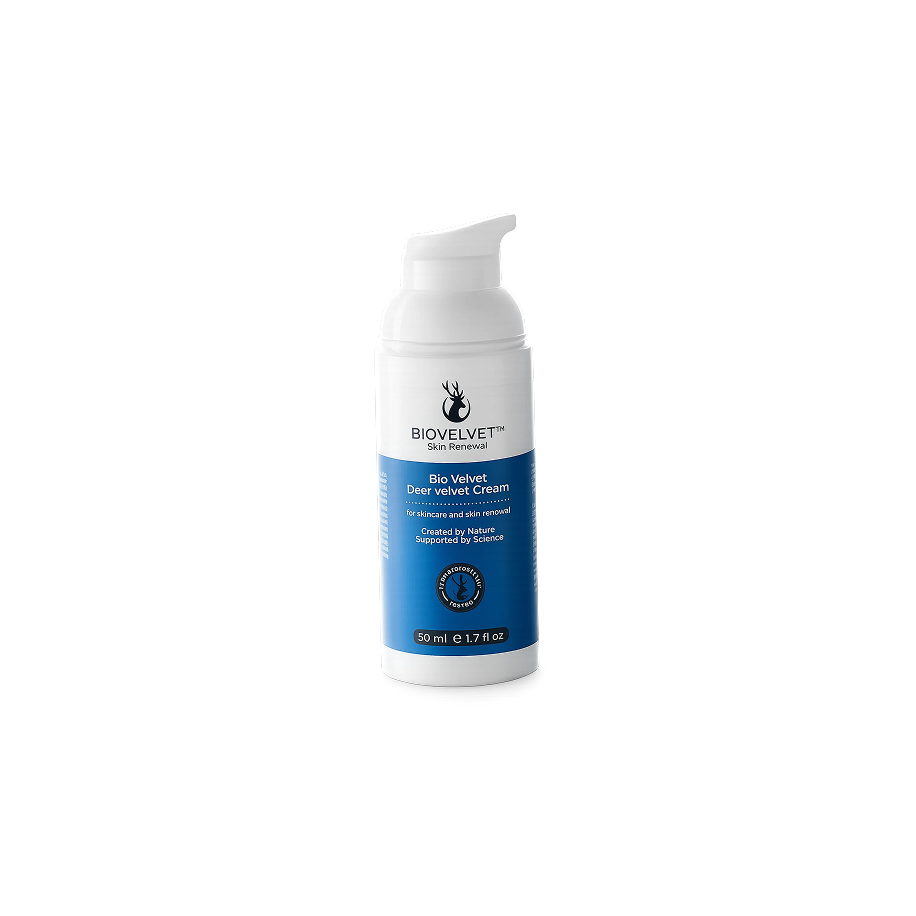
Deer Antler Velvet · Hyaluronic Acid · Aloe Vera · Allantoin
BioVelvet Recovery Cream
For dry, fragile, or healing skin that needs barrier support. Steroid-free, from $54.87 on subscription. 90-day money-back guarantee.
How to Avoid Topical Steroid Withdrawal and Make Safer Long-Term Decisions
If you want to know how to avoid topical steroid withdrawal, the goal is not to avoid all steroids forever. It is to use them thoughtfully: the right strength, for the right duration, with a clear plan and proper follow-up.
Safer long-term decisions usually include:
- Avoiding unsupervised long-term use
- Being careful with sensitive areas like the face and genitals
- Asking about step-down plans
- Discussing steroid-sparing options
- Using maintenance care between flares
- Reviewing any pattern of repeated rebound
Many people use topical steroids safely. The problem is usually not a single short course. It is prolonged, repeated, or poorly supervised use.
Questions to ask before using or refilling a steroid cream
Useful questions include:
- How long should I use this?
- Where should I not use it?
- When should I step down or stop?
- What should I use between flares?
- What side effects should I watch for?
- What if the rash comes back quickly after stopping?
- Is this the right strength for this body area?
- Do I need a follow-up review?
These are practical questions, not overreactions.
What topical steroids can and cannot do
Topical steroids can be very effective short-term anti-inflammatory tools. For many people, they reduce redness, itch, and flare intensity quickly.
What they cannot do is act as a complete long-term skin recovery strategy on their own. Chronic conditions like eczema usually also need trigger management, maintenance care, barrier support, and a plan for what happens between flares.
FAQ
What are the first signs of topical steroid withdrawal?
Common early signs people report include burning, bright redness, heat, swelling, unusual sensitivity, and worsening skin shortly after reducing or stopping steroid creams. The challenge is that these can overlap with eczema or irritation, so history matters.
How do you know if it is topical steroid withdrawal or eczema coming back?
There is no single sign that proves it. Clinicians look at the history of steroid use, where the cream was applied, how long it was used, what happened after stopping, and whether symptoms seem broader, more burning, or more rebound-like than a typical flare.
What is the best topical steroid withdrawal treatment?
There is no one best treatment for everyone. The usual approach is medical supervision, ruling out infection or another diagnosis, controlling symptoms, keeping skincare simple, and adjusting the plan based on severity and response.
How long does topical steroid withdrawal last?
It varies widely. Some people improve over weeks, while others describe a longer, uneven course. Recovery is often not linear, so fixed promises are not reliable.
How can you avoid topical steroid withdrawal?
Use topical steroids with a clear plan: the right strength, the right duration, careful use on sensitive areas, follow-up with a clinician, and maintenance care between flares. Avoid unsupervised long-term or repeated stop-start use.
Can topical steroid withdrawal be treated naturally?
Some simple non-prescription steps may support comfort, like bland moisturising, trigger reduction, and avoiding harsh products. But natural does not mean safer, and severe or widespread symptoms still need medical care.
BioVelvet Recovery Cream
Built for skin that is dry, fragile, or still settling after a flare. Deer antler velvet paired with hyaluronic acid, aloe vera, vitamin E, and allantoin, designed to support barrier recovery, not just add moisture for an hour. BioVelvet is steroid-free, petroleum-free, and lanolin-free.
This article was written from the point of view of BioVelvet, the home brand of biovelvet.com. Competitor products are included for informational comparison only. No paid placement from any competitor brand. Products were evaluated on declared formula, declared positioning, brand-published data, and declared guarantees. Prices reflect brand or retailer pricing at time of writing and may move. Read the ingredient list on the box you actually buy, because formulas get reformulated.