
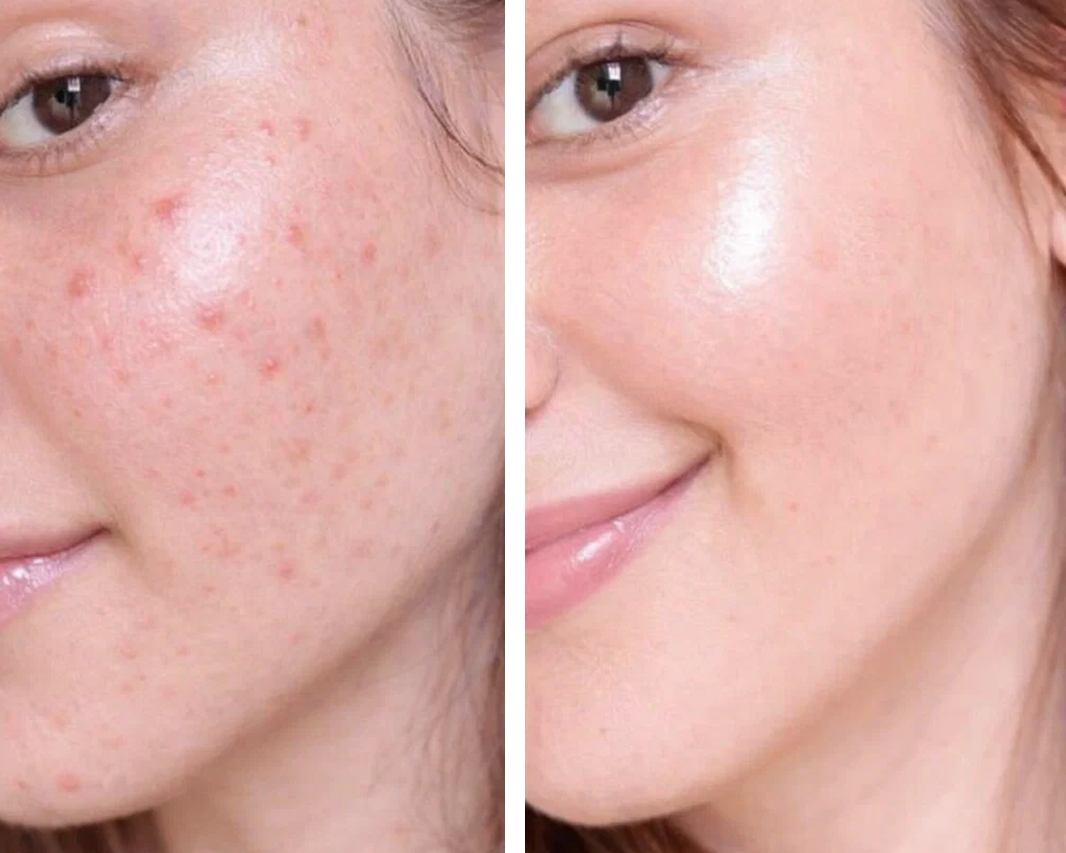

For acne-prone skin
Calmer Skin After Acne
Breakouts and acne actives leave skin dry and raw. This deer antler velvet recovery cream calms the irritation and helps rebuild your barrier.
What acne scar treatment can realistically do
Acne scar treatment is confusing for a simple reason: people often use the word scar to describe several different things. Some marks are true scars. Some are dark spots left behind after a breakout. Some are lingering red marks that slowly fade with time. Those are not the same problem, so they do not respond to the same treatment.
The best acne scar treatment depends on four things: what kind of mark you have, how deep it is, your skin tone, and whether acne is still active. That matters more than trend-driven product lists or before-and-after photos without context.
It also helps to set the ceiling early. Topical skincare can help with discoloration, hydration, and mild uneven texture. It can support skin that is recovering. But deeper indented scars often need in-office treatment if you want meaningful change.
Short on time? Jump straight to the products, compared and reviewed →
Acne scars vs dark spots: know what you’re treating
True acne scars involve a change in skin structure. The skin may look indented, uneven, or raised because the healing process left behind too little or too much tissue.
Post-acne dark spots are different. These are flat marks left after inflammation settles. In some people they look brown or grey-brown. In others they look pink or red for a while before fading. They can be stubborn, but they are not the same as a deep scar.
This distinction matters because dark spots often respond well to sunscreen and ingredients like retinoids, azelaic acid, niacinamide, and vitamin C. A deep indented scar usually will not.
Why there is no single best treatment for scars on face
A lot of people search for the best treatment for scars on face as if there is one answer. There usually isn’t. Ice pick scars, rolling scars, boxcar scars, raised scars, and flat dark marks all behave differently.
The real goal is not finding the most talked-about treatment. It is matching the treatment to the scar pattern in front of you. That is why two people with “acne scars” can need completely different plans.
Living Collagen · 50+ Bio-Active Compounds · Aloe Vera · Dead Sea Minerals
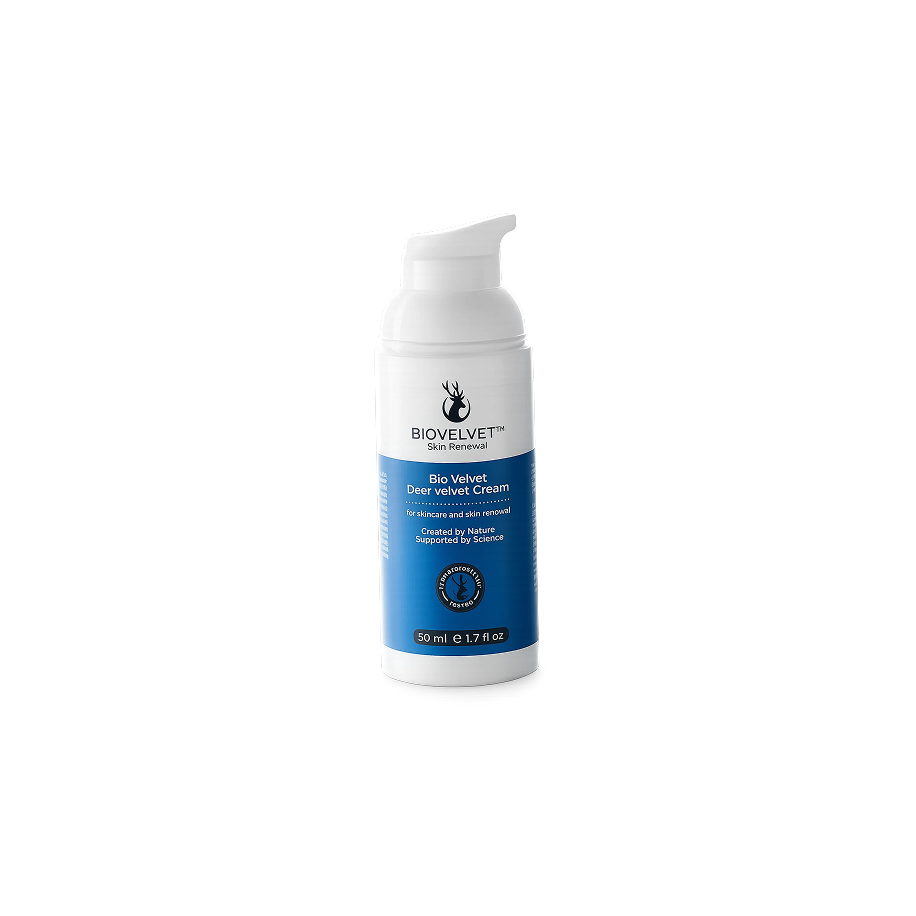
BioVelvet Recovery Cream
Recovery support for skin that is stressed, post-breakout, or healing after a treatment. Petroleum-free, 90-day money-back guarantee.
Types of acne scars and how to identify them
Before thinking about treatment, it helps to know what kind of scarring you are looking at. Most people have more than one type, which is one reason combination plans are so common.
If your scarring is deep, widespread, or hard to identify, a dermatologist’s assessment is often worth it. It can save time, money, and frustration.
Atrophic scars: ice pick, boxcar, and rolling scars
Atrophic scars are indented scars. These are the most common type after acne.
Ice pick scars are narrow and deep. They look like tiny punctures in the skin and are often harder to treat with surface-only approaches.
Boxcar scars are wider with more defined edges. They can look round or oval and often show up on the cheeks and temples.
Rolling scars create a wavy or uneven look because the skin is tethered down below the surface.
These different shapes matter because they often respond differently. Rolling scars may improve with subcision. Boxcar scars may respond to microneedling, certain peels, or resurfacing treatments depending on depth. Ice pick scars often need more targeted approaches than a cream or mild peel can provide.
Raised scars and darker marks after acne
Not all acne scars are indented. Some are raised.
Hypertrophic scars stay within the boundary of the original breakout area but sit higher than the surrounding skin. Keloids extend beyond the original area and are more likely in people who are already prone to them.
These raised scars are treated differently from indented scars. A treatment that helps rolling scars may do nothing for a raised scar, and in some cases could make things worse if used without the right guidance.
Then there are flat dark marks after acne. These are common, especially in medium to deeper skin tones, and they are often mistaken for scars. They may fade with time and respond to topical skincare, but they are not true structural scars.
At-home acne scar treatment: what helps and what has limits
At home, the basics matter more than people want to hear. Daily sunscreen, gentle cleansing, consistent moisturising, and patience give any scar-focused routine its best chance to work.
For post-acne marks and mild uneven texture, some ingredients can help:
- retinoids for skin renewal and texture support
- azelaic acid for discoloration and redness support
- niacinamide for barrier support and uneven tone
- vitamin C for antioxidant support and brightening
- exfoliating acids for surface texture and marks, when tolerated
If you are searching for the best cream for acne scars and dark spots or the best acne scar removal products, the straightforward answer is that products can help some concerns more than others. They are usually most useful for marks, mild texture, and overall skin recovery. They do not remove deep pitted scars.
The routine that gives topical products the best chance to work
A simple routine usually works better than an overloaded one.
Morning
- Gentle cleanser
- Scar-focused or mark-focused serum if using one
- Moisturiser
- Broad-spectrum sunscreen
Evening
- Gentle cleanser
- Retinoid, azelaic acid, or another treatment if tolerated
- Moisturiser or recovery cream
SPF is non-negotiable if you are trying to improve acne marks. Without it, dark spots can linger longer and new discoloration can develop more easily. Healing skin is more vulnerable to sun exposure than people realise.
What to expect from creams, serums, and silicone-based options
Creams and serums can improve hydration, support the skin barrier, and help fade discoloration over time. They may also improve the look of newer or more superficial marks.
Silicone-based options are more often discussed for raised scars than for classic indented acne scarring. They can be useful in the right context, but they are not a universal acne scar fix.
What topicals generally cannot do is erase deep indented scars. If the skin structure has changed in a meaningful way, topical care alone usually has limited reach.
That said, recovery support still matters. Skin tends to do better with consistent barrier care than with constant switching between harsh actives. A recovery cream can be useful when skin is dry, irritated, or healing after stronger treatments. BioVelvet Recovery Cream fits here as a recovery step rather than a primary acne treatment product. Its formula is built around deer antler velvet, alongside soothing and moisture-supporting ingredients like aloe vera, hyaluronic acid, vitamin E, and allantoin. For skin that feels overworked, post-breakout, or procedure-stressed, that kind of support can be more useful than adding yet another active.
How to remove acne scars naturally in a week: the straightforward answer
You cannot remove true acne scars naturally in a week.
Flat red or brown marks can start to look a little better with time, sun protection, and the right skincare. But actual acne scars do not disappear in seven days, and they do not disappear because of lemon juice, scrubs, toothpaste, or other DIY remedies people pass around online.
Those approaches often irritate the skin, worsen discoloration, and delay recovery.
Acne Scar & Skin-Recovery Products Compared at a Glance
These products do very different jobs. Silicone gels (biocorneum, Avene, Skinuva) target raised and healing scars, retinol and repair serums target marks and texture, the acne products control active breakouts so new marks do not form, and BioVelvet is a recovery step for stressed skin. Deer antler velvet extract is BioVelvet's hero ingredient. Match the product to your actual concern, not the loudest claim. If you are dealing with surgical, C-section, or burn scars rather than acne, our best scar cream guide covers those.
| Product | Format & size | Key actives | Best for | Price |
|---|---|---|---|---|
| biocorneum SiliSilk Advanced Scar Gel | Silicone gel + SPF, 20-30 g | Medical silicone (polysiloxanes), SPF 30 | Raised/healing scars with sun exposure | ~$30-60 |
| BioVelvet Recovery Cream | Recovery cream, 1.7 oz (50 ml) | Deer antler velvet, hyaluronic acid, aloe vera, vitamin E, allantoin | Post-procedure, post-breakout recovery | $54.87 |
| Skinuva Scar SPF | Scar cream + SPF, 15-30 ml | Selective growth-factor peptides, SPF 30 | Daytime scar care with SPF | ~$54 |
| RescueMD Skin DNA Repair Complex | Serum, 15 ml | Growth-factor and repair complex | Post-acne marks, overall skin repair | ~$120 |
| Mederma Scar Serum | Serum, 0.34 oz (10 ml) | Cepalin (onion bulb extract), hydrators | Older marks, easy drugstore access | ~$30 |
| CeraVe Resurfacing Retinol Serum | Serum, 1 fl oz (30 ml) | Encapsulated retinol, niacinamide, 3 ceramides | Post-acne marks and uneven texture | ~$20 |
| Avene Cicalfate Scar Gel | Scar gel, 30 ml | Silicone-based gel, Avene thermal spring water | Healing scars on sensitive skin | ~$30 |
| Neutrogena Stubborn Acne Spot Drying Lotion | Drying lotion, 1 oz | Salicylic acid | Drying down active spots | ~$10 |
| Cetaphil Gentle Clear Mattifying Acne Moisturizer | Acne moisturizer, 3 oz | Salicylic acid, niacinamide, hydrators | Daily acne-prone hydration | ~$15 |
Living Collagen · 50+ Bio-Active Compounds · Aloe Vera · Dead Sea Minerals
BioVelvet Recovery Cream
Recovery support for skin that is stressed, post-breakout, or healing after a treatment. Petroleum-free, 90-day money-back guarantee.
The Picks, Reviewed by What Each One Actually Does
A quick run through each option, what it does well, and where it falls short.
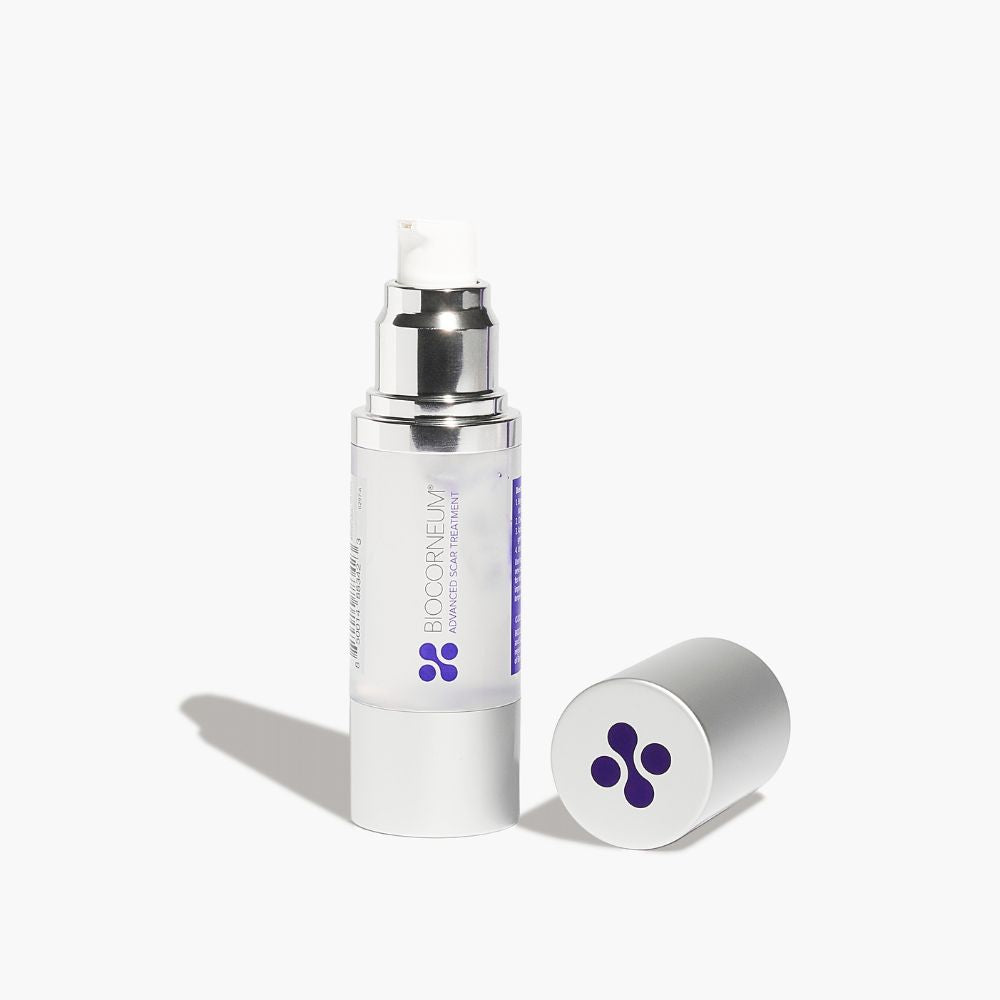
biocorneum SiliSilk Advanced Scar Gel
A medical-grade silicone scar gel with built-in SPF 30. Silicone is the most evidence-supported topical for raised and healing scars, and the SPF matters because UV keeps marks darker for longer. Best on closed, healing skin rather than active breakouts.
- Best for: raised or healing scars on sun-exposed skin
- Key: medical silicone + SPF 30
- Watch-out: for closed skin only, not active acne
BioVelvet Recovery Cream
A recovery cream made to help stressed, post-breakout, or post-treatment skin feel calmer, more comfortable, and better supported while it settles. It is built around deer antler velvet alongside hyaluronic acid, aloe vera, vitamin E, and allantoin to nourish skin and strengthen the barrier - a soothing daily layer that works hand in hand with your acne or scar routine. Petroleum-free, fragrance-free, and backed by a 90-day money-back guarantee.
- Best for: barrier support and recovery between or after treatments
- Petroleum-free, fragrance-free
- Pairs with: your main acne or scar treatment, as the soothing recovery layer
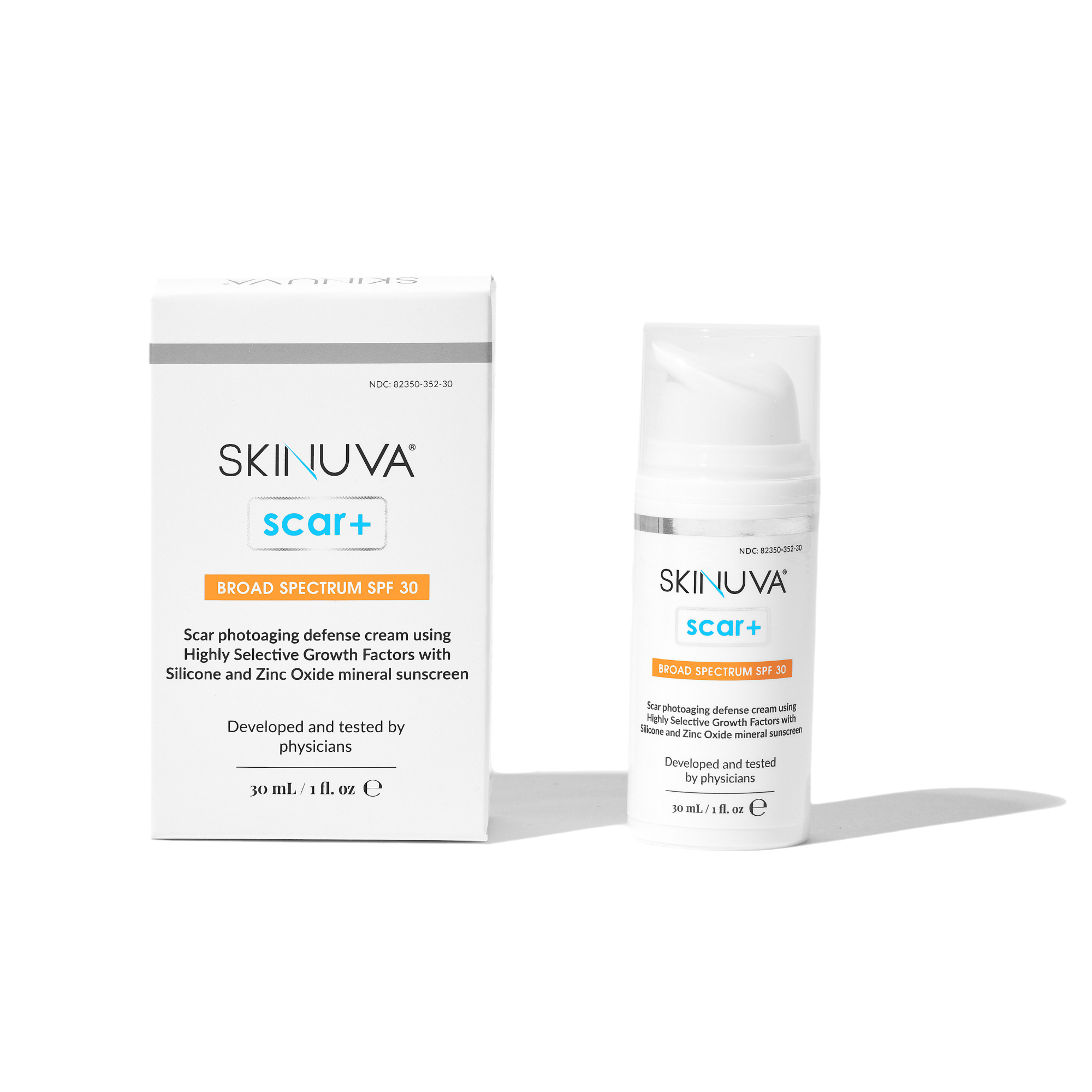
Skinuva Scar SPF
A peptide-based scar cream that pairs scar-focused actives with SPF 30, so daytime scar care and sun protection happen in one step. Positioned for newer scars where consistent daily use and UV protection matter most.
- Best for: daytime scar care that needs SPF built in
- Key: growth-factor peptides + SPF 30
- Watch-out: premium price; for closed, healing skin
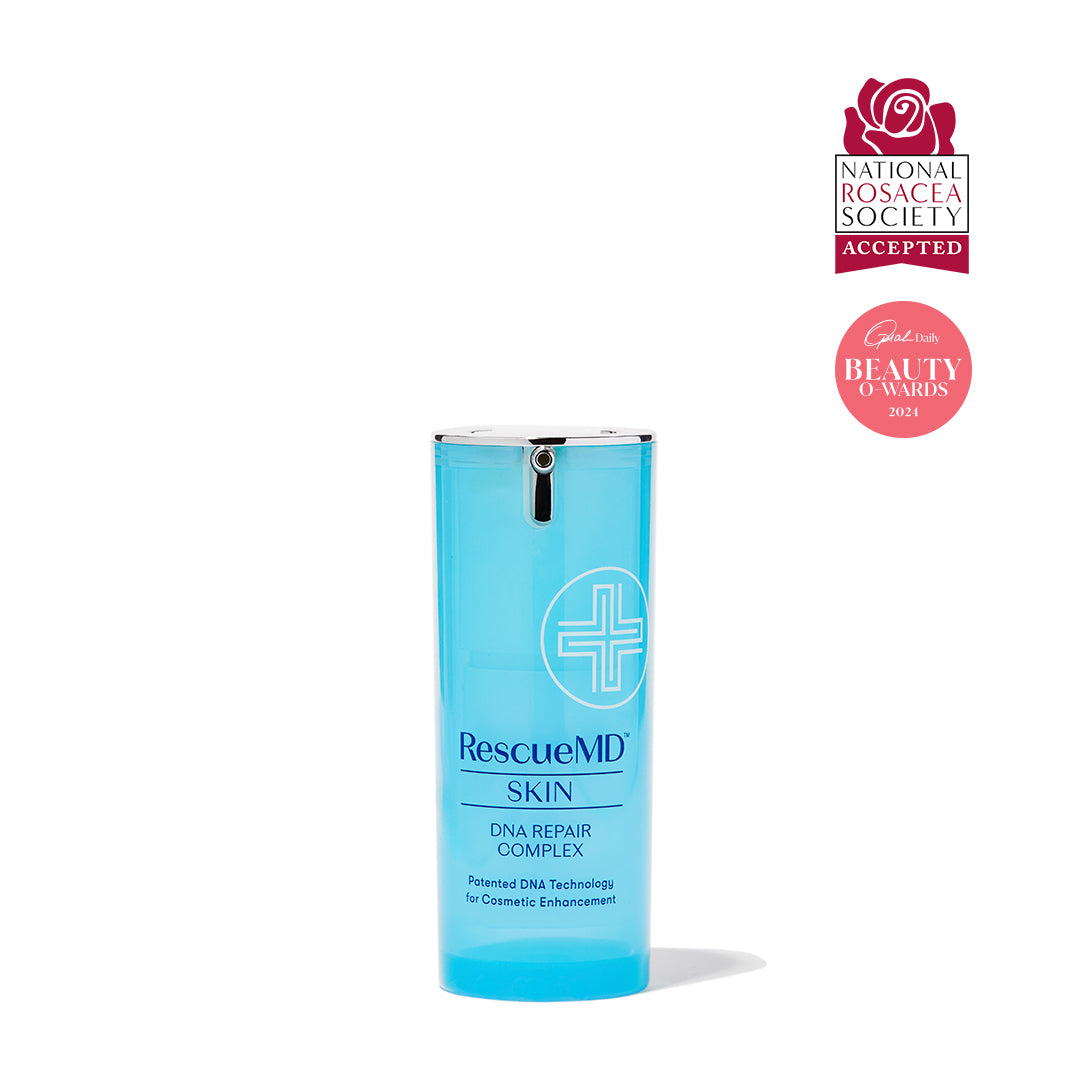
RescueMD Skin DNA Repair Complex
A premium repair serum aimed at post-acne marks, tone, and overall skin recovery rather than deep indented scars. A higher-investment option for people focused on marks and texture who want a single repair-focused serum.
- Best for: post-acne marks and overall repair
- Key: growth factors and repair actives
- Watch-out: premium price; limited reach on deep pitted scars
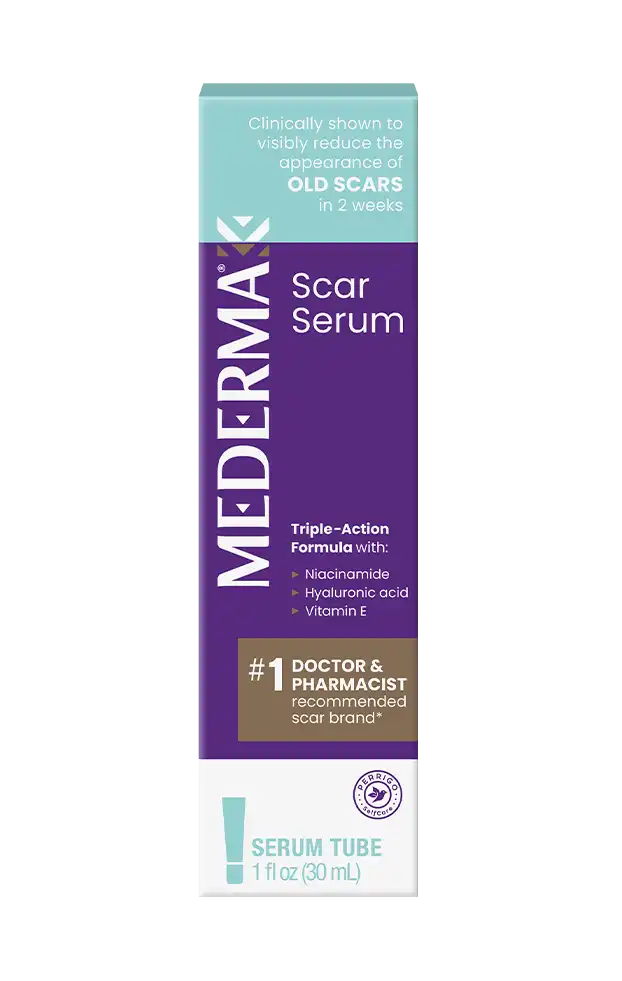
Mederma Scar Serum
A lightweight serum built around Mederma's Cepalin botanical, aimed at older marks and surface texture. The evidence for botanical scar gels is more modest than silicone, but Mederma is easy to find and a low-friction once-daily option. We break it down against BioVelvet in our Mederma vs BioVelvet comparison.
- Best for: older, flatter marks on a budget
- Key: Cepalin onion-bulb extract
- Watch-out: modest evidence vs silicone; not for deep scars
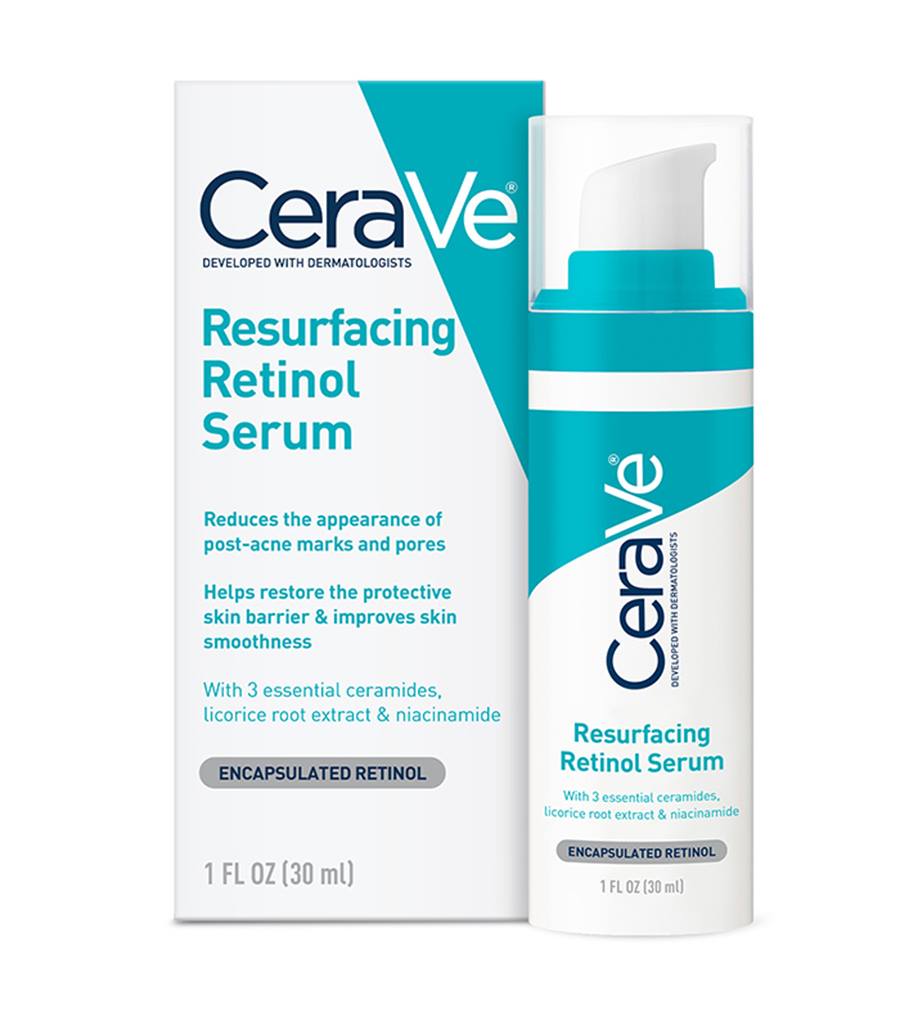
CeraVe Resurfacing Retinol Serum
An accessible retinol serum with ceramides and niacinamide, aimed at post-acne marks and uneven texture. Retinoids are one of the more established ingredients for marks and surface texture, and the ceramide base helps offset some of the irritation.
- Best for: post-acne marks and mild texture on a budget
- Key: encapsulated retinol + niacinamide + ceramides
- Watch-out: can irritate; introduce slowly, use SPF

Avene Cicalfate Scar Gel
A silicone-style scar gel from Avene's Cicalfate line, formulated for sensitive, compromised skin. A gentler route to silicone-based scar care for people whose skin reacts easily to richer or fragranced formulas.
- Best for: healing scars on sensitive, reactive skin
- Key: silicone-based gel + Avene thermal water
- Watch-out: for closed skin; not for active breakouts
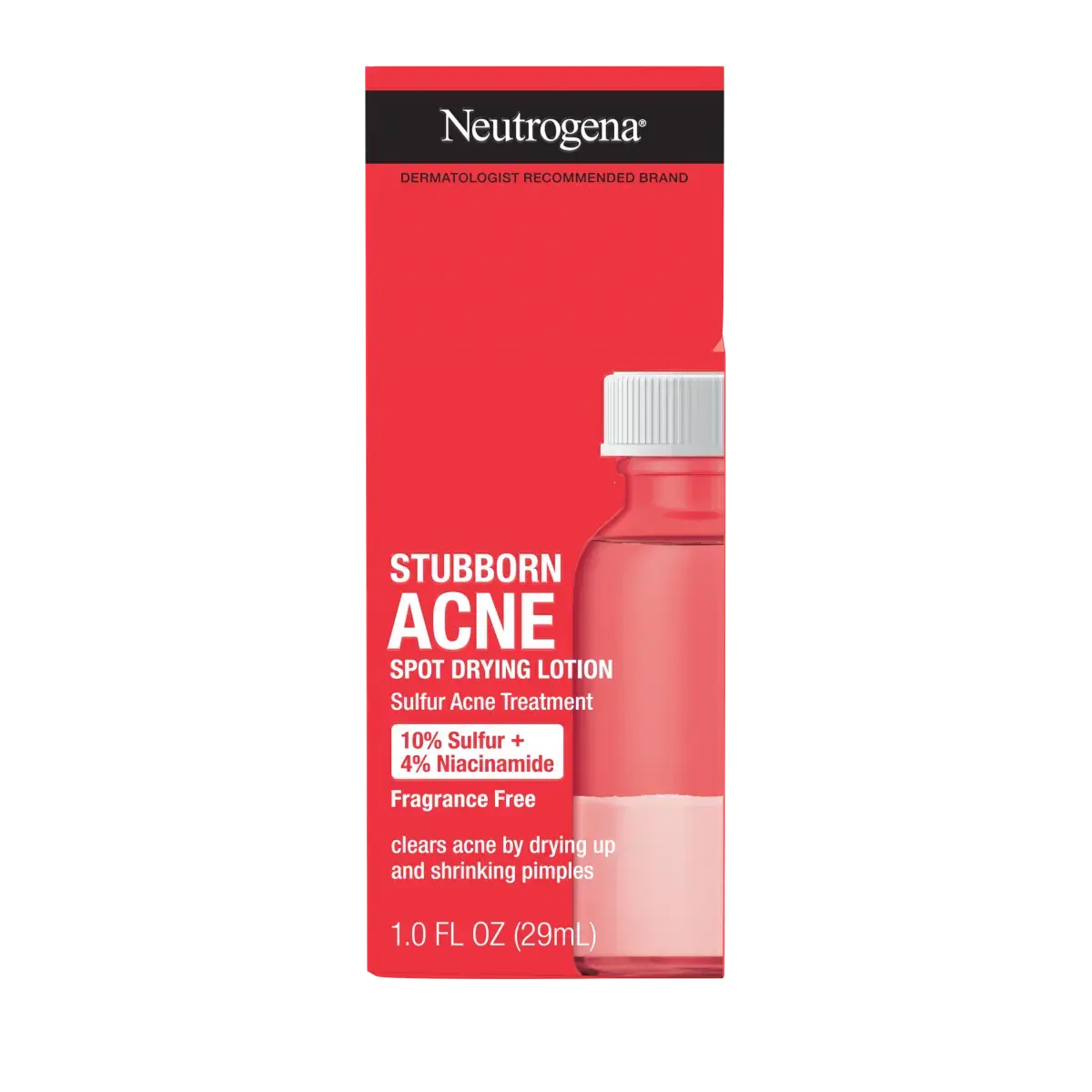
Neutrogena Stubborn Acne Spot Drying Lotion
A targeted drying lotion for active breakouts, built around salicylic acid. It belongs to controlling acne (which prevents new marks) rather than treating existing scars. Useful as the breakout-control half of a scar plan, not as a scar treatment.
- Best for: drying down active, stubborn spots
- Key: salicylic acid
- Watch-out: treats acne, not scars; can be drying

Cetaphil Gentle Clear Mattifying Acne Moisturizer
A lightweight daily moisturizer with salicylic acid and niacinamide for acne-prone skin. Like the Neutrogena pick, it supports acne control and barrier comfort rather than scar remodeling, so it fits the breakout-control side of a scar plan.
- Best for: daily hydration on acne-prone skin
- Key: salicylic acid + niacinamide
- Watch-out: acne maintenance, not a scar treatment
Professional acne scar treatment options and who they suit best
This is where deeper acne scar treatment usually happens. Many dermatologists combine treatments because scars are rarely all the same type, depth, or age.
The trade-offs matter: downtime, number of sessions, risk of irritation or pigment change, and cost all vary.
Microneedling, radiofrequency microneedling, and chemical peels
Microneedling is often used for mild to moderate atrophic scars and overall texture. It can help stimulate gradual remodeling over time, but it is not equally effective for every scar pattern.
Radiofrequency microneedling adds heat-based energy and may be considered in some cases where texture and firmness are also concerns.
Chemical peels can help more with post-acne marks, mild texture, and overall tone than with deep ice pick scars. They can be useful, but they are not a cure-all.
These treatments may fall short for very deep scars or scars that are tethered below the surface.
Laser resurfacing, dermabrasion, and energy-based treatments
Laser resurfacing can be helpful for texture and more established scarring, but it needs careful planning. Skin tone, healing history, and the risk of post-inflammatory pigment change all matter, especially in darker skin tones.
Dermabrasion is less commonly discussed now than some newer options, but it can still appear in acne scar treatment plans in selected cases.
Energy-based treatments are not one category with one outcome. The settings used, the skin type being treated, and the scar pattern all affect the result. This is one area where practitioner experience matters a great deal.
Sun protection before and after these treatments is essential. Poor aftercare can undo progress or increase the risk of marks lingering longer.
Subcision, punch techniques, fillers, and steroid injections
Subcision is often used for rolling scars because it targets the bands that pull the skin downward.
Punch techniques may be considered for isolated deep scars, especially when a scar is too narrow and deep for broader resurfacing methods to do much.
Fillers can sometimes help when shallow volume loss contributes to the look of scarring.
Steroid injections are generally associated with raised scars, not indented ones. They may be used when hypertrophic scars or keloid-type scars are the problem.
Again, this is why one-size-fits-all acne scar treatment advice usually fails.
How to choose the right acne scar treatment plan
A practical plan starts with these questions:
- Are the marks flat, indented, or raised?
- Is acne still active?
- Is your skin easily irritated?
- Are you trying to avoid downtime?
- What is your realistic budget for ongoing care?
If your concerns are mostly dark marks and mild unevenness, starting with skincare makes sense. If your scars are deep, widespread, or clearly indented, it may be more efficient to book a dermatology consult rather than spending months trying product after product.
Maintenance and recovery also matter. Even the best procedure plan will be harder on skin that is inflamed, over-exfoliated, or still breaking out regularly. Barrier support becomes especially important after peels, microneedling, or resurfacing treatments.
If you still have active acne, treat that first
If breakouts are still happening, scar treatment becomes harder for a simple reason: new acne can create new marks and new scars while you are trying to fix old ones.
Controlling active acne first is usually the smartest place to start. It does not mean you have to ignore scar care completely, but it does mean the scar plan should not come before breakout control.
Questions to ask before booking a procedure
Before agreeing to any procedure, ask:
- How many sessions are usually needed for my scar type?
- Do you have before-and-after photos for similar skin tones and similar scars?
- What is the downtime after each session?
- What is the risk of hyperpigmentation or prolonged redness?
- What aftercare will I need?
- What is the full expected cost, not just the first session cost?
Those questions are more useful than chasing the newest device name.
Timelines, limitations, and when to get medical advice
Acne scar treatment works slowly. Dark marks may fade over months. True scars usually improve gradually over a series of treatments, not all at once.
It also helps to be clear about limitations. Acne scar treatment cannot erase every scar completely. It cannot replace acne control. And it cannot guarantee the same result for every skin tone, scar pattern, or healing history.
If scarring is severe, you are prone to keloids, acne is worsening, or the way your skin looks is affecting your mental health in a significant way, professional help is worth seeking sooner rather than later.
How long does acne scar treatment take to work?
Topical care usually takes weeks to months to show visible improvement, especially for dark marks and mild texture. In-office procedures often require a series of sessions plus healing time between them. Deep scars improve gradually, not instantly.
Red flags to avoid in product and clinic marketing
Be cautious around:
- promises of instant scar removal
- claims that one treatment works for every scar type
- before-and-after images without timeline, skin type, or treatment details
- clinics that skip discussion of downtime or pigment risk
- products that imply deep pitted scars can be erased with a cream alone
If the marketing sounds too certain, it usually is.
Ready to try?
BioVelvet Recovery Cream
Deer antler velvet paired with hyaluronic acid, aloe vera, and allantoin, built to support the barrier while skin recovers from breakouts and treatments.
FAQ
What is the best acne scar treatment for the face?
There is no single best acne scar treatment for the face. The right option depends on whether you have dark marks, red marks, indented scars, or raised scars. Mild discoloration may improve with sunscreen and topical skincare. Deeper indented scars often respond better to procedures such as microneedling, subcision, or laser-based treatment.
Can acne scars go away naturally?
Some post-acne marks fade naturally over time, especially flat red or brown marks. True structural scars are less likely to go away on their own. They may soften in appearance, but deeper scars usually need targeted treatment if you want significant change.
What is the best cream for acne scars and dark spots?
For dark spots and mild uneven tone, creams or serums with retinoids, azelaic acid, niacinamide, or vitamin C can help. For skin that feels irritated or is recovering, a barrier-supportive cream may be a better fit than adding more actives. Deep indented acne scars usually do not respond dramatically to a cream alone.
How long does acne scar treatment take to work?
Topical acne scar treatment usually takes several weeks to a few months for visible change. Professional treatments often take multiple sessions with healing time in between. Dark marks tend to improve faster than true scars.
Do acne scar removal products actually work?
Some do, within limits. They can help fade discoloration, support smoother-looking skin, and improve hydration. They do not remove every scar, and they are usually not enough for deep pitted scars. Product claims tend to sound bigger than real-world results.
When should I see a dermatologist for acne scars?
See a dermatologist if you have deep or widespread scarring, raised scars, a history of keloids, ongoing active acne, or if over-the-counter care is not moving things in the right direction. It is also worth seeking help if scarring is affecting your confidence or quality of life.
This article is for informational purposes only and is not a substitute for professional dermatological advice. For deep, widespread, or worsening scarring, or a history of keloids, see a dermatologist. BioVelvet Recovery Cream, a petroleum-free cream backed by a 90-day money-back guarantee, is the home brand for this article. Internal links use biovelvet.com URLs only. Competitor products are included for factual comparison; prices and formulas may change, so check the current product page before buying.