Growth factors and repair
Growth factors, and where deer antler velvet fits.
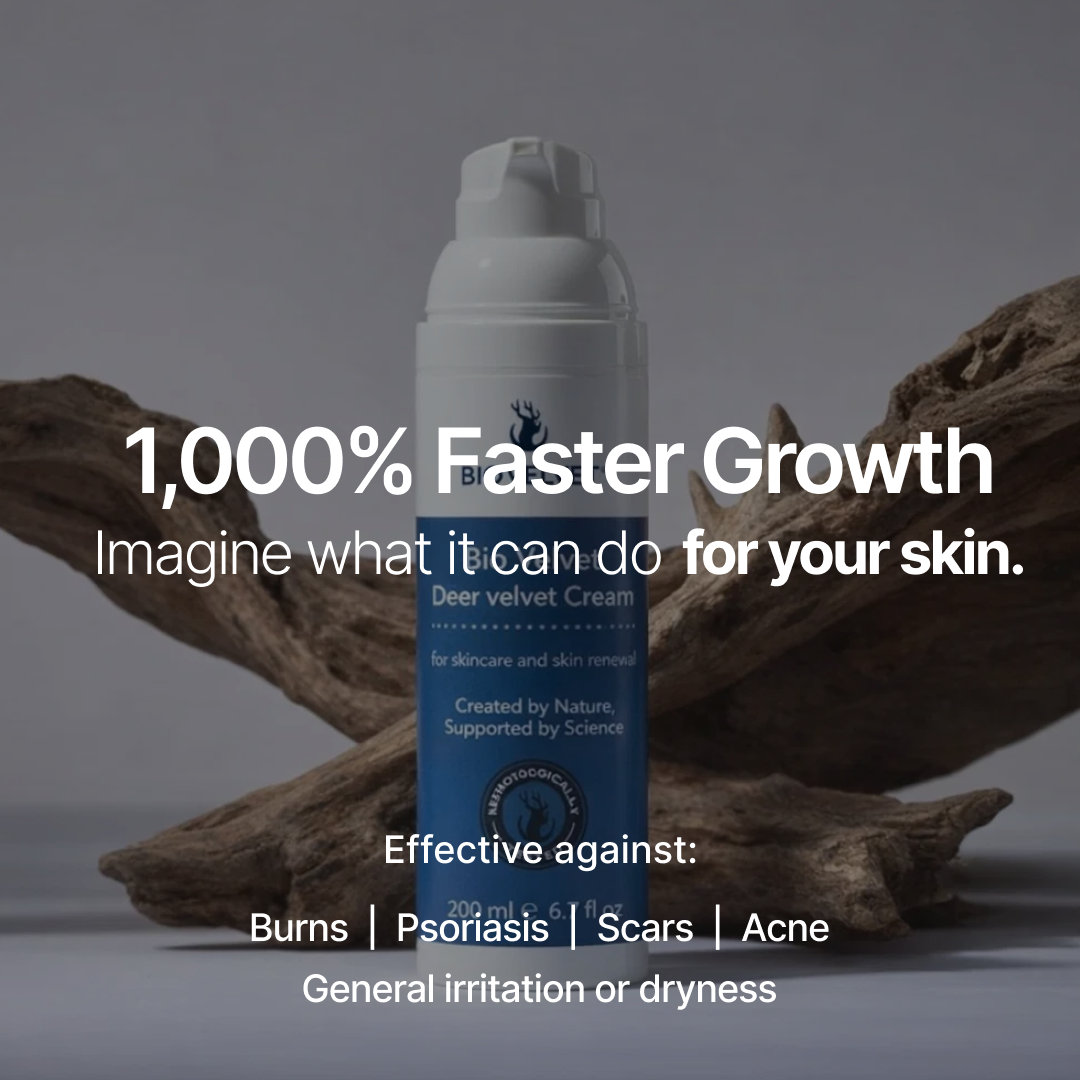
Growth factor serums lean on signaling proteins to support skin repair. BioVelvet takes a different route, built around deer antler velvet studied in animal and lab models for tissue-repair support, alongside hyaluronic acid and aloe vera.
Shop BioVelvet →What are growth factors in skincare?
Growth factors in skincare are signaling proteins that help tell skin cells to repair, renew, and support collagen production. In plain English: they act like messengers. They do not force the skin to do something unnatural. They support processes the skin already knows how to carry out on its own.
That quick answer matters because the term can sound more dramatic than it needs to. Growth factors are a real part of skin biology, not just a marketing phrase. But not every product that uses the language is equally well made, and not every formula will deliver meaningful results.
The main difference between growth factors and standard skincare ingredients is their role. A hydrator adds and holds moisture. An exfoliant helps remove built-up dead skin. A growth factor serum is usually aimed at something else: supporting visible skin quality, recovery, and a smoother, firmer look over time.
For many readers, this is where the confusion starts. "Growth factors" sounds like a medical treatment category. In reality, topical products sit in the cosmetic world. They may help support the appearance of healthier, stronger-looking skin, but they are not the same thing as a prescription treatment or an in-office procedure.
Why growth factors matter more as skin ages
As skin gets older, its repair signals slow down. Collagen support slows too. That is one reason fine lines become more noticeable, skin can feel thinner, and small irritations may take longer to settle than they did ten or twenty years ago.
This is why growth factors tend to show up in products aimed at aging, post-procedure recovery, or skin that seems slower to bounce back. The interest is not really about "reversing aging." It is about supporting skin that no longer recovers as quickly or as visibly as it used to.
Growth factors vs peptides: not the same thing
Growth factors and peptides are often mentioned in the same breath, but they are not the same thing.
Peptides are smaller signal ingredients used to support visible firmness and smoother-looking skin. Growth factors are a different category of signaling proteins with a different role in the skin's repair and renewal processes.
Both can appear in anti-aging routines. Both are used because they work with the skin's own biology rather than simply sitting on the surface. But they are not interchangeable, and a product that contains peptides is not automatically a growth factor product.
Living Collagen · 50+ Bio-Active Compounds · Aloe Vera · Dead Sea Minerals
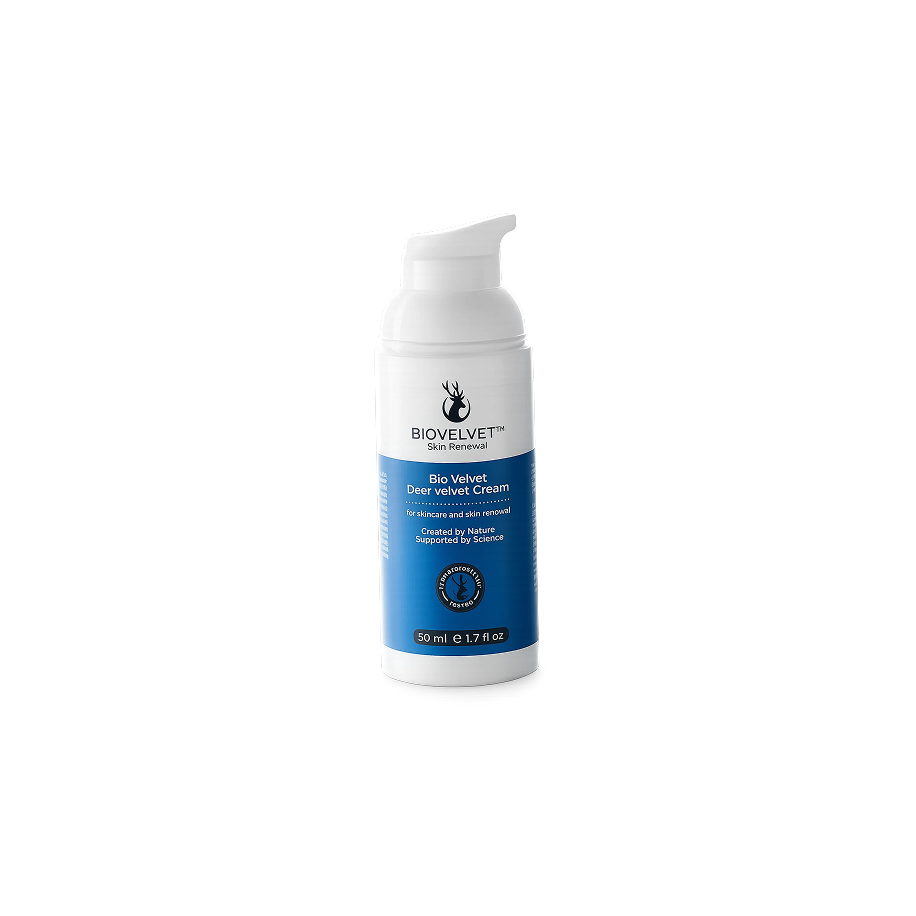
BioVelvet Recovery Cream
Deer antler velvet studied in animal and lab models for tissue-repair support, paired with hyaluronic acid and aloe vera. 90-day money-back guarantee.
How do growth factors work on the skin?
The simplest way to think about growth factors is this: they act like messengers that encourage the skin to carry out repair and renewal processes it already knows how to do.
That might include supporting the skin's natural turnover, helping maintain a firmer look, and improving the visible appearance of texture over time. In some formulas, they are also used as part of a recovery routine after irritation or cosmetic procedures, when skin feels fragile, dry, or reactive.
These are the visible outcomes most people care about:
- smoother texture
- improved firmness
- softer appearance of fine lines
- support during recovery after irritation or procedures
What topical growth factors do not do is create dramatic, medical-grade regeneration in the way some brand language implies. They work at the skin level, and their results depend heavily on the formula, the condition of the skin barrier, and how consistently the product is used.
A good way to stay grounded here: think support, not miracles.
What skin concerns can a growth factor serum help with?
A growth factor serum may be useful for:
- early signs of aging
- skin that feels thinner or less resilient
- visible roughness or uneven texture
- post-procedure recovery support
- skin that looks red or stressed after the barrier has been pushed too hard
This last category matters more than many people realize. A lot of skin is not truly "aging" so much as tired, over-exfoliated, or slow to recover. In that context, growth factor products are often used on recovery nights, when the goal is to help skin settle rather than push it harder with more actives.
What growth factors cannot do
This is where realistic expectations matter.
Growth factors do not replace sunscreen. They cannot erase deep scars. They are not a substitute for prescription treatment if you have a severe eczema flare, an infection, a worsening rash, or a skin condition that needs medical care.
They are also not a shortcut past the basics. If your routine is full of harsh cleansers, too many acids, or poorly tolerated actives, a growth factor serum may not be enough to offset that damage.
What types of growth factors are used in skincare products?
"Growth factors" is a broad category, not one single ingredient. Different products use different types, sources, and blends, which is one reason a growth factor serum from one brand can feel very different from one from another.
On product pages, readers will usually see a few common categories:
- epidermal growth factors
- fibroblast-supporting factors
- blended recovery complexes
You do not need to memorize those categories to shop well. The useful takeaway is that sourcing and formulation matter. Two products can both claim to contain growth factors and still perform very differently depending on concentration, stability, and the rest of the formula around them.
This is also why searches for the best growth factors for skin or best growth factors for skin dermatologist recommendations can be frustrating. There is no single winner that works for everyone. The better question is usually: what kind of skin issue are you trying to support, and does the full formula make sense for that concern?
Human-derived, plant-derived, and bio-engineered growth factors
Modern skincare formulas use several sourcing approaches.
Some use human-derived technology. Some use plant-based systems designed to mimic useful signaling activity. Others use bio-engineered methods made in controlled lab settings.
For most consumers, the practical point is not the category label itself. It is whether the product is well formulated, clearly explained, and suited to the skin concern in front of you.
Why ingredient lists can be confusing
Growth factor products can be hard to compare because many brands lead with trademarked complexes instead of plainly saying what kind of growth factors they use.
That does not automatically mean the product is poor. But it does make comparison harder. If a brand relies heavily on vague language like "advanced renewal complex" or "next-generation regenerative technology" without clearly explaining what is actually in the formula, caution is reasonable.
Clearer is usually better.
Are growth factors safe, and who are they best for?
Safety is one of the first questions people ask, and fairly so.
Many people tolerate growth factor products well, especially when compared with stronger active ingredients that can sting, peel, or trigger irritation. But tolerance still depends on the formula, your skin type, and the rest of your routine.
Patch testing is a sensible starting point, especially if your skin is sensitive, reactive, post-procedure, or eczema-prone. Even a product aimed at recovery can still cause problems if your skin dislikes one of the supporting ingredients.
In general, growth factors tend to make the most sense for people focused on:
- visible aging
- recovery support
- fragile or thinning skin
- skin that no longer bounces back quickly after irritation
Can sensitive or acne-prone skin use growth factors?
Sometimes, yes.
A well-formulated growth factor product may be easier for sensitive skin to tolerate than stronger actives like exfoliating acids or retinoids. But that does not mean all reactive skin will like them.
If you are acne-prone or easily congested, introduce the product slowly and watch how your skin responds. The issue is not always the growth factors themselves. Sometimes the problem is the full base formula, especially if it is very rich or layered with other ingredients your skin does not tolerate well.
How to use growth factors in a routine
A growth factor serum usually goes after cleansing and before a cream.
In many routines, it fits best on recovery nights or alongside a barrier-supportive routine. That means keeping the rest of the routine calm and simple: gentle cleanser, growth factor serum, cream, and SPF in the morning.
If you use stronger actives, it often makes sense to separate them rather than stack everything at once. More is not better if your skin is already stressed.
BioVelvet vs a growth factor serum at a glance
BioVelvet
- Recovery-focused formula for fragile or post-procedure skin
- Deer antler velvet studied in animal and lab models for tissue-repair support
- Hyaluronic acid and aloe vera for hydration and barrier support
- Petroleum-free and lanolin-free
Growth factor serum
- Signaling-protein technology aimed at aging and texture
- Formula quality and sourcing vary widely by brand
- An established category with more human research on some actives
- Not built specifically for post-procedure or fragile skin recovery
Bottom line: a growth factor serum targets aging and texture with signaling proteins. BioVelvet takes a recovery-focused route built around deer antler velvet, suited to fragile or post-procedure skin rather than a dedicated anti-aging serum.
What results should you realistically expect from growth factors in skincare?
Growth factors may support smoother, stronger-looking skin over time, but they are not overnight ingredients.
For most people, visible change takes several weeks of consistent use. That might mean skin looks a little smoother, feels less fragile, or appears firmer and more even over time. If a formula is designed for recovery support, comfort and reduced tightness may show up sooner, especially after irritation or a procedure.
Results depend on three things more than most marketing pages admit:
- the concern you are trying to address
- the condition of your skin barrier
- whether the rest of your routine is helping or undermining recovery
If your skin barrier is compromised, even a good product may struggle to show its best side until the basics are in place.
How to choose a product without falling for hype
Start with the full formula, not the headline claim.
Look beyond phrases like "regenerating," "age-reversing," or dramatic before-and-afters. Ask:
- What else is in the formula?
- Is it built for recovery, aging support, or post-procedure use?
- Is the brand clear about what kind of growth factors it uses?
- Do you actually need a growth factor serum, or would a simpler barrier-supportive product make more sense right now?
Brand-led claims around regeneration are where caution matters most. Supportive, realistic language is usually a better sign than a promise to transform your skin in days.
Where recovery-focused formulas fit into the conversation
Not every repair-support product uses conventional growth factor branding.
Some recovery creams take a broader approach, using ingredients that support the skin's own repair environment rather than presenting themselves as a dedicated growth factor serum. That can matter for people dealing with fragile, sensitized, or slow-to-recover skin, especially if their main problem is not aging in the cosmetic sense but skin that has been through too much.
One example is deer antler velvet, an ingredient studied in animal and lab models for its role in supporting tissue repair, and it is BioVelvet's hero ingredient. BioVelvet Recovery Cream is built around deer antler velvet that was discovered by Dr Zur, alongside hyaluronic acid, aloe vera, vitamin E, and allantoin, to support skin that needs recovery rather than just moisture. It is a different framing from classic growth factor serums, but it belongs in the same broader conversation: ingredients that help skin repair itself more effectively.
Ready to try?
BioVelvet Recovery Cream
Built around deer antler velvet, studied in animal and lab models for its role in tissue repair, paired with hyaluronic acid, aloe vera, and allantoin. A different framing from a classic growth factor serum, made to support skin that needs recovery, not just moisture.
FAQ
What are growth factors in skincare and what do they do?
Growth factors in skincare are signaling proteins that help tell skin cells to repair, renew, and support collagen production. In practical terms, they are used to support smoother texture, firmer-looking skin, and recovery after stress or irritation.
Are growth factors better than peptides for aging skin?
Not necessarily. They are different categories, not direct replacements for each other. Peptides are smaller signal ingredients often used for firmness and visible aging support. Growth factors are signaling proteins with a different role in skin renewal and recovery. Some routines use one, some use both.
How long does a growth factor serum take to work?
Usually several weeks of consistent use. Some people notice faster comfort or smoother feel sooner, especially if the product is used in a recovery-focused routine, but visible changes in firmness or texture tend to take longer.
Are growth factors safe for sensitive skin?
Many people tolerate them well, but not everyone will. Formula quality matters, and sensitive skin should always patch test first. If your skin is reactive, post-procedure, or eczema-prone, start slowly and keep the rest of the routine simple.
Can you use growth factors with retinol or vitamin C?
Often yes, but it depends on your skin and the rest of the formula. Many people use growth factors on recovery nights or alongside barrier-supportive products rather than layering too many strong actives together. If irritation is already an issue, separating them is usually the safer approach.
What are the best growth factors for skin?
There is no single best answer for everyone. The best growth factors for skin depend on your goal, whether that is visible aging support, post-procedure recovery, or help for skin that feels fragile. The most useful approach is to compare the full formula, not just the marketing term on the label.