Bio-Oil vs BioVelvet compared
Two very different routes to skin recovery.
Two very different routes to skin recovery: a decades-old, clinically tested oil and a newer cream built around New Zealand deer antler velvet. Here is how the evidence, the price and the ingredients compare.
Shop BioVelvet →


Bio Oil skincare oil vs BioVelvet
Bio-Oil Skincare Oil and BioVelvet Recovery Cream solve different problems: Bio-Oil is a mineral-oil-based specialist oil with 11 published clinical trials behind it, while BioVelvet is a light cream for dry, irritated skin built around a deer antler velvet ingredient story few mainstream brands have touched.
I compared the two to see which one deserves a place in which routine. Bio-Oil dates from the 1980s, is sold in 165 countries and carries a long list of editorial awards. BioVelvet is a newer direct-to-consumer brand with a 90-day money-back guarantee on every order.
The prices sit in different leagues. At Walmart, Bio-Oil Skincare Oil runs from $6.49 for 0.85 fl oz (25 ml) to $29.97 for 6.7 fl oz (200 ml). BioVelvet Recovery Cream is $64.90 one-time or $54.87 on a monthly subscription for a 50 ml bottle, with bigger savings on multi-packs.
Both speak to scars, dry skin and skin that feels stressed, and they get there by very different routes. This guide answers which one suits which buyer, and how to weigh published trial data against a distinctive ingredient story.
Who this guide is for
This guide is for someone choosing between a clinically tested workhorse oil that has sat on pharmacy shelves for decades and a newer cream built around an unusual ingredient the bigger brands have left alone. It suits the reader who already knows their skin concern, whether a scar, a stretch mark, dryness or sensitivity, and wants to pick the right format and the right fit.
It is also for anyone who has read a confident claim on either side and wants to know what sits behind it. Some readers care most about measured outcomes, some about what goes into the bottle, and some about price per ounce or the return window. Each section below takes one of those questions and answers it for both products.
The two products at a glance
Bio-Oil Skincare Oil is a specialist oil with paraffinum liquidum (mineral oil) as the first ingredient, finished with sunflower seed oil, soybean oil, calendula, chamomile, lavender, rosemary, vitamins A and E and a fragrance system. The brand publishes 11 clinical trials run at proDERM Hamburg, Peking University First Hospital, Thomas J. Stephens and Associates in Texas, the Medical University of South Africa Photobiology Lab and Rigano Laboratories in Milan, with POSAS scoring on scars and stretch marks and grader-blinded design on ageing skin and uneven tone.
It carries Halaal, Kosher, Vegan and EU cruelty-free certifications, is made under ISO 22716:2007 GMP and has a 36-month period after opening. The brand describes it as dermatologist-recommended.
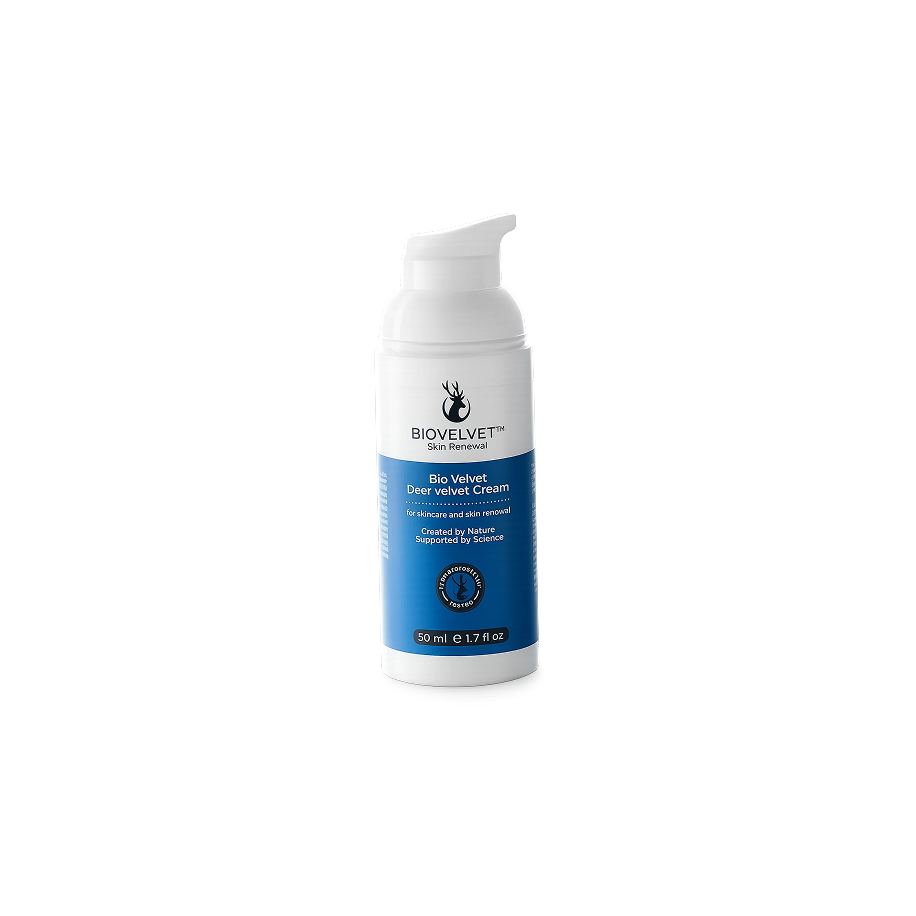
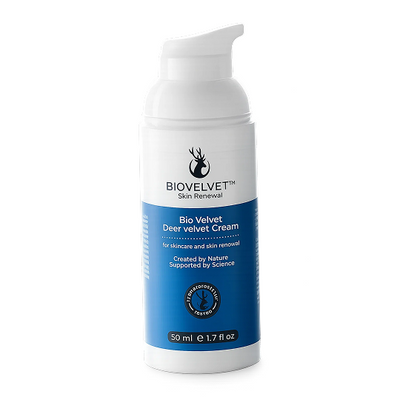
BioVelvet Recovery Cream is a light oil-in-water cream built around New Zealand deer antler velvet extract, an ingredient studied in animal and lab models for the biology behind antler regrowth. It pairs the velvet with aloe vera, jojoba seed oil, sodium hyaluronate, glycerin, allantoin, bisabolol and vitamin E, plus ginkgo biloba, seaweed and Dead Sea minerals.
The velvet comes from New Zealand deer farms and is harvested before the antler calcifies. Antlers regrow every year from a permanent base on the skull, and a 2012 review by Chunyi Li of AgResearch in New Zealand, published in Birth Defects Research Part C, traced that regrowth to a specialized tissue in that base. BioVelvet Recovery Cream suits dry, irritated skin and the skin around healed scars, and it costs $64.90 one-time or $54.87 on a monthly subscription, with a 90-day money-back guarantee from the brand. Patch test first: contains tea tree oil and royal jelly (bee-derived).
What sets each product apart
Cost sizes returns and formula side by side
The summary above is the quick read. The four tables below are the real decision tools: price per ounce, the sizes you can buy, how returns work and what is in each formula.
What you actually pay per ounce
Prices checked November 9, 2026.
💡 On cost per ounce, the two sit in different leagues. Bio-Oil's 6.7 fl oz size works out at about $4.47 per fluid ounce at Walmart, and the 0.85 fl oz size at $6.49 is the cheapest way to try it. BioVelvet Recovery Cream comes to about $38 per fluid ounce at the one-time price and about $32 on subscription, so Bio-Oil is roughly 8.5 times cheaper per ounce at its largest size. BioVelvet is priced for its deer antler velvet formula and backs every order with a 90-day money-back guarantee, while Bio-Oil's price reflects global scale and retail distribution.
Which sizes each brand sells
💡 Bio-Oil sells four real size points, from 25 ml to 200 ml, so a small trial bottle is easy to find. BioVelvet sells one bottle size, and the multi-packs are more of the same bottle at a lower price per unit. Its route to a low-risk trial is the 90-day money-back guarantee on the full bottle, a different mechanism that serves the same purpose.
How you buy it and how you return it
💡 BioVelvet puts a 90-day money-back guarantee in writing at brand level, the longer of the two windows by a wide margin, and that is the practical way to trial its single bottle size. Bio-Oil routes returns through whichever retailer sold it, usually a shorter window, offset by a much lower entry price that keeps the cost of a trial small.
What is in each formula category by category
This table strips out marketing language and shows what is in each bottle.
💡 Read this table row by row. Bio-Oil is fragrance-rich in exchange for its sensory experience and its multi-indication clinical backing, and its full allergen list is easy to check. BioVelvet Recovery Cream tells the more unusual ingredient story, with deer antler velvet from New Zealand in a light, petroleum-free cream. If your skin reacts easily, patch test either one first, because BioVelvet contains tea tree oil and royal jelly and Bio-Oil carries 23 declared fragrance allergens.
How to weigh published trials against ingredient innovation
Most product comparisons skip this part. These two products speak to similar goals, such as better-looking scars and more comfortable dry skin, and they arrive there through very different evidence pathways. Bio-Oil brings 11 third-party clinical trials with named study centres, sample sizes, POSAS scoring and outcomes at specific timepoints. BioVelvet brings an unusual ingredient story and a 90-day money-back guarantee as the way to try it.
Published trials tell you what has been measured under controlled conditions. When Bio-Oil reports that 92% of subjects improved at day 57 in its scar trial, that figure comes from 36 female participants in a double-blind, randomised, placebo-controlled study at proDERM Institute in Hamburg, scored on POSAS, and you can read the summary and check the method.
Brand claims are a different kind of statement. A brand can describe what its formula is built to do, which ingredients it uses and why, and what research exists on those ingredients, without running a trial on the finished product. When you read any claim, ask where the figure comes from: a controlled trial on the product itself, research on one ingredient, or the brand's own guarantee. All three can be useful, and they answer different questions.
Ingredient innovation is a separate axis from trial data. Mineral oil and vitamin A are well understood and well tolerated by most skin. Deer antler velvet is newer to mainstream skincare, studied in lab and animal models for the compounds behind antler regrowth. If you are drawn to a new ingredient, BioVelvet Recovery Cream offers that, and if you want a long-tenured formula sold everywhere, Bio-Oil offers that.
The guarantee is the bridge between them. A 90-day money-back guarantee from the brand means BioVelvet takes on the trial risk, and 90 days covers several skin cycles, which is a fair amount of time to judge a cream on your own skin. Bio-Oil handles returns through the retailer you bought from, on that retailer's window.
For a deeper walk through the BioVelvet formula and what each component does, the ingredients explained walkthrough covers each one in detail.
The picks and when to choose each
BioVelvet Recovery Cream
$54.87 subscribed or $64.90 once, 50 ml
BioVelvet Recovery Cream is the most distinctive ingredient story in this comparison, one of the few creams built around deer antler velvet. The velvet comes from New Zealand deer farms, harvested before the antler calcifies, and it sits with aloe vera, jojoba seed oil, sodium hyaluronate, glycerin, allantoin and bisabolol for moisture and comfort.
It suits dry, tight or irritated skin and the skin around healed scars, and the cream texture fits face routines and layers well under SPF. By hour eight on a winter forearm, the skin still felt cushioned and calm rather than coated. The 90-day money-back guarantee is the longest in this comparison, and the subscription discount grows with the pack size, from 15% on a single bottle to 23% on the 2-pack and 28% on the 3-pack, once you know you like it. Patch test first: contains tea tree oil and royal jelly (bee-derived).
Shop now90-day money-back guarantee

Bio-Oil Skincare Oil
$6.49 for 0.85 fl oz to $29.97 for 6.7 fl oz at Walmart
Eleven published clinical trials set Bio-Oil apart in the mass-market multi-use category: POSAS scoring on scars (92% improvement at 8 weeks, n=36 at proDERM Hamburg) and on stretch marks (100% improvement at 8 weeks, n=38), grader-blinded scoring on uneven tone (86% improvement at 12 weeks, n=67 at Thomas J. Stephens) and an in vitro occlusivity comparison against vernix caseosa.
The formula puts mineral oil first, with vitamin A as retinyl palmitate at a low cosmetic concentration, plant oils, calendula, chamomile, lavender, rosemary, bisabolol and vitamin E. It absorbs quickly, sits under foundation after about five minutes and belongs after cleansing and before any water-based moisturizer. It carries Parfum plus 23 declared fragrance allergens, and the brand recommends it in pregnancy for stretch marks after its CPSR review. Its orange-pink colour comes from CI 26100. If natural ingredients are your filter, note that mineral oil leads the formula, and if you avoid retinoid esters in pregnancy, the vitamin A content is a question for your clinician. The 36-month period after opening is long for this category. The 6.7 fl oz bottle is the value size and the 0.85 fl oz bottle is the low-cost trial.
Prices checked November 9, 2026.
How they compare on the things you probably care about
Format and where it sits in a routine
BioVelvet Recovery Cream is a light cream that works on its own or layered with the rest of your routine on the face and body. Bio-Oil is a 100% oil designed for face and body, applied after cleansing and before a water-based moisturizer or SPF.
Texture often decides which one people keep using. A cream suits readers who want one step that hydrates and softens in the same go, while an oil suits readers who like a slip for massage and are happy to add a separate moisturizer. On a scar, either can sit alongside silicone gel at a different time of day.
What each one is made for
Both speak to scars, dry skin and ageing skin, and Bio-Oil adds stretch marks and uneven tone, all covered in its trial set. BioVelvet Recovery Cream is made for comfort on dry, irritated skin and on the skin around healed scars, alongside silicone where a scar is raised. Treat any list of uses as positioning rather than proof of results on every concern listed.
Ingredient transparency
Bio-Oil publishes its full INCI and allergen list on the product page. BioVelvet Recovery Cream lists its headline ingredients on the product page, led by New Zealand deer antler velvet extract, and prints the full INCI on the carton. If you track specific ingredients such as vitamin A, fragrance allergens or essential oils, both lists give you what you need.
Evidence backing
Bio-Oil has 11 published trials at independent third-party centres, POSAS-scored where it applies, with samples of 22 to 67 people. BioVelvet Recovery Cream rests on a formula of well-known hydrating and soothing ingredients, lab and animal-model research on deer antler velvet and a 90-day money-back guarantee. They are different kinds of evidence.
Trial and return
BioVelvet Recovery Cream comes in one bottle size, and the 90-day guarantee from the brand takes on the trial risk and gives you several skin cycles to judge it. Bio-Oil has the lowest entry price, $6.49 for 0.85 fl oz at Walmart, so the cost of trying it is small, with returns through the retailer.
Vegan and animal derived status
BioVelvet Recovery Cream contains deer antler velvet and bee-derived royal jelly, and the brand describes humane harvesting on New Zealand farms before the antler calcifies. Bio-Oil is vegan and EU-compliant cruelty-free.
Fragrance profile
BioVelvet Recovery Cream has a parfum-free INCI, though tea tree and manuka are aromatic botanicals with a scent of their own. Bio-Oil contains Parfum plus 23 declared fragrance allergens, and the scent is part of the product experience.
Pregnancy positioning
Bio-Oil is specifically recommended for stretch mark prevention in pregnancy, twice daily from the first trimester, with the brand addressing vitamin A safety through its CPSR. If pregnancy use is your reason for buying, Bio-Oil is the product with explicit guidance, and with any skincare in pregnancy it is worth a word with your clinician.
BioVelvet vs Bio-Oil at a glance
BioVelvet
- New Zealand deer antler velvet story
- Cream format, layers under SPF
- 90-day money-back guarantee
- Petroleum-free and lanolin-free
Bio-Oil
- 11 published clinical trials
- Full INCI and allergen list disclosed
- Far cheaper per ounce
- Fragrance-heavy, 23 allergens
Bottom line: Bio-Oil brings published trial data and a lower price per ounce. BioVelvet brings a distinctive ingredient story and the longer guarantee.
A realistic expectation
Both products are positioned as comfort and appearance layers. Sunscreen, acne treatment and professional dermatology for severe skin conditions are separate jobs. If you have an ongoing inflammatory skin condition, understanding the difference between eczema and psoriasis is the first step to picking the right product, since the triggers and treatments differ. If your issue is a compromised barrier rather than appearance, the skin barrier repair cream guide explains what to look for in a formula. Holding either product to a standard it was never built for is how good formulas end up disappointing people.
The simple rule
If you want a light cream built around New Zealand deer antler velvet, a 90-day money-back guarantee from the brand and a texture that suits face routines, BioVelvet Recovery Cream fits that need. If your decision rests on published clinical evidence, value per ounce, a long list of certifications and pregnancy guidance, Bio-Oil fits that need. When your skin has a specific need that one of them meets better, that need is the tiebreaker, and for a wider look across formats the best scar cream guide is the place to start.
If you want to see the cream itself, the BioVelvet Recovery Cream page has sizes and the guarantee in full.
FAQ
Can I use Bio-Oil and BioVelvet in the same routine?
Yes, on different areas or at different times of day. They are different kinds of product, a specialist oil and a light cream, so combining them is a routine-design question more than a compatibility one. Apply the oil to cleansed skin and let it absorb fully before layering a cream or SPF.
If you are targeting one specific issue, such as a scar, a stretch mark or a patch of irritation, pick one product and stay consistent for at least 4 to 8 weeks before judging the result.
Is Bio-Oil's vitamin A content a concern during pregnancy?
The brand discloses that retinyl palmitate is included at a low cosmetic concentration and that the product has been evaluated within a Cosmetic Product Safety Report (CPSR) for pregnancy and breastfeeding. It recommends twice-daily application from the first trimester for stretch mark prevention. For a definite answer in your own case, confirm with your clinician.
What is BioVelvet's hero ingredient and how is it different from collagen supplements or peptide creams?
BioVelvet's hero ingredient is New Zealand deer antler velvet extract. Research on the velvet has been done in lab and animal models, which is why it sits at the centre of the formula, and in the cream it works alongside hyaluronic acid, glycerin, aloe vera, allantoin and bisabolol for moisture and comfort.
Oral collagen supplements are a different category altogether, because they act through digestion rather than on the skin surface.
Why does BioVelvet cost more per ounce than Bio-Oil?
BioVelvet Recovery Cream is a smaller, direct-to-consumer brand built around New Zealand deer antler velvet extract, an ingredient with a higher input cost than mineral oil and standard plant oils. Bio-Oil is a long-established mass-market product sold at scale through retailers.
Every BioVelvet order comes with a 90-day money-back guarantee from the brand, so the full jar can be judged on your own skin.
Which one should I buy for scars specifically?
Bio-Oil has published trial data for scars, with 92% of subjects showing POSAS improvement at 8 weeks in a 36-subject double-blind, placebo-controlled trial at proDERM Hamburg. For raised scars, silicone gel or sheets remain the first-line consensus.
BioVelvet Recovery Cream suits the dry, tight skin around a healed scar and works alongside silicone as the daily comfort step. Patch test first: contains tea tree oil and royal jelly (bee-derived).
This comparison was written by BioVelvet, the brand behind BioVelvet Recovery Cream. Bio-Oil is included as a comparison product, with no paid placement. Products were compared on declared formula, certifications, published trial data, guarantees and the author's own use. Prices and formulas change, so check the current product page and the box you buy.