Deer antler cream
What deer antler cream can do for skin.
Deer antler velvet extract, what the research covers so far, and where a recovery cream fits for dry, reactive, or healing skin.
Shop BioVelvet →What is deer antler cream?
Deer antler cream is a topical skincare product made with deer antler velvet extract. In plain terms, that means a cream you apply to the skin, not a capsule, spray, or sports supplement you take by mouth.
People usually search for deer antler cream because they are looking for help with skin that feels damaged, dry, reactive, slow to recover, or visibly red. Some are dealing with rough patches. Some want support for newer scars. Some are trying to calm skin after a procedure, over-exfoliation, or a long stretch of irritation.
The scepticism around this category is fair. If you have never heard of deer antler velvet in skincare before, it can sound like either a gimmick or a recycled supplement trend. A lot of the confusion comes from the fact that deer antler velvet is better known online as a supplement ingredient than a skincare one. In BioVelvet's formula, deer antler velvet extract is the hero ingredient, not a supporting one.
Deer antler cream vs deer antler supplement
This matters, because topical deer antler cream and oral deer antler supplements are different conversations.
A deer antler cream is used on the skin, where the goal is local support for moisture, comfort, and recovery. A deer antler supplement is taken orally and is usually discussed in the context of performance, recovery, or sports-related claims.
That is why search results often mix together terms like deer velvet antler, performance supplements, and WADA-related discussions. But those topics do not tell you much about what a cream may or may not do on skin. The expectations, mechanism, and use case are different.
So if you are researching deer antler cream for dryness, redness, scars, or post-procedure recovery, it helps to ignore most supplement-style claims and judge the product as skincare.
Why deer antler velvet shows up in skincare
Deer antler velvet is the soft, growing tissue found on developing antlers before they harden. What makes it interesting is the underlying biology: deer regrow their antlers on a repeated cycle, and that growing tissue contains natural compounds involved in fast tissue development.
That does not mean a cream can recreate antler regrowth on human skin. It does explain why researchers and formulators have taken an interest in the ingredient for skin recovery, and why it has been studied in animal and lab models for its role in tissue development. In skincare, the attraction is simple: if an ingredient is linked to fast-growing, highly active tissue, it is reasonable to ask whether it may support skin's own repair processes when used topically.
Living Collagen · 50+ Bio-Active Compounds · Aloe Vera · Dead Sea Minerals
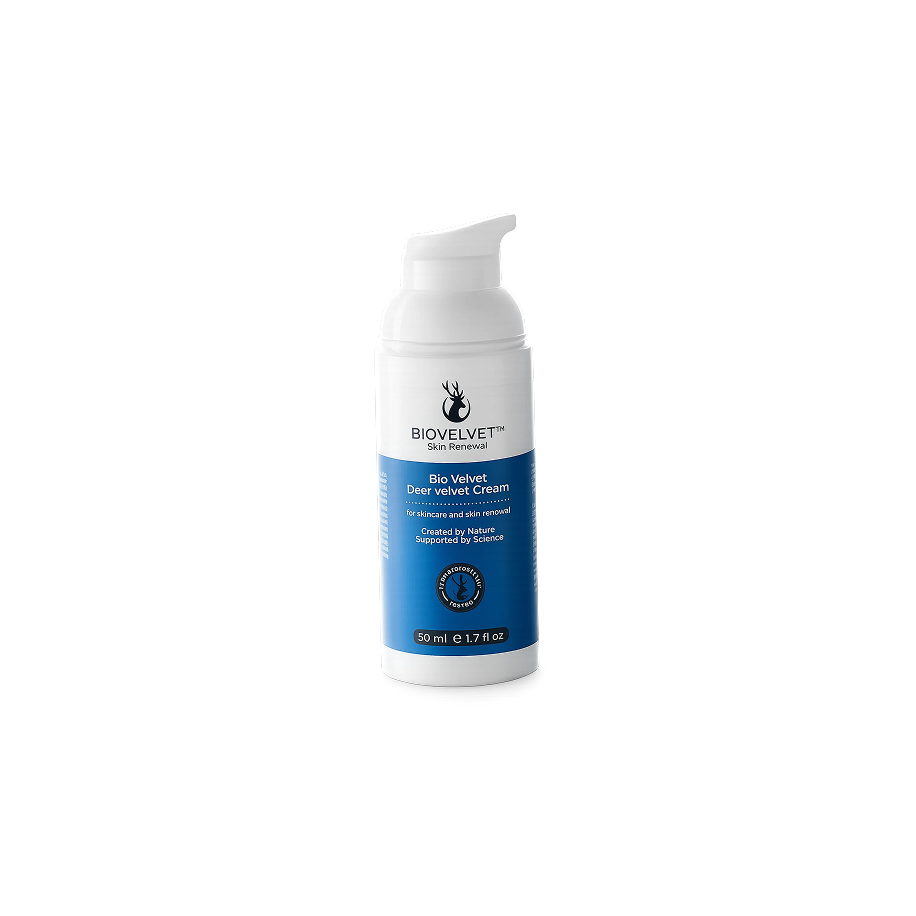
BioVelvet Recovery Cream
The deer antler cream built around the hero ingredient, not a token add-in. Petroleum-free barrier support for dry, fragile, or healing skin. 90-day money-back guarantee.
What does the evidence say about deer antler cream for skin?
The first distinction to make is this: there is a difference between evidence on deer antler velvet as an ingredient and claims about any specific deer antler cream brand.
Published research on deer antler velvet suggests potential relevance for wound healing, surface repair, and scar-related recovery processes, based on animal and lab studies. Some studies have looked at how antler-derived material behaves in topical formats and whether it may help support the skin's natural recovery response.
That is promising. It is not the same as saying every deer antler cream on the market is proven to work for every skin problem.
What researchers have studied so far
At the ingredient level, the main research areas have been:
- wound healing
- skin repair
- scar-related recovery
- topical delivery of deer antler velvet extract
In plain English, the published work suggests that deer antler velvet contains naturally occurring compounds that may help support the skin's own recovery process, studied in animal and lab models. That is the reason it keeps coming up in wound-healing and repair-focused discussions.
But most of this evidence is still ingredient-level, early-stage, or based on controlled formats rather than large human trials on retail creams sold directly to consumers. That is an important limit.
So the summary is: there is real scientific interest here, and there are published findings worth paying attention to, but the evidence base is not the same as having large independent trials on every cream using the ingredient.
What the evidence does not prove
The evidence does not prove that deer antler cream can cure eczema, psoriasis, burns, or deep scars.
It also does not support framing deer antler cream as a replacement for medical care when skin is infected, severely inflamed, or not healing properly.
Some readers also search for terms like deer antler velvet cancer because they hear that the ingredient contains natural growth-related compounds and assume that must carry broader risk or treatment implications. That search exists, but it should be handled carefully. Topical deer antler skincare should not be framed as cancer treatment, cancer prevention, or a substitute for medical advice about unusual lesions or non-healing skin changes.
What deer antler cream may help with in real life
The most realistic use cases for deer antler cream are not dramatic. They are everyday recovery situations: very dry skin, rough or stressed areas, visible redness after irritation, and skin that needs support rather than another active.
This is best understood through a maintenance-and-recovery lens. People looking for this kind of cream are usually not chasing beauty-copy promises. They want calmer skin, less discomfort, and better resilience.
Dry, compromised, or overworked skin
This is probably the clearest fit.
When skin feels tight, flaky, reactive, or overworked by cold weather, harsh cleansers, retinoids, acids, or too many actives at once, a richer recovery cream can help create a better environment for the barrier to settle down.
That is especially relevant on recovery nights or off-nights from stronger routines. If you use retinoids or exfoliants, there is often a point where skin does not need another active. It needs a break. Deer antler cream may fit well there, especially if the formula also includes supportive ingredients that help hold moisture and reduce irritation.
Scars, post-procedure skin, and minor burn aftercare
Deer antler cream may also have a place in recovery-focused skincare after skin stress, including newer scars, post-procedure dryness, or minor superficial burns.
That said, scar care still has basics that matter more than trendier ingredients. Silicone remains a core option for scar management, and sun protection matters if you want healing skin to avoid becoming darker or redder over time.
For minor burns, supportive skincare may help once the initial injury is mild and stable. But this has limits. A small superficial burn is one thing. Blistering burns, severe pain, white or charred skin, or large affected areas need medical attention.
Eczema and psoriasis: where topical support fits
A lot of people search deer antler cream because they are tired of living in a steroid-heavy cycle. That frustration is real.
For eczema and psoriasis, the most way to position a deer antler cream is as supportive skincare during maintenance or recovery phases. It may help skin feel less dry, less tight, and more comfortable between worse periods.
It should not be framed as a replacement for prescribed treatment during severe flares. If skin is rapidly worsening, widespread, cracked, infected, or affecting sleep and daily function, over-the-counter skincare has reached its ceiling.
How to choose the best deer antler cream
This is where many articles are weak. They list products, but they do not give readers a way to judge them.
The best deer antler velvet product for skin depends on more than whether the label mentions antler extract. Formula quality, surrounding ingredients, skin tolerance, and intended use all matter.
Ingredients that make a deer antler cream more useful
Deer antler velvet works within a formula. The surrounding ingredients matter because they shape how comfortable, supportive, and usable the cream actually is.
Helpful supporting ingredients include:
- Hyaluronic acid for drawing moisture into the skin
- Aloe vera for a calmer, more soothed feel
- Allantoin for sealing in moisture and supporting a weak barrier
- Vitamin E for barrier support
- Seaweed extract for added hydration and skin-conditioning support
- Green tea for antioxidant support
In other words, a useful deer antler cream should not rely on one unusual ingredient alone. It should be built as a recovery formula.
Questions to ask before you buy
Before buying, ask:
- Is the formula heavily fragranced, or likely to sting reactive skin?
- Is it meant for face use, body use, or both?
- Does the texture make sense for very dry skin, or is it too light?
- Are patch testing instructions clear?
- Is the brand transparent about where the deer antler velvet comes from?
- Does it address ethical sourcing directly?
That last point matters more here than in most skincare categories. People reasonably want to know how deer antler velvet is sourced and whether the brand is willing to explain it clearly.
What makes one formula stand out
Before looking at brands, the best evaluation points are:
- who developed the formula
- how long they have worked with the ingredient
- whether reviews sound specific and believable
- whether claims are careful rather than inflated
- whether deer antler velvet is the hero ingredient or just a token add-in
That distinction matters. Some products mention deer antler velvet because it sounds unusual. Others are built around it from the start.
BioVelvet vs a token deer antler cream at a glance
BioVelvet
- Deer antler velvet extract is the hero ingredient
- Paired with hyaluronic acid, aloe vera, allantoin
- Built as a recovery formula, not a single active
- Petroleum-free and lanolin-free
Token antler cream
- Antler extract listed low on the ingredient panel
- Thin supporting formula around it
- Marketed on the name, not the mechanism
- Often cheaper on the shelf
Bottom line: a lot of deer antler creams add the ingredient for the label. BioVelvet builds the recovery formula around it.
Realistic expectations, safety questions, and when not to rely on deer antler cream
A good deer antler cream may help skin feel calmer, less dry, and more supported over time. That is the realistic ceiling.
What it should not be expected to do is solve every inflammatory skin condition, replace urgent care, or deliver overnight scar change.
How long does deer antler cream take to work?
Comfort changes, like reduced dryness or less tightness, may show up within days.
More visible improvement usually takes weeks, especially if the issue is ongoing barrier damage, post-procedure sensitivity, or rough, chronically dry skin.
Scars generally take longer. So does skin that has been inflamed for a long time.
Consistency matters more than over-application. Putting on more product more often does not automatically improve results.
Who should patch test or speak to a doctor first
Patch test first if you have very reactive skin or a history of irritation from new products.
Speak to a doctor before relying on any new cream if you have:
- open or infected skin
- a severe burn
- a rash that is rapidly spreading or worsening
- severe eczema or psoriasis
- pregnancy-related concerns
- a baby or child with persistent skin symptoms
A new skincare product is not the right first move for suspected infection, severe inflammatory disease, or anything that may need diagnosis.
A practical mention of deer antler velvet Recovery Cream
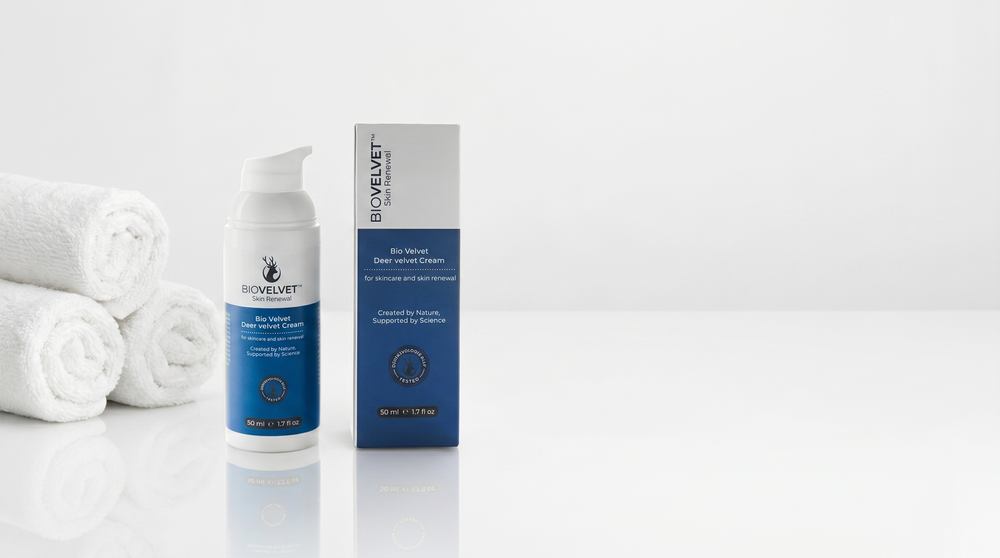
One example in this category is BioVelvet Recovery Cream, developed by Dr. Doron Zur, a veterinary scientist with 20+ years working with deer antler velvet.
What makes it notable is that it was built around deer antler velvet extract as the core ingredient, rather than using it as a novelty. The formula also includes hyaluronic acid, aloe vera, vitamin E, allantoin, and other recovery-focused ingredients.
The brand positions it as a recovery cream for compromised, dry, reactive, or healing-looking skin. It is petroleum-free, lanolin-free, and backed by a 90-day money-back guarantee, which gives a shopper time to judge fit on their own skin rather than relying on anyone else's experience.
Ready to try?
BioVelvet Recovery Cream
Built for skin that is dry, fragile, or still settling. Deer antler velvet paired with hyaluronic acid, aloe vera, and allantoin - designed to support barrier recovery, not just moisture.
FAQ
What is deer antler cream used for?
Deer antler cream is usually used for dry, stressed, reactive, or recovery-phase skin. People often buy it for rough patches, visible redness, post-procedure care, newer scars, and general barrier support.
Is deer antler cream the same as a deer antler velvet supplement?
No. A deer antler cream is applied to the skin. A deer antler velvet supplement is taken orally. They involve different use cases, different expectations, and different search confusion.
Does deer antler cream help eczema or psoriasis?
It may help as supportive skincare during maintenance or recovery phases by improving comfort and dryness. It should not be treated as a replacement for prescribed care during severe flares.
How long does deer antler cream take to work?
Some people notice comfort and moisture changes within days. More visible improvement usually takes a few weeks, and scars or long-term skin damage often take longer.
Is deer antler velvet cream safe for sensitive skin?
Some formulas may be suitable for sensitive skin, but that depends on the full ingredient list, fragrance level, and your own skin history. Patch testing is the safest first step.
What should I look for in the best deer antler velvet cream?
Look for a formula where deer antler velvet is clearly central, not a token ingredient. Then check the surrounding ingredients, likely sting risk, ethical sourcing transparency, founder credibility, and whether the brand makes calm, realistic claims rather than hype-driven promises.