Bisabolol
Bisabolol in skincare: what it actually does.
How bisabolol calms irritated skin, who it suits, and how to use it without overloading a reactive routine.
Shop BioVelvet →What is bisabolol and why is it in so many skincare products?
Bisabolol is a skincare ingredient best known for one job: helping calm skin that looks and feels irritated. If your skin tends to sting, flush, feel tight, or react badly to too many products, bisabolol is the kind of ingredient formulators often reach for.
That is why it shows up in so many products aimed at sensitive skin. You will see it in moisturisers, serums, sunscreens, after-sun care, and recovery-focused creams designed to make skin feel more comfortable rather than push it harder.
The form most often discussed in skincare is alpha-bisabolol. That is the version you will usually see referenced in cosmetic research and ingredient discussions. You may also come across the phrase bisabolol terpene. That simply places bisabolol in a broader ingredient family. It matters if you are reading technical material, but for most people the practical question is simpler: does it help calm skin, and is it likely to suit mine?
That is what actually matters here. Not chemistry for its own sake. Most readers want to know four things:
- what bisabolol does
- who it helps
- how to use it
- what it cannot realistically do
Bisabolol · Allantoin · Aloe Vera · Deer Antler Velvet Extract
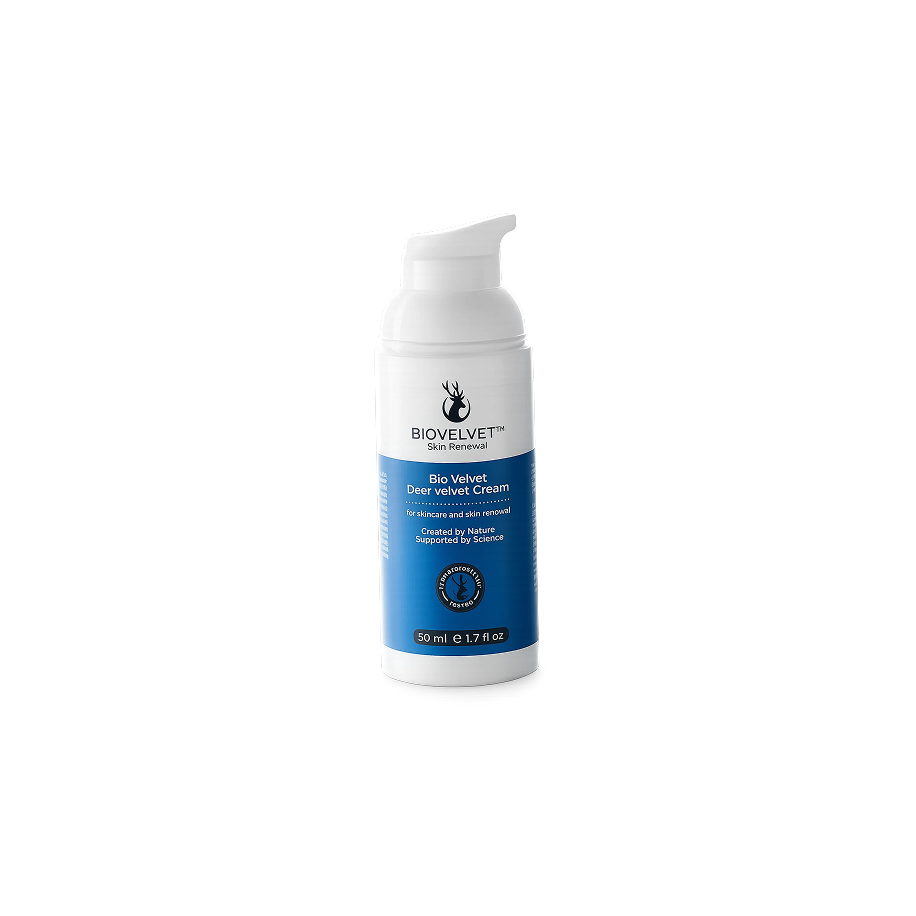
BioVelvet Recovery Cream
Petroleum-free recovery support built around bisabolol and allantoin, for skin that stings, flushes, or feels tight, backed by a 90-day money-back guarantee.
Bisabolol, alpha-bisabolol, and bisabolol terpene: what the names mean
These names sound more complicated than they are.
Bisabolol is the general ingredient name you will see in skincare conversations.
Alpha-bisabolol is the form most commonly used and studied in cosmetics. When people talk about bisabolol benefits for skin, this is usually what they mean.
Bisabolol terpene refers to the ingredient's broader chemical family. That label is mainly useful for classification. It does not change the core reason the ingredient is in skincare products: to help calm visible irritation and support skin comfort.
So in everyday skincare terms, most people can treat "bisabolol" and "alpha-bisabolol" as functionally the same conversation.
Where bisabolol comes from
Bisabolol can be sourced naturally from plants, including chamomile, and it can also be produced in other ways for cosmetic use. Many people assume the plant source is the most important part of the story. Usually, it is not.
What matters more is:
- the quality of the finished formula
- whether the overall product is gentle
- whether your skin tolerates it well
- what the product is trying to do alongside bisabolol
A well-formulated product with bisabolol in a gentle base will usually matter more than whether the ingredient sounds more natural on the label. Sensitive skin does not care much about marketing categories. It cares whether the formula helps or irritates.
Bisabolol skin benefits: what it may help with
The main bisabolol skin benefits are fairly straightforward. It is valued for helping calm visible redness, reduce the feeling of irritation, and make sensitised skin feel less reactive.
This is not the kind of ingredient people usually buy for dramatic resurfacing or fast visible transformation. It plays a quieter role. It helps create a better environment for skin that is stressed, overworked, or uncomfortable.
That matters more than it sounds. A lot of skin problems get worse when the barrier stays irritated. The more your skin stings, flakes, overreacts, or feels permanently "off," the more useful calming support becomes.
Bisabolol is often included to support that barrier environment rather than act like a harsh active. In practical terms, that means it is often there to help skin tolerate the rest of the routine better.
It may also help support a more even-looking skin tone over time, especially when redness and irritation are part of what is making the skin look uneven. But it is important to keep the claim in proportion: bisabolol is well-liked and useful, not a cure-all.
Why bisabolol is considered a soothing ingredient
Bisabolol is considered soothing because it is commonly used in formulas designed for skin that is quick to react. Think stinging after cleansing, flushing from weather, discomfort after over-exfoliation, or that raw feeling that follows too many active products layered together.
In simple terms, it helps take the edge off.
That does not mean it treats the underlying cause of every skin issue. It means it can support skin that feels overstimulated, uncomfortable, or visibly irritated. For many people, that is exactly what makes it valuable.
Can bisabolol help after irritation, breakouts, or over-exfoliation?
In real life, this is where bisabolol often makes the most sense.
It is commonly used in products meant for:
- skin recovering from strong acids or retinoids
- shaving irritation
- windburn or sun-exposed skin
- post-breakout redness
- routines that have become too aggressive
- skin that feels stripped after over-cleansing
If your skin is not dealing with a major medical issue but simply feels pushed too hard, bisabolol can be useful as part of the reset. Not because it fixes everything on its own, but because it supports comfort while the skin settles.
It also tends to work well in formulas meant for recovery phases, where the goal is to simplify the routine, reduce stinging, and stop adding more irritation.
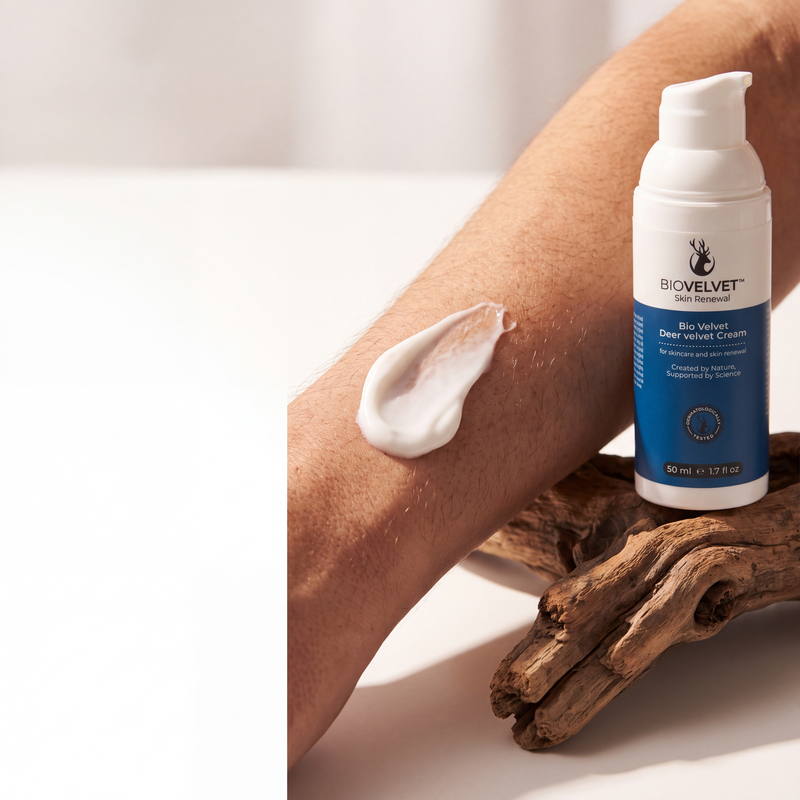
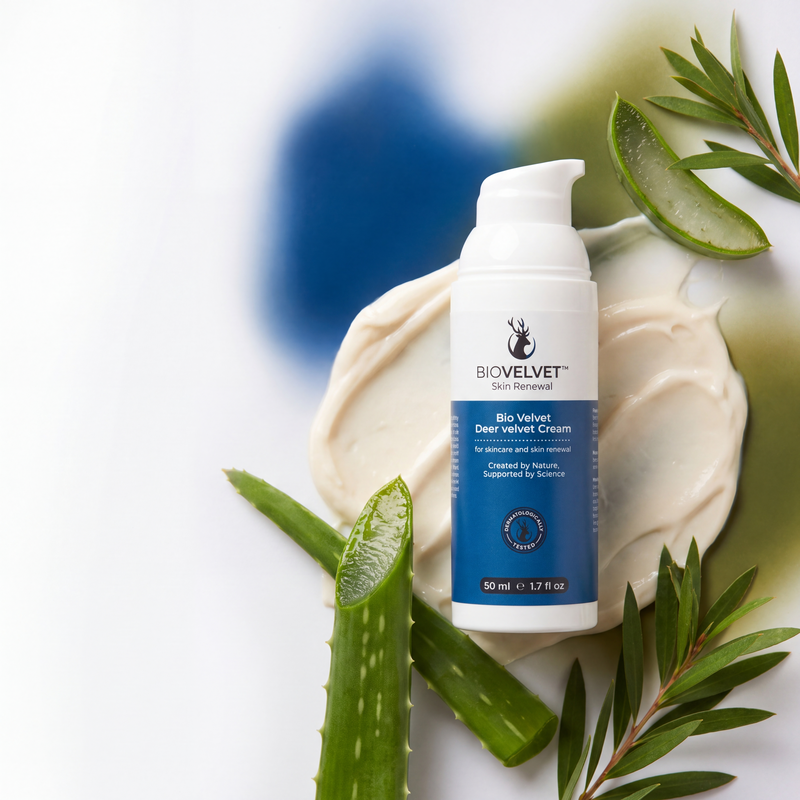
BioVelvet Recovery Cream is one example of that approach: it pairs bisabolol with allantoin and deer antler velvet extract, used topically for skin that feels irritated, tight, or slow to settle. You can see how the actives sit together in the full ingredient breakdown.
Bisabolol for uneven-looking skin
Bisabolol is sometimes described as brightening or tone-evening, but that needs context.
Its effect on uneven-looking skin is usually secondary. In other words, it may help skin look more even because it is calming irritation and supporting recovery. If redness, lingering post-breakout marks, or mild reactive blotchiness are part of the problem, a soothing ingredient can help the skin look more settled over time.
That is different from a dedicated pigment treatment.
Bisabolol is not the same as using a targeted routine for stubborn dark marks, melasma, or deep post-inflammatory pigmentation. If discoloration is your main concern, bisabolol can be a helpful support ingredient, but it is rarely the main event.
Who is bisabolol best for?
Bisabolol tends to make the most sense for people with skin that is sensitive, dry, reactive, redness-prone, or stressed by too many products.
It is especially useful in routines built around stronger actives. If you use retinoids, exfoliating acids, acne treatments, or products that can leave skin feeling tight and overworked, a calming support ingredient becomes much more relevant.
It also appeals to acne-prone users who want soothing ingredients without the heavy feel of thick occlusives. Not everyone with irritated skin wants a rich balm. Some want something lighter that still helps reduce discomfort.
The main thing to keep in mind is scope. Bisabolol is supportive skincare. It is not a substitute for condition-specific medical care.
Sensitive and redness-prone skin
If your skin reacts to fragrance, cold air, heat, over-cleansing, or trying one new product too many, bisabolol is the kind of ingredient worth noticing.
People with redness-prone skin often do not need more intensity. They need fewer triggers and better support. That is where bisabolol fits best. It is often included in formulas meant to help skin feel calmer and look less visibly stressed.
For someone with a skin history that includes frequent stinging or flushing, that can be more useful than another "active" promising dramatic results.
Dry, compromised, and barrier-stressed skin
Bisabolol can also make sense for dry or barrier-stressed skin, but it works best as part of a broader formula.
On its own, it is not a full answer to severe dryness. Dry and compromised skin usually needs several things working together:
| What the skin needs | What it does |
|---|---|
| Humectants | Pull water into the skin |
| Emollients | Soften roughness |
| Barrier-supporting ingredients | Reduce water loss |
| A gentle base | Avoids re-irritating the skin |
Bisabolol helps most when it is part of that bigger picture. Think of it as the calming support inside a formula, not the only thing doing the heavy lifting.
Can bisabolol help skin with eczema, rosacea, or acne?
Carefully: it may help support comfort and reduce visible irritation, but it does not replace proper treatment.
For eczema-prone skin, a bisabolol-containing product may feel soothing and may support the barrier between flares. But it is not a replacement for medical care during severe or worsening flares.
For rosacea-prone skin, it may help reduce the feeling of reactivity in a gentle routine. But persistent facial redness, burning, or flushing still needs the right diagnosis. Many things can look similar on the surface.
For acne-prone skin, bisabolol can be useful as a support ingredient when breakouts are being treated with stronger products that cause dryness or irritation. It may help make those routines easier to tolerate.
In all three cases, the realistic framing is the same: supportive, not curative.
How to use bisabolol in a routine
Most people do not need a dedicated bisabolol product. If bisabolol already appears in a well-formulated calming moisturiser, serum, sunscreen, or recovery cream, that is often enough.
This is usually an ingredient you use as part of a formula, not one you chase in isolation.
You will commonly see it in:
- serums
- moisturisers
- sunscreens
- after-sun products
- masks
- recovery creams
- gentle treatment products
For routine placement, the product type matters more than the ingredient itself. A bisabolol serum goes where a serum goes. A bisabolol cream goes where a cream goes.
For many people, the most useful approach is simple:
| When | What the routine looks like |
|---|---|
| Morning | Gentle cleanse, hydrating or calming layer, moisturiser if needed, SPF |
| Night | Cleanse, treatment if using one, calming moisturiser or recovery cream |
| Recovery phase | Strip the routine back, avoid irritation, use barrier-supporting products |
If your skin is reactive, patch test first and add one new product at a time. That rule matters more than any ingredient promise on the box.
What products commonly contain bisabolol
Bisabolol appears in a wide range of formats, including:
| Format | What it suits |
|---|---|
| Creams and lotions | Daily moisturising |
| Serums | Calming support |
| Sheet or wash-off masks | Skin that feels stressed |
| Sunscreens | Sensitive skin |
| After-sun formulas | Skin after sun exposure |
| Oil-based blends | Sometimes sold as bisabolol oil products |
The format should match the problem. If your skin is dry and irritated, a cream makes more sense than a light mist. If the issue is daytime redness and sensitivity, a sunscreen with calming support may be more useful than adding another extra step.
How to pair bisabolol with other ingredients
Bisabolol tends to pair well with other gentle, supportive ingredients because it plays a support role well.
You will often see it combined with:
| Ingredient | Role alongside bisabolol |
|---|---|
| Hyaluronic acid | Hydration |
| Aloe vera | Soothing support |
| Glycerin | Moisture |
| Ceramides | Barrier care |
| Niacinamide | Barrier support and visible redness |
| Vitamin E | Added skin-conditioning support |
This is usually a good sign. Soothing ingredients often work best in teams. A calming product does not need one hero ingredient doing everything.
Using bisabolol alongside stronger actives
Bisabolol fits naturally into routines that include stronger ingredients such as:
- retinoids
- exfoliating acids
- benzoyl peroxide
- acne treatments that cause dryness
- recovery periods after in-office procedures
Its role here is not to "cancel out" irritation so you can keep overdoing actives. It is there to support the skin and help keep the routine tolerable.
If your skin is already raw, stinging, or flaking, the answer is not usually to add more layers. It is often to reduce the irritation load. Bisabolol can help in that recovery phase, but it cannot fix a routine that is still too aggressive.
Is bisabolol safe? Side effects, allergies, and common concerns
In skincare, bisabolol is generally considered well tolerated, especially in formulas designed for calming and sensitive skin. That is a large part of why it is used so widely.
But no ingredient is universal.
Natural origin does not automatically make something risk-free. Plant-derived ingredients can still irritate some people, and the full formula always matters. A product can contain bisabolol and still be a poor choice for reactive skin if it also contains fragrance, essential oils, or other common triggers.
Patch testing is still worth doing, especially if your skin has a history of reacting unpredictably.
Watch for signs such as:
- burning that does not settle
- increased redness
- itching
- swelling
- rash-like bumps
- worsening dryness after repeated use
If that happens, stop using the product and strip the routine back to basics.
Can bisabolol irritate skin?
Yes, it can, although that is not the usual experience.
Irritation or allergy is still possible, especially in highly reactive skin or in formulas that contain many other potential triggers. It is also easy to blame one ingredient when the real issue is the overall product.
That is why patch testing matters. Test a small amount first, especially if your skin already struggles with fragrance, botanical extracts, or complex formulations.
Is bisabolol safe for daily use?
For many people, yes.
Whether daily use makes sense depends less on bisabolol itself and more on the full formula and the state of your skin. A gentle moisturiser with bisabolol may be fine twice daily. A treatment product that also contains stronger actives may not be.
So the right question is not just "Is bisabolol safe every day?" It is "Is this specific product suitable for my skin every day?"
When a soothing ingredient is not enough
There are limits to what skincare can do.
More skincare is not the answer if you are dealing with:
- a worsening rash
- signs of infection
- a severe burn
- persistent or spreading facial redness
- broken skin that is not healing
- a chronic condition that is getting worse despite topical care
Those situations need proper medical assessment. A soothing ingredient may still have a support role later, but it is not the main intervention.
What bisabolol can and cannot do: realistic expectations
Bisabolol can help skin feel calmer and look less visibly irritated. That is the useful, grounded version of the claim.
It is not a miracle ingredient. It will not single-handedly transform skin that is dealing with a larger problem. Results depend on the cause of the irritation, the full formula, and whether the skin is mildly stressed or dealing with a true medical condition.
That distinction matters. Skin that is slightly over-exfoliated may respond quickly to a calming routine. Skin with active eczema, rosacea, or dermatitis may need a much broader plan.
How long does bisabolol take to work?
Some people notice a comfort difference fairly quickly. Skin may feel less stingy or tight within the first few uses if the product is otherwise well suited to the skin.
Visible improvement usually takes longer.
If the problem is mild irritation, a calmer look may show up within days. If the issue is a more fragile barrier or a routine that has been too harsh for weeks, overall stability usually depends on more consistent use and fewer triggers over time.
So the timeline is usually:
- comfort first
- visible settling second
- stronger barrier resilience later
What bisabolol will not do
Bisabolol will not:
- replace prescription treatment
- erase deep pigmentation by itself
- clear severe acne on its own
- resolve psoriasis plaques
- stop a major eczema flare by itself
- fix a routine if the real trigger is still present
That last point is often the big one. If your skin is being irritated every day by over-cleansing, fragranced products, too many actives, or environmental triggers, a soothing ingredient can only do so much.
Support helps. Removing the cause helps more.
How to read a label and choose a good bisabolol product
If you are interested in bisabolol, the goal is not to buy the product shouting loudest about it. The goal is to choose a formula that makes sense for your skin.
A good bisabolol product usually has three things going for it:
- a gentle base
- sensible supporting ingredients
- a clear match between the formula and the skin problem
Concentration is not the only thing that matters here. With soothing ingredients, the surrounding formula often matters more than chasing the strongest-sounding number.
What to look for on the ingredient list
Look at the whole product, not just the headline ingredient.
If your skin is sensitive or reactive, pay attention to whether the formula also contains:
- added fragrance
- drying alcohols
- lots of essential oils
- multiple strong actives
- ingredients you already know trigger your skin
Then look for helpful support around bisabolol, such as:
- glycerin
- hyaluronic acid
- ceramides
- aloe vera
- niacinamide
- barrier-supporting creams or emollients
The best bisabolol product for stressed skin is usually the one that gives the ingredient a calm, low-drama environment to work in.
When bisabolol is worth prioritising
It makes practical sense to prioritise bisabolol when your skin is dealing with:
- sensitivity
- redness
- post-irritation recovery
- active-heavy routines
- shaving discomfort
- mild barrier stress
- products that usually sting
In these situations, bisabolol is not random label decoration. It is aligned with what the skin actually needs.
When another type of product may matter more
For some concerns, bisabolol should be treated as supportive rather than primary.
That is especially true for:
- severe acne
- active eczema flares
- psoriasis plaques
- deep pigmentation
- persistent rosacea symptoms
- infected or worsening rashes
In those cases, the more important question is what the main treatment should be. A bisabolol product may still be helpful as part of the routine, but it is not the core answer.
If your skin problem needs treatment, choose treatment first. Then use soothing support around it.
Ready to try?
BioVelvet Recovery Cream
Built for skin that stings, flushes, or feels tight after too much product. Bisabolol and allantoin paired with deer antler velvet extract, used topically for everyday skin comfort.
FAQ
What is bisabolol in skincare?
Bisabolol is a calming skincare ingredient commonly used to help reduce visible irritation, support comfort, and make sensitive or reactive skin feel less stressed.
What does bisabolol do for the skin?
It mainly helps soothe skin. In practice, that can mean less visible redness, less discomfort, and better tolerance in routines that otherwise feel irritating or drying.
Is bisabolol good for sensitive skin?
Often, yes. Bisabolol is commonly used in products made for sensitive skin because it helps support a calmer feel. That said, the full formula still matters, and patch testing is wise if your skin reacts easily.
Is alpha-bisabolol the same as bisabolol?
In most skincare discussions, yes. Alpha-bisabolol is the form most commonly referenced and used in cosmetic formulations, so when people say bisabolol, they usually mean alpha-bisabolol.
Can you use bisabolol every day?
Usually, yes, if the overall product suits your skin. Daily use depends more on the full formula and your skin's condition than on bisabolol alone.
Does bisabolol help with redness?
It may help reduce visible redness, especially when that redness is linked to irritation or barrier stress. It is best understood as a supportive calming ingredient, not a treatment for every cause of redness.