Diaper rash care
Diaper rash, matched to the cause.
The right baby rash cream depends on what is causing it, from everyday irritation to a rash that needs a pediatrician instead of another cream.
Shop BioVelvet →What a Baby Rash Cream Can Help With - and What It Can't
"Baby rash" sounds simple, but it usually isn't. A rash in the diaper area can come from moisture, friction, stool, urine, heat, yeast, eczema, or a reaction to wipes or a product. That matters, because the right baby rash cream depends on the cause.
The most common situation is plain irritant diaper rash. This happens when skin stays wet too long, rubs against the diaper, or gets repeated contact with urine or stool. In that setting, a baby rash cream can help a lot. It can create a barrier, reduce friction, soothe sore skin, and give the area a better chance to recover.
What it cannot do is treat every kind of rash. If a rash is infected, severe, or not really diaper rash at all, cream alone may not be enough. That is not a failure on your part. It just means the rash needs a different approach.
What diaper rash usually looks like
Simple diaper rash often shows up as:
- Red or pink skin in the areas touching the diaper
- Soreness or tenderness
- Small bumps
- Skin that looks warm or irritated
- Fussing or crying during diaper changes
- Rash on the buttocks, genitals, or upper thighs
In many cases, the skin folds are less affected in straightforward irritant rash, because the worst contact is on the surfaces exposed to wetness and rubbing.
When the rash may be something else
Sometimes the rash is not simple irritant diaper rash.
A few common possibilities:
- Yeast rash: often bright red, more defined, and common in the skin folds
- Eczema: dry, rough, inflamed patches that may appear beyond the diaper area
- Allergic contact rash: can happen after a new wipe, cream, detergent, or diaper brand
- Heat rash: tiny bumps linked to sweating and trapped heat
- Rash with fever or illness: this needs more caution and often medical review
If the rash looks unusual, keeps coming back, or seems more painful than expected, it is worth checking with a pediatrician rather than guessing.
Living Collagen · 50+ Bio-Active Compounds · Aloe Vera · Dead Sea Minerals
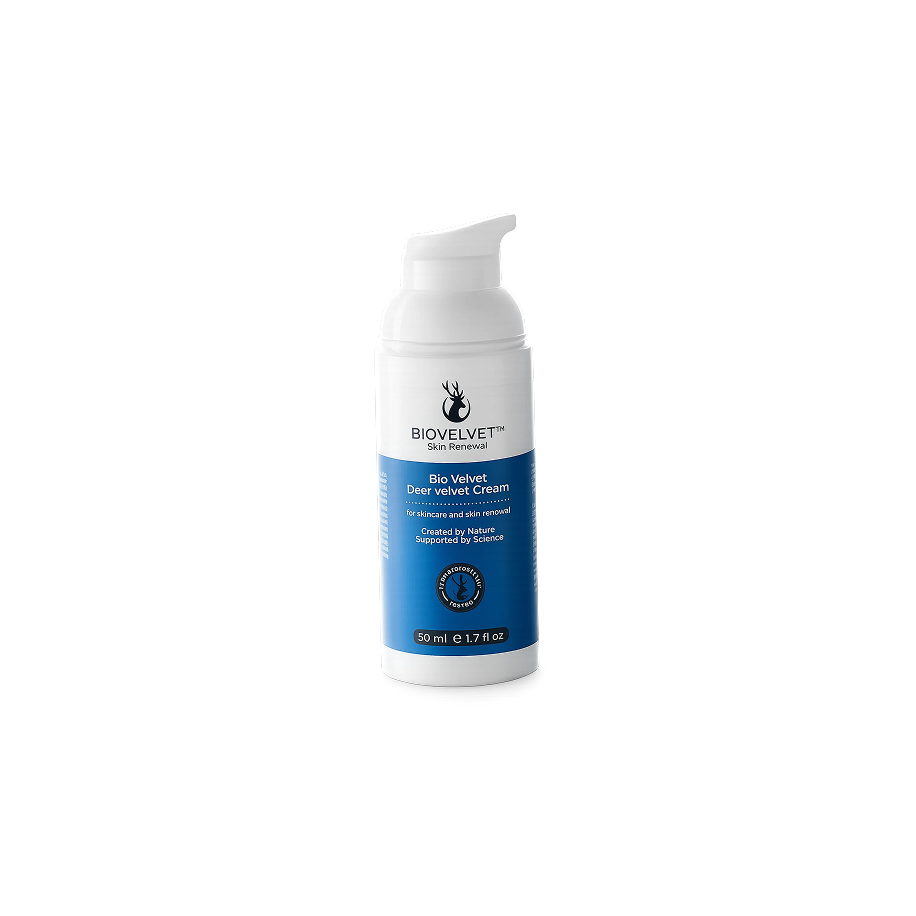
BioVelvet Recovery Cream
Recovery support for fragile, very dry skin beyond standard diaper-rash care, backed by a 90-day money-back guarantee.
How to Choose a Baby Rash Cream by Ingredient, Not Packaging
Baby rash creams are often sold with soft colors, reassuring language, and broad promises. None of that tells you much. What matters more is the ingredient type and what the product is actually meant to do.
In simple terms, the main categories are:
- Barrier creams
- Ointments
- Zinc oxide creams or pastes
- Petrolatum-based formulas
- Soothing creams for non-diaper irritation
For active diaper rash, the most useful products are usually the ones that protect skin from more wetness and friction.
Look for plain, functional ingredients:
- Zinc oxide creates a physical barrier over irritated skin
- Petrolatum seals out wetness and reduces friction
- Aloe vera can help soothe
- Simple fragrance-free formulas are often the safest place to start for reactive skin
A useful rule for parents: "natural" does not automatically mean gentler. Some of the most irritating ingredients in baby products are natural fragrances and essential oils. When skin is already inflamed, added scent is rarely helpful.
Texture matters too. Thick pastes usually work better for active diaper rash, especially overnight. Lighter creams can make sense for mild irritation, chafing, or prevention when the skin is currently calm.
Ingredients that usually help
Here are the ingredients that tend to be most useful in a baby rash cream:
- Zinc oxide: the classic diaper-rash ingredient. It sits on top of the skin and protects it from moisture.
- Petrolatum: a strong barrier ingredient that helps seal out urine and stool.
- Lanolin: helps soften and protect, though some babies with very reactive skin may not tolerate it as well as simpler formulas.
- Shea butter: supports dry, rough skin and helps reduce friction.
- Aloe vera: soothing and often helpful when skin looks sore or inflamed.
- Other simple barrier-supporting ingredients: products with short ingredient lists are often easier to troubleshoot if the skin reacts.
Ingredients to be cautious with on irritated baby skin
Be careful with:
- Fragrance
- Strong essential oils
- Products with lots of extra botanical add-ins
- Heavily preserved formulas that do not explain their use clearly
- Products marketed for "everything" without clear instructions for diaper-area use
That does not mean every added ingredient is harmful. It means irritated baby skin usually does better with fewer variables.
Best Baby Rash Creams Compared: Best for Different Needs, Not "Best Overall"
There is no single best baby rash cream for every baby or every rash. The table below is organised by use case, not by quality ranking. Position in the table does not mean winner to loser. It is simply one way to compare options without pretending one cream solves every situation.
Comparison table: baby rash cream options by use case
| Position | Product | Best for... | Texture | Main barrier/support ingredients | Better for prevention or active rash? | Limitations |
|---|---|---|---|---|---|---|
| 1 | Desitin Maximum Strength | Best for thick overnight protection | Very thick paste | Zinc oxide | Active rash, especially when skin is exposed to longer wet periods overnight | Can feel messy; hard to wipe off fully |
| 2 | Vaseline or plain petrolatum ointment | Best for everyday diaper-rash prevention | Ointment | Petrolatum | Prevention and mild irritation | Less protective than high-zinc pastes for more inflamed rash |
| 3 | BioVelvet Recovery Cream | Best for compromised or very dry irritated skin that needs recovery support beyond basic moisture | Rich cream | Deer antler velvet, hyaluronic acid, aloe vera, vitamin E, allantoin | Better suited to fragile, very dry, or irritated skin outside standard diaper-rash care | Not a standard diaper-rash paste; parents should ask a pediatrician before using any non-standard cream in the diaper area on a baby |
| 4 | Boudreaux's Butt Paste Original | Best for fragrance-free minimalist diaper-rash care | Thick paste | Zinc oxide | Active rash and prevention in babies who rash easily | Thick texture is not for everyone |
| 5 | Antifungal cream recommended by a clinician | Best for yeast-suspected rash only under clinician guidance | Varies | Antifungal active depends on product | Yeast rash, not routine prevention | Not for self-diagnosing every diaper rash; needs medical guidance if yeast is suspected |
How to describe BioVelvet in the table without overclaiming
BioVelvet Recovery Cream sits in a different lane from standard diaper-rash pastes. It is not a zinc oxide barrier paste and should not be framed as a replacement for basic diaper-rash treatment.
Where it may be relevant is irritated, fragile, or very dry skin that needs recovery support beyond simple moisture. Its formula includes deer antler velvet, hyaluronic acid, aloe vera, vitamin E, and allantoin. New Zealand deer antler velvet extract is the hero ingredient in BioVelvet Recovery Cream, paired with those supporting ingredients. In plain terms, that means ingredients chosen to support moisture, soothe irritation, and help stressed skin recover.
For babies, though, the diaper area is a special case. Before using any non-standard cream there, especially on broken or persistent rash, it is sensible to speak with a pediatrician first.
How to Use Baby Rash Cream Correctly
A good cream helps most when it is used properly. The basics are simple.
- Clean gently. Use warm water or a very gentle wipe if needed.
- Pat dry fully. Do not trap moisture under the cream.
- Apply enough product. For active rash, think protective layer, not a thin rub-in lotion.
- Do not over-rub. Irritated skin does not need scrubbing.
- Reapply as needed. During active diaper rash, that often means every diaper change.
For active rash, most parents do best with cream at every change. For prevention, use can be more selective: before naps, overnight, during diarrhea, during teething, or any time your baby tends to rash more easily.
A few practical answers parents often want:
- Do you wipe all the cream off each time? No. If there is still a clean barrier layer in place, you do not need to scrub it all off. Remove stool gently, then reapply where needed.
- How much should you use? More than most first-time parents think. The skin should look protected, not lightly moisturised.
- Should you let the skin air-dry first? Yes, if you can. Even a short period of full drying helps.
Common mistakes that keep diaper rash from improving
A few things commonly slow progress:
- Applying too little cream
- Scrubbing the area completely clean at every diaper change
- Using fragranced wipes on broken skin
- Switching products every day out of frustration
- Leaving the diaper area damp before applying cream
Consistency matters more than trying five products in two days.
When a baby rash cream fits into prevention, not just treatment
Baby rash cream is not only for skin that is already red.
Barrier creams can also help prevent rash in babies who are more likely to flare during:
- Teething
- Diarrhea
- Antibiotics
- Overnight diaper wear
- Periods of frequent stooling
In those situations, a protective layer before irritation starts can be more useful than waiting for the skin to break down first.
BioVelvet vs a zinc oxide diaper paste at a glance
BioVelvet
- Supports very dry or fragile skin
- Barrier and moisture recovery
- Petroleum-free and lanolin-free
- Gentle enough for sensitive and baby skin
Zinc oxide paste
- Protects against wetness and friction
- The standard first choice for active diaper rash
- Can feel thick and hard to wipe off
- Works alongside a recovery cream for dry skin
Bottom line: zinc oxide paste is the standard for active diaper rash. BioVelvet is not a diaper-rash paste replacement - it supports very dry, fragile skin, and it is worth checking with a pediatrician before using any non-standard cream in the diaper area.
When a Baby Rash Cream Is Not Enough
Most mild diaper rashes improve with sensible home care. But a baby rash cream has limits.
If the rash is severe, blistered, bleeding, spreading beyond the diaper area, linked to fever, or not improving after a few days, it is time to call a pediatrician.
Some rashes need treatment that a barrier cream cannot provide:
- Yeast rashes often need an antifungal
- Bacterial infection may need medical evaluation
- Eczema-like rashes may need a different skin plan entirely
- Allergic reactions may require stopping the trigger, not just adding more cream
Parents often feel they should be able to solve diaper rash themselves. Sometimes you can. Sometimes you should not have to.
Signs that suggest a yeast or infected rash
Ask for medical advice if you notice:
- Bright red rash in the skin folds
- Sharply defined edges
- Small "satellite" spots around the main rash
- Oozing
- Pus
- Unusual tenderness
- Rapid spreading
These signs do not always mean something serious, but they do suggest the rash may not be plain irritant diaper rash.
A realistic timeline for improvement
Mild irritant diaper rash often starts to look better within 1 to 3 days once the skin is kept clean, dry, and protected.
If the rash is still not improving after a few days of good barrier care, or if it keeps returning, it deserves a closer look. Persistent rash is often a clue that the original cause has been missed.
Ready to try?
BioVelvet Recovery Cream
Deer antler velvet paired with hyaluronic acid, aloe vera, vitamin E, and allantoin - support for skin that needs more than basic moisture. For diaper-area use on a baby, check with your pediatrician first.
FAQ
What is the best baby rash cream for diaper rash?
For straightforward diaper rash, a thick zinc oxide cream or paste is usually the most practical starting point. It protects skin from moisture and friction. The best choice depends on the situation: thick zinc products for active rash, petrolatum ointments for prevention, and simpler fragrance-free formulas for babies with reactive skin.
Can I use baby rash cream at every diaper change?
Yes. During active diaper rash, many babies benefit from cream at every diaper change. If the skin is calm, some parents use it more selectively for prevention, especially overnight or during diarrhea.
How do I know if my baby's rash is diaper rash or a yeast rash?
Simple diaper rash usually affects the surfaces that touch the diaper and is linked to moisture and friction. Yeast rash is often bright red, shows up in the skin folds, and may have small spots around the edges. If you are not sure, or if it is not improving, call your pediatrician.
Do you wipe off all diaper rash cream before reapplying?
Not always. You do not need to scrub every bit off at each change. Gently clean away stool and urine, leave any clean barrier layer that is still protecting the skin, and add more cream where needed.
When should I call a doctor about a baby rash that is not getting better?
Call a doctor if the rash is severe, bleeding, blistered, very painful, spreading, linked to fever, or not improving after a few days of sensible home care. Also call if you suspect yeast, infection, or eczema rather than standard diaper rash.