Natural psoriasis care
What natural psoriasis treatment can do, and where it needs backup.
Moisturizing, gentle bathing, and trigger management do most of the everyday work. Here is what a recovery cream can add for skin left dry and fragile after a flare, and when plaques need more than home care.
Shop BioVelvet →What Natural Psoriasis Treatment Can Realistically Do
People usually search for natural psoriasis treatment for a reason. Often, they are tired of recurring flares, tired of steroid cycles, tired of products that sting, and tired of spending money on one more cream that promises relief and delivers very little. That frustration is real.
It also helps to be clear from the start: psoriasis is a chronic immune-driven skin condition. That means natural care may help manage symptoms, reduce discomfort, support the skin barrier, and make plaques easier to live with. It is not a cure.
For mild psoriasis, home care can sometimes make a meaningful difference in day-to-day comfort. For moderate or severe psoriasis, natural care usually works best as support alongside medical treatment, not instead of it.
That is the lens for this article: what may realistically help soothe plaques, reduce scaling, support skin recovery, and help you avoid common triggers.
Psoriasis vs. dry skin or eczema: why the distinction matters
Psoriasis is often confused with ordinary dry skin or eczema, but they are not the same thing. Psoriasis plaques are usually thicker, more sharply defined, and more visibly scaly. Dry skin tends to look rough and flaky without the same dense buildup. Eczema often feels itchier and can look more red, weepy, or irritated in flexural areas like behind the knees or inside the elbows.
That distinction matters because the right care plan depends on the right diagnosis. A home routine that helps dry skin may do very little for psoriasis. And if you are treating psoriasis like simple dryness for months without improvement, it is time to get it checked.
A quick answer: what is the best natural psoriasis treatment?
There is no single best natural psoriasis treatment for everyone. For most people, the strongest basics are regular moisturising, gentle bathing, trigger management, stress reduction, and selected soothing ingredients such as aloe vera or oatmeal. Simple, consistent care usually helps more than cycling through lots of trendy remedies.
Deer Antler Velvet Extract · Hyaluronic Acid · Aloe Vera · Allantoin
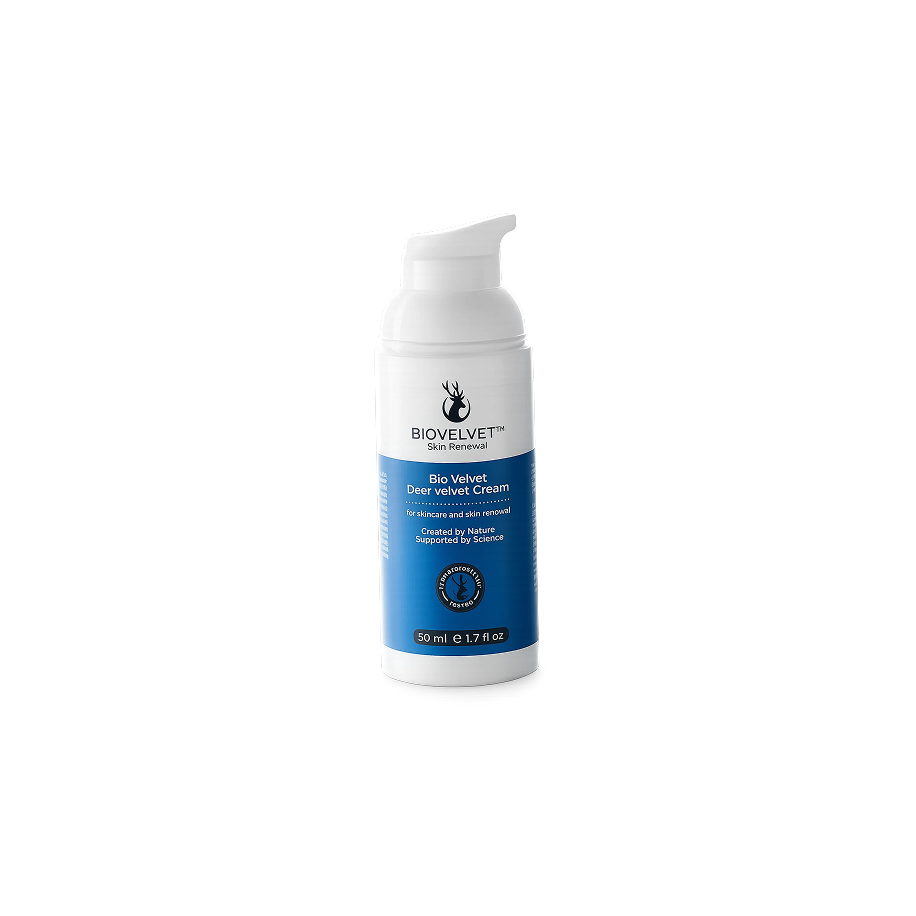
BioVelvet Recovery Cream
Steroid-free recovery support for dry, plaque-prone skin between flares. 90-day money-back guarantee.
The Natural Psoriasis Treatment Basics That Help Most People
The most useful natural psoriasis care is usually the least glamorous. Protect the skin barrier. Reduce irritation. Keep plaques from getting drier, tighter, and more inflamed.
That matters more than adding five different oils, masks, or DIY mixtures at once.
A simple routine for flare-prone skin often looks like this:
- Cleanse gently
- Soften scales without scrubbing
- Apply a rich cream or ointment
- Protect skin from triggers you already know make things worse
Consistency usually matters more than complexity.
Moisturising: the foundation of natural psoriasis treatment
If you do one thing consistently, make it moisturising. Thick, fragrance-free creams and ointments usually help more than light lotions, especially on elbows, knees, hands, and lower legs where plaques often get drier and more cracked.
Moisturising does not treat the underlying disease. What it can do is reduce tightness, scaling, cracking, and itch. It can also make plaques feel less stiff and help skin hold onto water better.
For many people, the best time to apply a cream is right after bathing, while the skin is still slightly damp.
Baths, soaks, and scale-softening care
Lukewarm baths can help soften plaques and make scales easier to manage. Some people find colloidal oatmeal soothing for itch and dryness. Others use Epsom salt or Dead Sea salt baths as part of their routine, especially for body plaques.
The key word is gentle. Hot water can worsen dryness and irritation. Harsh scrubbing can inflame plaques further. Picking scales off can leave skin raw, sore, and more vulnerable.
If a bath helps, keep it short, keep the water warm rather than hot, and moisturise soon after.
Sunlight, climate, and everyday trigger management
Some people with psoriasis improve with careful sun exposure. Others burn easily, and sunburn can trigger more inflammation. So sunlight is not a simple yes-or-no remedy. A little may help. Too much can absolutely backfire.
Triggers vary, but common ones include stress, skin injury, harsh soaps, alcohol, smoking, winter dryness, and friction from clothing. Tight waistbands, scratchy fabrics, and repeated rubbing can all make already irritated skin feel worse.
One of the most practical forms of natural psoriasis treatment is simply learning your own pattern and removing what repeatedly sets your skin off.
Stress reduction and sleep support
Psoriasis and stress often feed each other. Flares raise stress. Stress can worsen flares. That does not mean psoriasis is "just stress." It means the nervous system is part of the picture.
Walking, yoga, mindfulness, therapy, and better sleep routines can all help some people feel more stable between flares. These are not direct treatments for plaques in the way a prescription medicine might be. But they can be part of a realistic, whole-person plan that reduces the background pressure on the body.
Natural Ingredients and Remedies for Psoriasis: What May Help
The phrase "natural remedy" covers everything from sensible barrier support to things that sting badly and make skin worse. Natural does not automatically mean effective. It also does not automatically mean gentle.
Aloe vera, oatmeal, and other soothing topicals
Aloe vera is widely used to calm irritated skin, and many people find it soothing when plaques feel hot, tight, or uncomfortable. Oatmeal baths can also help with itch and dryness for some people.
In practice, bland barrier-supporting creams are often more useful than heavily fragranced herbal products. If a product contains lots of perfume or multiple plant extracts, it may be more irritating than helpful.
For skin that is already inflamed, simpler is usually better.
Dead Sea salt, mineral soaks, and scalp-friendly approaches
Dead Sea salt and other mineral soaks are commonly discussed in psoriasis care for a reason. Some people find they help soften plaques and make skin feel less congested and uncomfortable, especially on the body.
Scalp psoriasis needs its own kind of patience. One of the most helpful approaches is to soften scale before washing rather than trying to scrape it off. Letting a gentle, rich product sit on the scalp first can make washing less traumatic to the skin. Pulling or scratching thick scalp scale away aggressively often leaves the area more inflamed.
Apple cider vinegar, tea tree oil, and other remedies that need caution
Some people use diluted apple cider vinegar for scalp itch. The problem is that even diluted vinegar can sting, especially on cracked or freshly scratched skin.
The same caution applies to essential oils. Tea tree oil gets mentioned often because people associate it with scalp and skin relief, but sensitive skin does not always agree. Natural oils can still trigger irritation or allergy, especially when used too often or at too high a strength.
If you try either, patch test first and stop if the skin burns, reddens further, or feels worse.
Turmeric, diet patterns, and anti-inflammatory lifestyle changes
Turmeric is one of the most searched natural options for inflammatory skin problems. Some people report symptom improvements with it, whether through food or supplements, but responses vary. Diet is not a standalone psoriasis treatment.
What tends to be more useful than fad elimination rules is a broader pattern: maintaining a healthy weight, limiting excess alcohol, not smoking, and eating in a generally anti-inflammatory way that you can actually sustain.
That may look like more whole foods, fewer highly processed foods, and a pattern that supports overall health rather than trying to "cleanse" psoriasis away.
A recovery cream approach for dry, cracked, or post-flare skin
Sometimes simple moisturising is not enough. After a flare, plaques may crack, skin may feel raw, and barrier damage can linger even when the worst inflammation has settled.
That is where a recovery cream approach can make sense. Rather than trying to "treat" psoriasis itself, a recovery cream is there to support calmer, more resilient skin during the recovery phase.
BioVelvet Recovery Cream was built for that kind of support. Its formula centers on deer antler velvet extract, alongside ingredients such as hyaluronic acid, aloe vera, vitamin E, and allantoin to help create a better environment for skin recovery. This New Zealand deer antler velvet extract is the ingredient BioVelvet Recovery Cream is built around. It is not a cure for psoriasis, and it is not a replacement for prescription treatment. But for skin that feels dry, fragile, or slow to settle after a flare, this kind of richer recovery-focused support may be more useful than a standard light moisturiser.
What to Avoid: Common Natural Psoriasis Treatment Mistakes
Just as important as what to try is what to skip.
Many natural remedies fail for one simple reason: they are too harsh for skin that is already cracked, inflamed, and vulnerable.
Harsh DIY remedies that can make plaques worse
Undiluted vinegar, strong essential oils, abrasive scrubs, vigorous exfoliation, and very hot baths or showers can all make plaques worse.
Damaged psoriatic skin usually responds better to softening and sealing than to aggressive stripping. If a remedy burns, stings hard, or leaves skin redder than before, it is not helping just because it is "active."
Trying too many remedies at once
When people are frustrated, they often try three or four new things in the same week. That makes it almost impossible to tell what is helping and what is irritating the skin.
Patch test first. Add one new product or remedy at a time. Give it time before deciding whether it belongs in your routine.
Stopping prescribed treatment abruptly to go fully natural
Natural care can complement medical treatment. It should not replace prescribed treatment for worsening psoriasis without medical guidance.
If you are using a prescription product, especially during a significant flare, do not stop it suddenly just to switch to home remedies. That usually creates more confusion, not less.
BioVelvet vs aloe vera gel at a glance
BioVelvet
- Supports the barrier as plaques settle
- Lasting moisture, not just a cool hit
- Helps fragile, post-flare skin
- Petroleum-free and lanolin-free
Aloe vera gel
- Cooling relief in the moment
- Evaporates fast
- Limited barrier support alone
- Cheap and easy to find
Bottom line: aloe vera can cool a hot, irritated plaque in the moment. BioVelvet is built for the barrier support that keeps plaques comfortable between flares.
When Natural Psoriasis Treatment Isn't Enough
This is the part many articles avoid, but it matters.
Natural psoriasis treatment may help mild plaques and improve day-to-day comfort. It does not replace medical care for severe, painful, widespread, infected, or joint-related symptoms.
If home care keeps failing, the answer is not always a better home remedy. Sometimes the answer is a dermatologist.
Signs you should see a doctor
Please get medical advice if you have:
- widespread plaques
- bleeding or cracked skin that is not healing
- signs of infection
- major scalp involvement
- nail changes
- itch that disrupts sleep
- symptoms that are affecting work, daily life, or mental health
Those are signs that psoriasis may need more than barrier support and home care.
Psoriatic arthritis and other red flags
If you also have joint pain, stiffness, swelling, or marked morning stiffness, that may point to psoriatic arthritis. That needs medical evaluation. Skin-focused natural remedies are not enough for that problem.
How natural care fits alongside medical treatment
The most realistic role for natural care is this: maintenance, barrier support, trigger management, and recovery between flares or alongside clinician-led treatment.
That may not sound dramatic, but for many people it is exactly what makes psoriasis more manageable.
Ready to try?
BioVelvet Recovery Cream
Built for dry, plaque-prone skin between flares. Deer antler velvet paired with hyaluronic acid, aloe vera, vitamin E, and allantoin for steroid-free comfort that works alongside your prescribed routine.
FAQ
What is the best natural psoriasis treatment?
There is no single best option for everyone. For most people, the strongest basics are thick fragrance-free moisturising, gentle bathing, trigger management, stress reduction, and selected soothing ingredients like aloe vera or oatmeal.
Can psoriasis go away with natural treatment?
Natural treatment may help manage symptoms, but psoriasis is a chronic condition and is not usually something home care makes disappear permanently. Some people go through quieter periods, but that is different from a cure.
What natural ingredient helps psoriasis plaques?
Aloe vera, oatmeal, and Dead Sea salt are among the most commonly used natural-support options. Rich barrier-supporting creams can also help reduce dryness, cracking, and scale buildup even though they do not treat the underlying disease.
Are Dead Sea salt baths good for psoriasis?
They can be helpful for some people, especially for softening body plaques and easing discomfort. The key is to keep baths lukewarm, avoid overdoing them, and moisturise afterwards.
Does aloe vera help psoriasis?
Aloe vera may help soothe irritated skin and reduce discomfort for some people. It is best thought of as supportive care rather than a treatment for the underlying disease.
When should I stop trying home remedies and see a doctor for psoriasis?
See a doctor if psoriasis is widespread, painful, bleeding, not healing, affecting your sleep, involving your scalp or nails significantly, or if you have joint pain, swelling, or stiffness. Those are signs home care may have reached its limit.