
Dermatologist Recommended Eczema Cream: What to Look For and Which Types Fit Different Flares
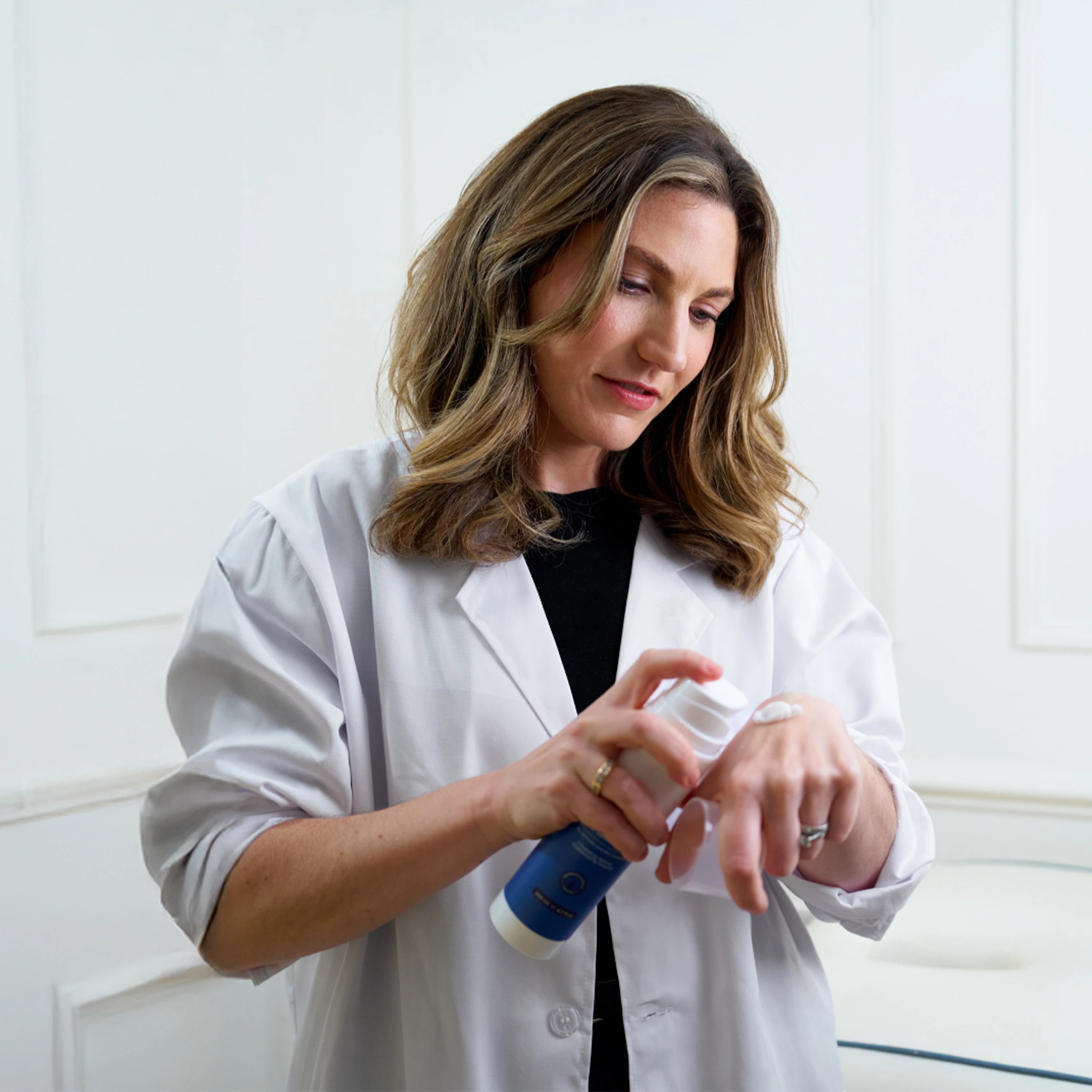
"Dermatologist recommended eczema cream" sounds like it should point to one clear answer. In real life, it rarely does.
There is no single cream dermatologists recommend for every person, every body area, or every severity level. What works well for mild facial eczema may be completely wrong for cracked hands. What helps during a quiet maintenance phase may not be enough during an active flare. And what supports recovery after a flare is not the same thing as prescription treatment for severe inflammation.
Eczema, often called atopic dermatitis, is a condition where the skin barrier is weak, water escapes too easily, and irritants get in more easily than they should. That barrier damage feeds the itch-scratch cycle: skin gets dry and inflamed, it itches, you scratch, the skin barrier gets more damaged, and the cycle keeps going.
That is why moisturising is not just a comfort step. It is part of treatment. A good eczema cream helps hold water in the skin, reduce friction, and support a barrier that is struggling to do its job.
It also helps to separate three different jobs an eczema cream might be doing:
- Daily maintenance: keeping skin comfortable between flares
- Flare support: reducing dryness and irritation while following a clinician's advice if prescription treatment is needed
- Recovery: helping fragile, reactive skin settle after a flare, after overuse of actives, or during a steroid-sparing routine supervised by a clinician
Why eczema care feels confusing
The market is crowded in a way that makes sensible choices harder, not easier. Many products claim to soothe, repair, hydrate, calm, or protect. Some do help. Many mainly moisturise for a few hours without meaningfully improving how skin behaves over time.
If you have eczema, you have probably already tried products that made skin feel softer but did not do much for itching, stinging, or the sense that your barrier was permanently on edge. That frustration is reasonable.
The types of products dermatologists usually recommend
In plain terms, these are the main categories:
- Ointments: thick, greasy, highly sealing; best for cracked, very dry skin and nighttime use
- Creams: thicker than lotions but easier to use than ointments; often the best middle ground for eczema
- Lotions: lighter and easier to spread, but usually less protective for very dry or flaring skin
- Steroid creams: prescription or over-the-counter anti-inflammatory medicines for certain flares; not the same as moisturisers
- Steroid-free barrier-repair products: creams designed to support the skin barrier, reduce dryness, and make skin more comfortable between or around flares
What ingredients matter most in a dermatologist recommended eczema cream
When dermatologists talk about eczema-friendly skincare, they usually focus less on branding and more on ingredient function. The key groups are simple:
- Occlusives to seal water in
- Humectants to draw water into the skin
- Barrier-supporting lipids to reinforce the outer layer
- Soothing agents to reduce sting and visible irritation
- Anti-itch ingredients that can make flares more tolerable
Just as important: the formula should be low-irritant. For reactive skin, fragrance-free and simple usually beats fancy.
That matters whether you are looking for the best cream for eczema itching, the best cream for eczema on face, or just a practical piece of dermatologist recommended skin care for eczema.
Ingredients that usually help
- Petrolatum: seals water into the skin and protects cracked areas
- Ceramides: help reinforce the skin barrier
- Glycerin: pulls water into the outer layer of skin
- Hyaluronic acid: helps hold moisture in the skin
- Colloidal oatmeal: soothes itching and irritation
- Shea butter: softens dry skin and supports barrier comfort
- Aloe vera: helps calm irritated skin
- Vitamin E: supports the skin barrier and helps reduce moisture loss
Ingredients that often make eczema worse
Some ingredients are not "bad" in general, but they are often a poor match for active eczema:
- Fragrance
- Harsh exfoliating acids
- Strong retinoids during flares
- Heavily fragranced botanicals or essential-oil-heavy formulas
- Anything new applied too broadly without patch testing when skin is highly reactive
Even products marketed as natural can sting compromised skin. Natural does not automatically mean gentle.
Face eczema needs a different level of caution
Facial skin is thinner, more visible, and often more reactive. The best cream for eczema on face is usually:
- simpler
- less likely to sting
- lighter than what you would use on hands, feet, elbows, or knees
A thick ointment may be perfect for cracked knuckles and completely wrong under the eyes. Face eczema usually rewards restraint.
Comparison table: dermatologist recommended eczema cream options by use case
No product is the universal winner. The better approach is to match the product type to the job it needs to do.
Choose by product comparison table
| Product | Texture | Best for | Possible drawbacks | Face suitability | Best routine phase |
|---|---|---|---|---|---|
| CeraVe Moisturizing Cream | Rich cream | Daily barrier support, mild-to-moderate dryness, maintenance | Can feel heavy for some; not enough alone for severe cracking | Usually yes, if tolerated | Maintenance, light flare support |
| Vanicream Moisturizing Cream | Thick cream | Very sensitive skin, minimal-ingredient routines, daily use | Plain feel; may need an ointment on top for severe dryness | Often yes | Maintenance, light flare support |
| Aquaphor Healing Ointment | Ointment | Sealing cracked areas, hands, feet, nighttime protection | Greasy; can feel too heavy on face or humid skin | Limited, area-specific | Flare support, nighttime sealing |
| Aveeno Eczema Therapy | Cream | Itching, dry irritated skin, colloidal-oatmeal soothing | Texture may be too light for severe hand or foot eczema | Usually yes, patch test first | Maintenance, mild flare support |
| La Roche-Posay Lipikar Balm AP+ | Balm-cream | Very dry body skin, body eczema, maintenance on large areas | Can feel rich or tacky; not ideal for everyone on the face | Sometimes, but not always preferred | Maintenance, recovery |
| BioVelvet Recovery Cream | Rich recovery cream | Dry, reactive, post-flare, slow-to-settle skin; people looking for a steroid-free recovery-focused option | Higher price point; not a replacement for prescription treatment during severe flares | Often suitable on dry, sensitised areas, patch test first | Recovery, maintenance, steroid-free support |
Choose by symptom, body area, and routine phase
| Situation | What usually fits best | Why |
|---|---|---|
| Best cream for eczema itching | Colloidal oatmeal cream or a rich fragrance-free cream | Oatmeal can help calm itching while the cream supports the barrier |
| Best cream for eczema on face | Simple, fragrance-free cream with low sting potential | Facial skin is thinner and usually less tolerant of heavy or highly active formulas |
| Best cream for hand eczema | Thick cream by day, ointment at night | Hands lose moisture quickly because of washing, weather, and friction |
| Best for nighttime sealing | Petrolatum-based ointment | Best for locking in moisture over cracked or very dry skin |
| Best steroid-free recovery option | A recovery-focused cream such as BioVelvet Recovery Cream | Useful when skin is fragile, dry, reactive, or settling after a flare |
| When prescription treatment enters the picture | Hydrocortisone, calcineurin inhibitors, PDE4 inhibitors, or other clinician-guided options | Needed when inflammation is beyond what moisturisers can control |
Why Use BioVelvet For Eczema
BioVelvet Recovery Cream belongs in this conversation as a recovery cream, not as a universal answer to every eczema case.
Its hero ingredient is deer antler velvet extract, used here topically rather than as a supplement. The formula was developed over 20 years by Dr. Doron Zur, a veterinary scientist with long experience working with deer antler velvet in animal health and tissue-repair contexts.
The formula also includes hyaluronic acid, aloe vera, vitamin E, and shea butter, which makes its role fairly clear: support moisture, calm fragile skin, and help recovery along once a flare has started to settle.
That is why it fits best in the "recovery-focused" lane: dry, sensitised skin, post-flare care, slow-to-settle patches, and people looking for a steroid-free option that does more than basic moisturising. It is not framed as a substitute for prescription anti-inflammatory treatment in severe eczema.
How to choose the right eczema cream for your skin, body area, and flare stage
A more useful framework than rankings is this:
- Match the product to severity
- Match the texture to the body area
- Match the formula to the routine phase: flare, maintenance, or recovery
- Choose the simplest formula your skin is likely to tolerate
The best cream for eczema itching may not be the same as the best everyday cream. And the best cream for eczema on face is often not the one you want for hands or feet.
For application, the basics matter more than most people think:
- apply after bathing or washing
- put it on damp skin
- use it consistently
- reapply often enough to support the barrier, especially on hands
During an active flare
- Use an ultra-gentle cleanser, or just lukewarm water if that is enough
- Stick to simple emollients and avoid acids and retinoids
- Follow prescribed medication if a clinician has already advised it
- Use thicker textures if skin is cracked or very dry
Between flares
- Moisturise regularly, not only when skin feels bad
- Pay attention to triggers like heat, harsh soaps, stress, fragrance, and overwashing
- Keep your cleanser gentle and your routine simple
- Consistency matters more than constantly switching products
If you want a steroid-free routine
Steroid-free creams can be very useful. They may support comfort, reduce dryness, and help the barrier recover. They can also make recovery periods easier and sometimes reduce how desperate skin feels between medically treated flares.
What they cannot do is act as a like-for-like replacement for prescription steroids during severe inflammatory flares. Those are different tools for different jobs.
Realistic expectations: what even the best eczema creams can and cannot do
A good eczema cream can:
- reduce dryness
- help calm itching
- support barrier repair
- make skin more comfortable
- help skin stay steadier between flares
A cream cannot:
- cure eczema
- reliably control severe inflammation on its own
- treat infection
- replace prescription care when symptoms are escalating
The search for the best cream for eczema prescription usually points to a different category: hydrocortisone, calcineurin inhibitors, PDE4 inhibitors, and other prescription treatments. These may be appropriate for certain flares, especially when moisturisers are no longer enough. They are not interchangeable with barrier creams.
When over-the-counter creams have reached their limit
See a clinician sooner if you have:
- oozing or crusting
- signs of infection
- deep cracking
- severe pain
- symptoms around the eyes
- widespread inflammation
- sleep disruption from itching
- flares that keep returning despite careful moisturising
How long results usually take
Some relief from tightness and dryness can happen quickly, sometimes after the first few uses. But meaningful barrier improvement usually depends on daily use over days to weeks. Results vary by person, body area, trigger load, and severity. YMMV is not a cop-out here. It is just true.
A simple dermatologist-style eczema routine that keeps the focus on recovery
The goal of an eczema routine is not complexity. It is steadiness.
Morning routine
- Use lukewarm water
- Use a gentle cleanser only if needed
- Apply cream to damp skin
- Finish with SPF on exposed skin
For body eczema, choose a richer cream or balm on dry areas.
For face eczema, keep the formula simple and low-sting.
For hand eczema, reapply after washing whenever possible.
Night routine
- Reapply after washing or bathing
- Use thicker textures at night if needed
- Consider ointment sealing for cracked hands or feet
A simple decision framework looks like this:
- Need daily baseline support? Start with a fragrance-free maintenance cream
- Need itch support? Consider colloidal oatmeal or a richer cream
- Need sealing for cracked skin? Use an ointment at night
- Need steroid-free support for fragile, post-flare, or slow-to-settle skin? A recovery cream like BioVelvet may fit better than a standard moisturiser
- Need control of severe inflammation? That is where prescription treatment enters the picture
FAQ
What eczema cream do dermatologists recommend most often?
Usually a fragrance-free, low-irritant cream or ointment rather than one single brand for everyone. Common recommendations include ceramide creams, minimal-ingredient creams, colloidal oatmeal formulas, and petrolatum-based ointments depending on severity and body area.
What is the best cream for eczema itching?
Often a rich fragrance-free cream with soothing ingredients like colloidal oatmeal. If itching is tied to significant inflammation, a moisturiser may help but may not be enough on its own.
What is the best cream for eczema on face?
Usually a simple, fragrance-free cream with low sting potential. Facial eczema tends to do better with lighter, less reactive formulas than those used on hands, feet, or thick body plaques.
Can a steroid-free eczema cream work as well as prescription treatment?
Not for severe inflammatory flares. Steroid-free creams can support barrier recovery, reduce dryness, and improve comfort, but they are not a direct substitute for prescription treatment when eczema is severe.
How often should I apply eczema cream during a flare?
Usually at least twice daily, and more often on areas that dry out quickly, such as hands. Applying after bathing and after washing is especially helpful.
When should I stop trying over-the-counter creams and see a dermatologist?
If you have oozing, crusting, signs of infection, severe pain, deep cracks, symptoms near the eyes, major sleep disruption, or flares that keep returning despite careful moisturising, it is time to get medical advice.
Read more
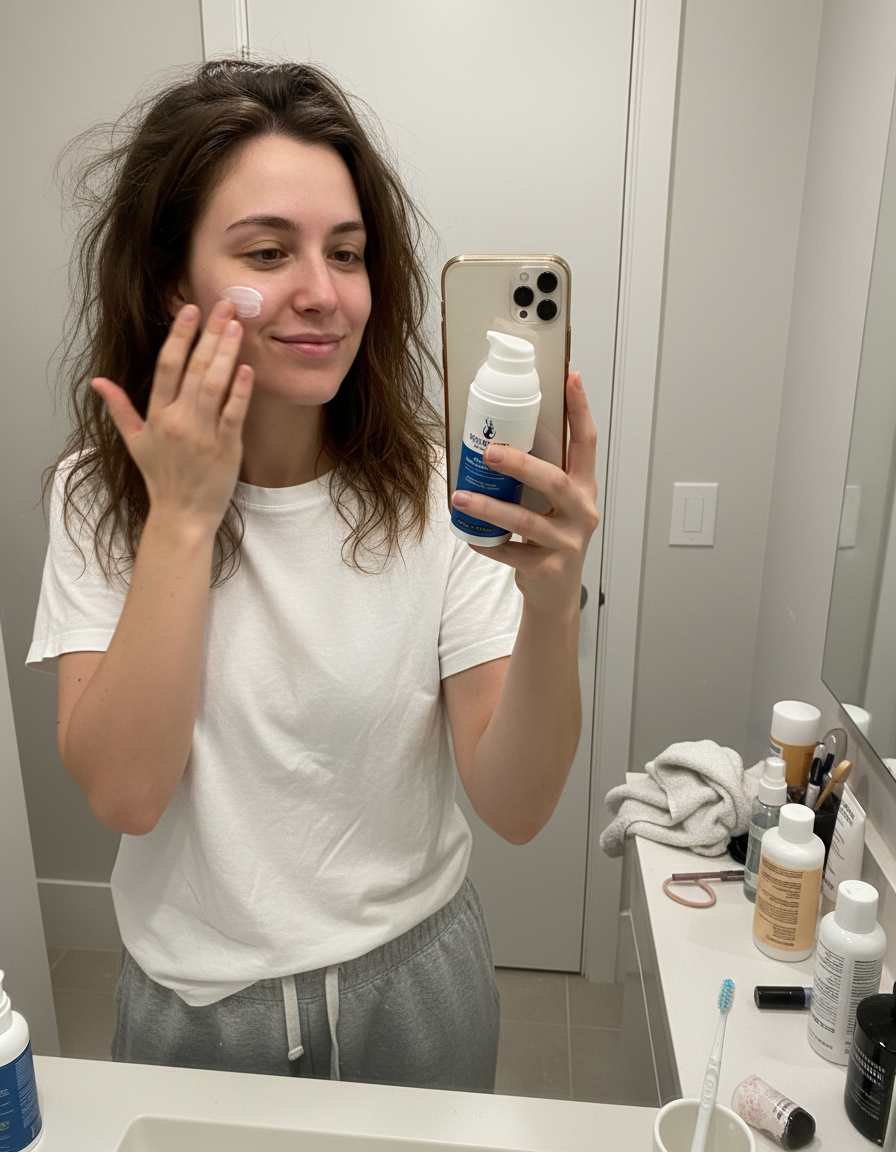
A clear guide to eczema cream for adults, including OTC options, hydrocortisone, face-safe choices, and how to choose for flares or daily care.
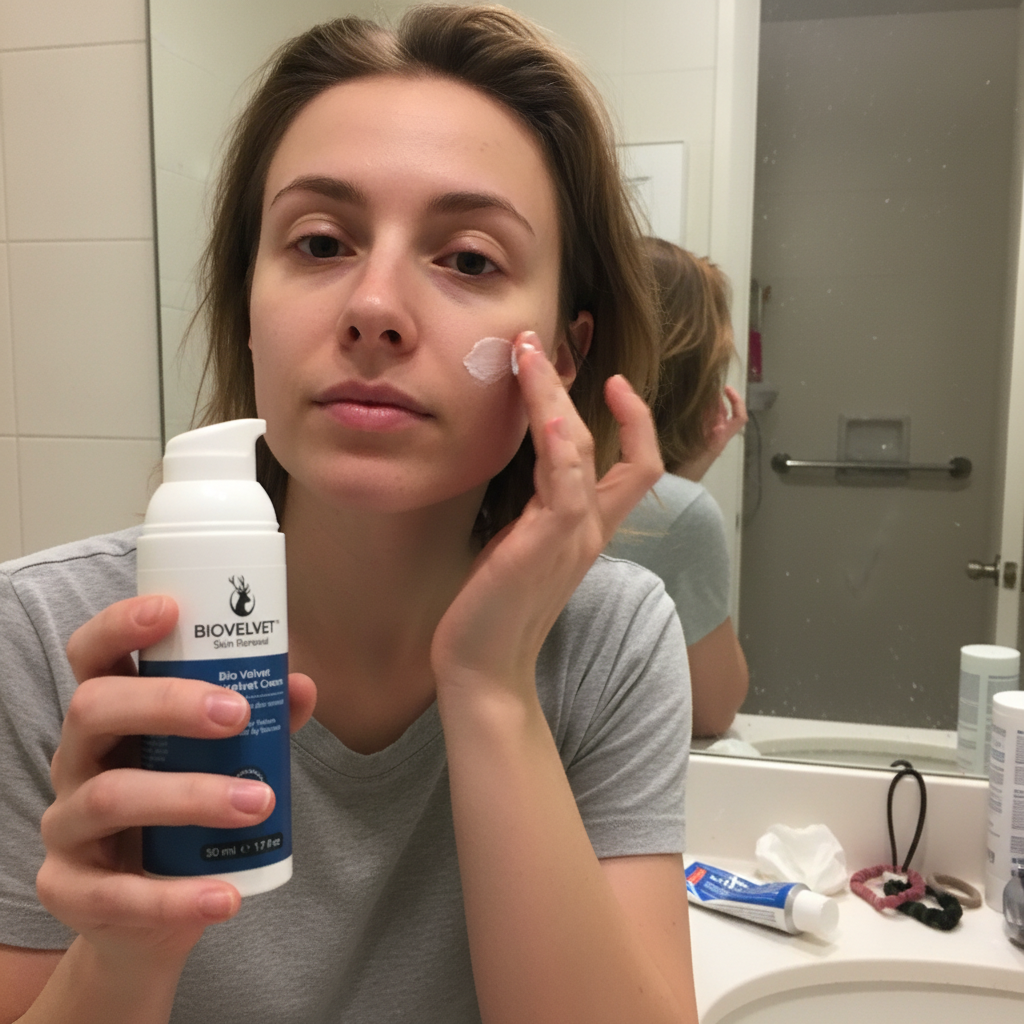
Learn what eczema on face looks like, common triggers, treatment options, and a gentle daily routine to calm flares and protect fragile skin.
