Dry skin
Why is my skin so dry even when I moisturise
Usually the texture is wrong, the timing is late, or something else in your routine is undoing it.
Shop BioVelvet → ✓ Supported byDr. Nadia Taylor, MD
 ✓ Patented ByDr Doron Zur
Why is my skin so dry
Skin gets dry when water leaves it faster than the outer layer can hold on to it. In most cases that comes down to 2 things stacked together: the environment pulling water out, and a routine that strips the barrier that is supposed to keep it in. Both are fixable, and neither is fixed by adding more product on top.
The frustrating version is the one most people are searching about, where you moisturise every day and it still feels tight by lunchtime. That is rarely a sign your skin is unusually dry. It is usually a sign that something about how you moisturise is not matching what your skin needs.
Dry or dehydrated or irritated
These get used as if they mean the same thing, and they do not. Dry skin is short of oil, so it feels rough and flakes. Dehydrated skin is short of water, so it feels tight, and it happens on oily faces too. Irritated skin has a disrupted barrier, which is the one that stings at products it used to tolerate.
Plenty of people have all three at once in winter, which is why a single light moisturiser so often does not solve it.
Petroleum-free · Holds water · Non-greasy
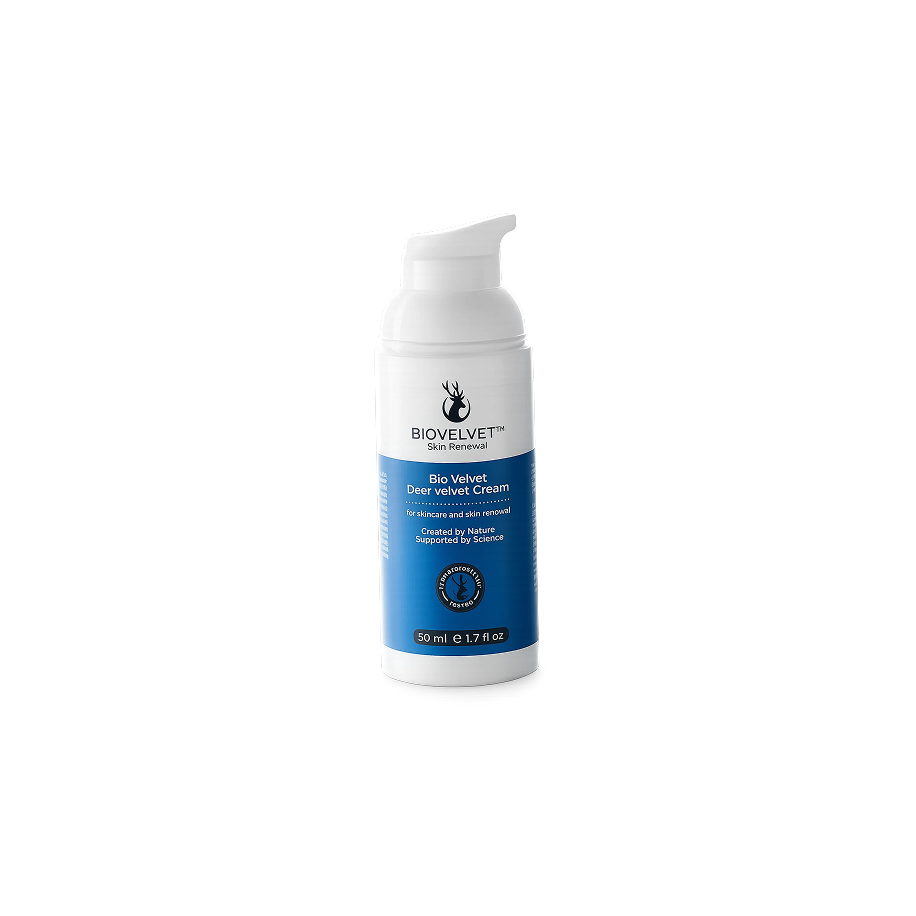
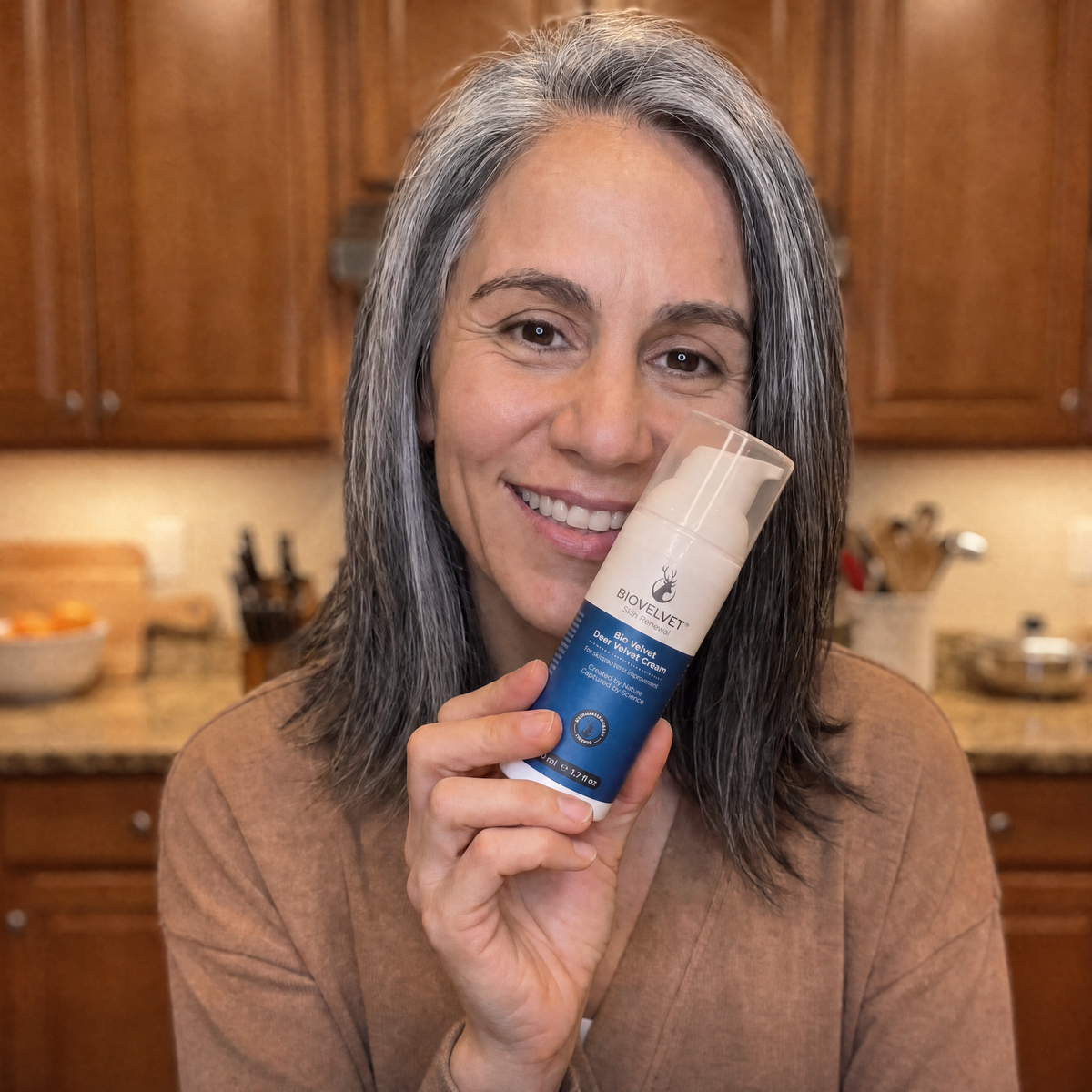
BioVelvet Recovery Cream
For skin that is tight and dry and stinging all at once. Holds water in and settles the surface, without a greasy layer. Backed by a 90-day money-back guarantee.
What is drying your skin out
Dryness almost never has one cause. It is usually two or three of these running at the same time.
| Cause | What it does | What helps |
|---|---|---|
| Cold air and indoor heating | Low humidity pulls water out of skin all day | A humidifier and a richer texture in winter |
| Long hot showers | Strips the oils that slow water loss | Short and lukewarm, then moisturise straight away |
| Foaming cleansers and scrubs | Removes the barrier along with the dirt | A gentle cleanser, and less often |
| Acids, retinoids, benzoyl peroxide | Speed up turnover faster than skin can rebuild | Pause them until skin stops stinging |
| Age and menopause | Less oil and slower recovery | Richer products and fewer irritants |
What your body might be lacking
Low levels of vitamin A, vitamin D, zinc, iron or niacin can all show up as dry, rough skin. It happens, but it is far less common than the causes in that table, and dry skin on its own is not a reason to start supplements. If the dryness arrived alongside tiredness, hair loss or brittle nails, ask your doctor about a blood test rather than guessing.
Why is my skin so dry even when I moisturise
This is the question that sends most people here, and there are really only three answers.
The texture is too light for how dry you are
Lotions, creams and ointments do different jobs rather than being stronger or weaker versions of each other. Lotion is mostly water and suits mild dryness. A cream carries more substance and suits moderate dryness. An ointment is the heaviest and belongs on skin that has actually cracked open.
The test is simple. If your skin feels dry again within an hour of applying, the texture is too light for what it needs right now, however good the ingredient list is.
It goes on too late
Moisturiser works best on skin that is still slightly damp from washing, because it traps water that is already there. Wait until your face feels tight and fully dry and you are sealing in dryness instead. Pat dry, then moisturise within a couple of minutes. Hands need reapplying every time you wash them.
Something else in the routine is undoing it
This is the most common one and the one people least want to hear. It is entirely possible to moisturise faithfully twice a day while an exfoliating acid or a retinoid or a strong vitamin C serum keeps the barrier permanently disrupted. The moisturiser is not failing. It is losing a fight it was never going to win.
If dryness started after adding something new, that timing is the answer. Simplifying for two weeks will tell you more than a fifth hydrating product.
Drinking more water rarely fixes it
Unless you are actually dehydrated, extra water makes much less difference to dry skin than people expect. The water you drink does not reach the outer layer fast enough to replace what the barrier is losing to the air. Keeping water in the skin is a surface job, which is why the fixes are shorter showers and moisturiser on damp skin rather than another litre a day.
How dry skin loses water and what stops it
Dry skin is a leak rather than a shortage. Water moves up from the deeper layers all day, and the outer barrier decides how much of it escapes into the air. Everything that helps works on one of the steps below.
Why skin dries
Water rises from the deeper skin layers
↓Gaps in the outer barrier let it through
↓Dry air and hot water pull it off the surface
↓Tight, rough, flaking skin
What stops it
Humectants like glycerin and hyaluronic acid pull water in
↓Emollients and occlusives slow it leaving
↓A gentler routine stops new gaps forming
↓Skin stays comfortable between applications
The humectant step is the best-studied part of skincare, and the evidence sits with ordinary ingredients rather than anything exotic.
Sources: American Academy of Dermatology; Pavicic et al., J Drugs Dermatol 2011 (PubMed 22052267); Breternitz et al. (PubMed 18025807). These are results for the named ingredients in those studies, not for any single product. Full list in the sources below.
Ointment or cream for dry skin
Petrolatum ointment
- Best seal on cracked skin
- Good overnight on hands and heels
- Heavy and visibly shiny
- Adds no water of its own
BioVelvet
- Glycerin and sodium hyaluronate hold water
- Allantoin and bisabolol for reactive skin
- Absorbs in, wear it during the day
- Contains tea tree oil, patch test first
An ointment only traps what is already in the skin. A cream adds water and holds it. Use the ointment where skin has split and a cream everywhere else.
What actually helps
Short lukewarm showers. A gentle cleanser, and on the face only as often as you need it. Moisturiser onto damp skin within a couple of minutes of washing. Sunscreen on exposed skin. Reapply on hands and anywhere that tightens up during the day.
While skin is dry and flaky, drop the scrubs and exfoliating acids and resist the urge to switch products every few days. Skin needs about two weeks of the same routine before you can tell whether it is working.
Where a recovery cream fits
Plain dryness usually responds to a decent moisturiser and gentler habits. Skin that is dry and also reactive, stinging and tight and flaking together, is where a formula built for comfort earns its place.
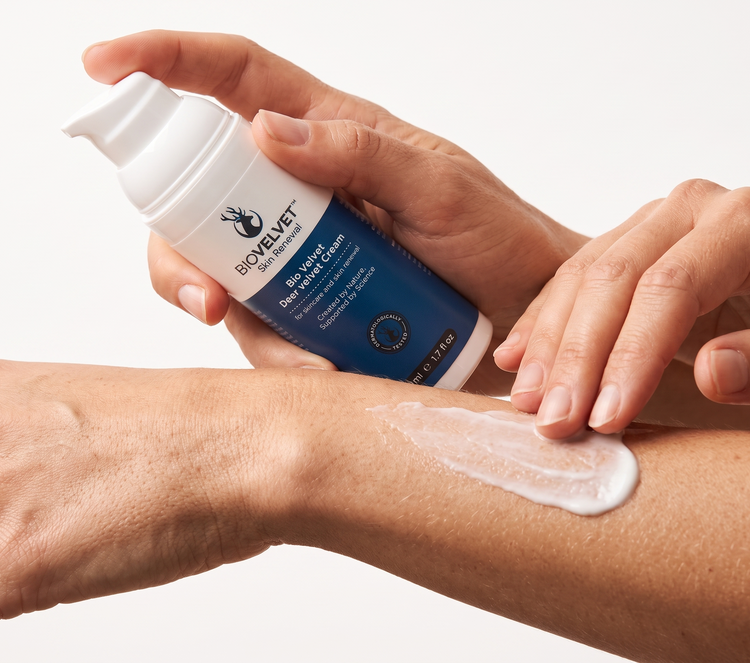
BioVelvet Recovery Cream pairs glycerin and sodium hyaluronate to hold water with allantoin and bisabolol to settle the surface, in a rich petroleum-free base that absorbs in rather than sitting greasy on top, so you can reapply during the day. It contains tea tree oil, which is a recognised contact sensitiser, so patch test it first if your skin reacts easily.
It is a comfort and barrier product, not a treatment. If the next section describes you, it belongs alongside a diagnosis rather than instead of one.
Worse in winter or after a new product. Improves when the routine gets gentler. Tight and flaky rather than red and weeping. Better after a week or two of consistent care.
Intense itch that recurs in the same places. Thick sharply defined scaly plaques. A rash that follows a product or metal touching the skin. No improvement at all after a few weeks.
Eczema, psoriasis and contact dermatitis all start out looking like dry skin. The difference is that they do not settle when you stop provoking them. If itching is the main problem, our guide to the best cream for itchy skin covers that separately.
When to get it checked
Bleeding cracks, signs of infection, itch bad enough to disrupt sleep, dryness that appeared suddenly with no obvious cause, widespread dryness with a rash, or dryness that has not improved after a few weeks of careful care. Thyroid problems, diabetes, kidney disease and some medications can all cause dry skin too, which is another reason a sudden change is worth mentioning to a doctor.
Ready to try?
BioVelvet Recovery Cream
For dry skin that moisturiser alone has not fixed. Holds water in and calms the sting, and absorbs in so you can reapply whenever it tightens.
FAQ
Why is my skin so dry even when I moisturise?
Usually one of three things. The texture is too light for how dry the skin is, it goes on too late after washing, or something else in the routine is stripping the skin faster than the moisturiser can replace what is lost.
What causes dry skin all over the body?
Cold weather, low humidity and indoor heating, long hot showers, harsh body washes, ageing, hormonal changes, some medications, and conditions such as eczema or psoriasis. Most people have more than one of these stacked together.
Is dry skin the same as dehydrated skin?
No. Dry skin is short of oil and tends to feel rough and flake. Dehydrated skin is short of water, feels tight, and happens on oily skin too. Many people have both at once, which is why one product rarely fixes it.
Should I use a lotion or a cream or an ointment?
Match the texture to the dryness. Lotion for mild dryness, a cream for moderate dryness, and an ointment for skin that has cracked open. If skin feels dry again within an hour of applying, the texture is too light.
How long does it take dry skin to improve?
Mild dryness usually improves within days. Facial dryness caused by overdoing actives takes one to two weeks after simplifying. Long-standing dryness on hands or legs can take several weeks of consistent care.
When is dry skin something more serious?
Bleeding cracks, signs of infection, itch that stops you sleeping, sudden unexplained dryness, or dryness that has not improved after a few weeks of careful care. Those point to eczema, psoriasis, dermatitis or something else that needs a diagnosis.
Does drinking water help dry skin?
Less than most people expect. Unless you are dehydrated, extra water does not reach the outer layer of skin fast enough to replace what it loses to the air. Shorter showers and moisturiser on damp skin do far more.
Should I peel off dry flaky skin?
No. Picking lifts skin that is still attached and leaves raw patches underneath. Let flakes shed on their own and keep moisturising, which softens them faster than peeling does.
Sources
- American Academy of Dermatology. Dermatologists' top tips for relieving dry skin.
- Mayo Clinic. Dry skin: symptoms and causes.
- Cleveland Clinic. Dry skin (xeroderma).
- Pavicic T et al. Randomised trial of 0.1% hyaluronic acid creams at five molecular weights, 76 women over 60 days. J Drugs Dermatol 2011;10(9):990-1000. PubMed 22052267.
- Breternitz M et al. Placebo-controlled randomised trial of a 20% glycerol emollient on skin barrier function. PubMed 18025807.
- Vaillant et al. Randomised corneometry trial of a glycerol-containing emollient versus vehicle. PubMed 31532576.
Find your match
What is your dry skin doing?