Aloe vera
Aloe vera benefits for face
Which benefits hold up, which ones got invented along the way, and how to use aloe without making a reactive face worse.
Shop BioVelvet →Aloe vera benefits for face
The aloe vera benefits for face that hold up are narrower than the marketing suggests: it pulls water toward the surface of the skin, and it calms a face that feels hot or reactive. Everything else people claim for it in 2026 is either a knock-on effect of those 2 things or wishful thinking.
That sounds like faint praise. It is not meant to be, because those two effects cover a surprising amount of what goes wrong with a face on an ordinary week: tightness after a long flight, heat after an afternoon outdoors, the raw feeling that follows a routine you pushed too hard.
Where aloe disappoints people is when it gets recruited for jobs it was never built for. Acne, pigmentation, an established scar, a condition that is actively flaring. Try it on any of those, get nothing, and it is easy to write the ingredient off entirely, which is a shame, because the narrow version of aloe is useful.
Where aloe sits next to the rest of your routine
Think of aloe as a supporting ingredient rather than a treatment. Its closest relatives in a formula are glycerin and hyaluronic acid, the ingredients that draw water toward the skin. It has almost nothing in common with retinoids or exfoliating acids, which work by changing how the skin behaves.
That has a practical consequence most people learn the hard way. Aloe gel on skin that is dry rather than dehydrated, with nothing over it, evaporates within the hour and can leave your face tighter than when you started. The same gel under a moisturiser does the job it was meant to do.
Aloe Vera · Allantoin · Bisabolol · Deer Antler Velvet Extract
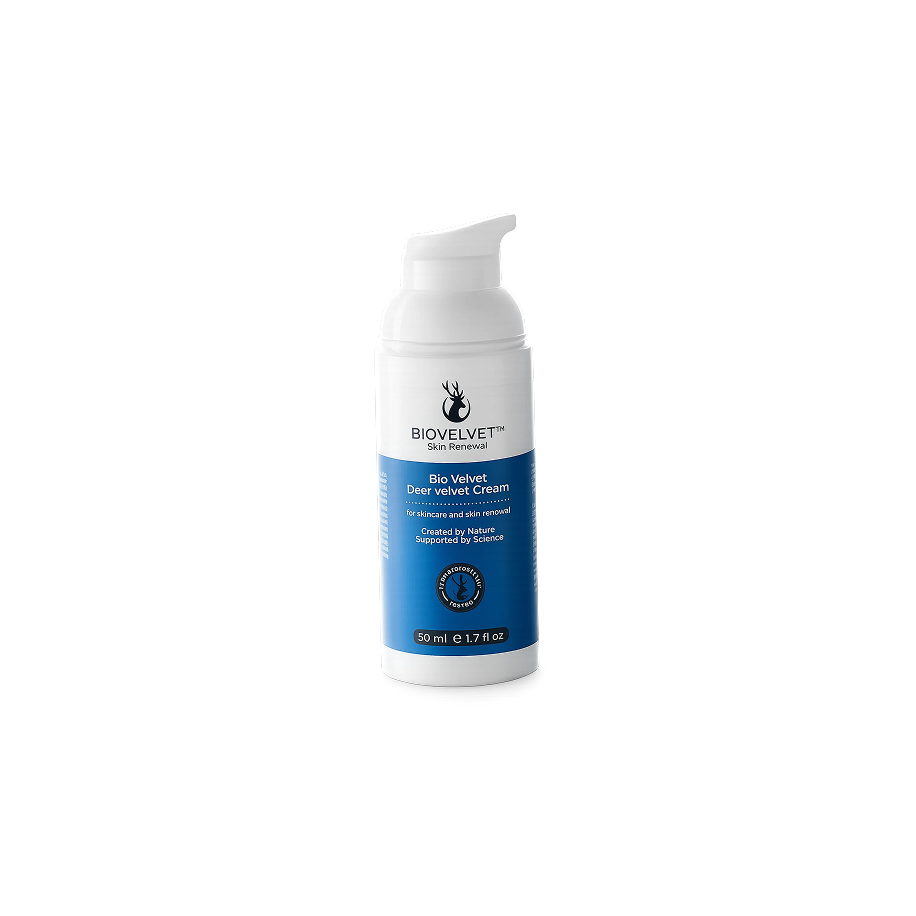
BioVelvet Recovery Cream
Aloe barbadensis leaf juice sits inside a petroleum-free cream alongside allantoin and bisabolol, so the soothing layer has something holding it in place. Backed by a 90-day money-back guarantee.
The benefits worth expecting, and how fast they show up
Almost everything aloe is used for on the face comes back to the same short list of effects. They are worth separating out, because they arrive on wildly different timescales and people tend to judge the ingredient by whichever one they noticed first.
| What aloe does | What you notice | How fast |
|---|---|---|
| Draws water toward the surface | Skin feels less tight, looks slightly plumper | Minutes |
| Cools and calms the surface | Less heat, less stinging, less visible flush | Minutes to hours |
| Supports the skin as everyday irritation settles | Rough, reactive patches look more even | Days to weeks |
Why the cooling feeling gets mistaken for a bigger benefit
Aloe gel is mostly water. It evaporates off warm skin and carries heat away with it, which feels good on a face that is hot after sun exposure or after a routine you overdid, and that sensation is the single biggest reason the ingredient enjoys the reputation it has.
But a cooler face is not a repaired one. If you are dealing with sunburn, the Skin Cancer Foundation explains that peeling is your skin shedding damaged cells, and no gel halts that once it has begun. What aloe does is make the waiting more bearable, which is worth something, just not what the internet tends to promise.
When aloe earns its place, and when it does not
The fastest way to get value out of aloe is to be strict about which column your situation belongs in, and to accept the second column without arguing with it.
Skin that feels hot after sun exposure. Tightness and dehydration on oily or combination skin. Mild roughness from weather or wind. A face that has been over-exfoliated and needs a simpler routine for a week. Post-shave or post-wax discomfort.
Deep or cystic acne. Established scars and stubborn pigmentation. Eczema, rosacea, or psoriasis that is actively flaring. Broken, weeping, or infected skin. A severe burn. Any rash that is spreading rather than settling.
None of that second column is a knock on aloe. It is the line every ingredient has somewhere between comfort and treatment, and aloe's happens to sit further toward the comfort end than most people assume.
The test I would apply is whether your skin is uncomfortable or unwell. Uncomfortable skin usually improves when you do less to it, and a soothing layer helps that along. Unwell skin needs someone to look at it, and reaching for aloe instead mostly buys delay.
Aloe vera benefits for acne-prone skin
Here aloe is a comfort step rather than an acne treatment, and the distinction is worth holding onto. Benzoyl peroxide, salicylic acid and retinoids all leave skin dry and stinging to some degree, and a light soothing layer makes those routines considerably easier to stay on top of.
Consistency is most of the battle with acne, so anything that stops you quietly abandoning your treatment in week three has real value. That value belongs to the treatment, though. Aloe is what keeps you in the room.
How to actually get the benefits
Most routines overcomplicate this. Cleanse gently, pat your face until it is damp rather than dripping, spread a thin layer of gel over the areas that feel dry or warm, and leave it a minute to sink in. If your skin runs dry or dehydrates easily, put a moisturiser over the top.
That final step is the one people skip, and skipping it is usually why aloe seems to do nothing. Alone on dry skin the water content leaves, sometimes taking a little of yours with it. Under a cream it behaves like the hydrating layer it was supposed to be.
Mornings work the same way with sunscreen at the end, which matters more than usual on a face that is already irritated, since stressed skin marks more easily in the sun.
How often is reasonable
Daily is fine for plenty of people, provided the formula is simple. Others get more out of it by reserving aloe for the days their skin is visibly unhappy, which is arguably closer to what the ingredient is for.
The right frequency depends on how reactive your skin is and what else you are putting on it. Any rule that ignores whether you are also running acids or retinoids is not worth following.
Overnight, and what you will actually see by morning
Leaving aloe on overnight is a common habit and a perfectly reasonable one. What you wake up to is modest: a face that feels cooler and less tight, slightly softer, carrying less of the reactive edge it had the night before.
If you were hoping for visibly different skin by morning, aloe is not the ingredient that does that, and no amount of layering it on will change the answer. And if your face feels worse, tighter or stingier or redder, that product is not suiting you. Repeating it does not fix that.
Side effects, and who should be careful
Most people tolerate aloe well, which is a different claim from it being risk-free. Reported reactions run to stinging, redness, itching, dryness and contact irritation.
They cluster in predictable places: very reactive skin, skin that is already broken, and gels padded out with fragrance or drying alcohol. That last one accounts for more complaints than the aloe itself does, and it is the easiest to avoid by reading the back of the bottle.
Patch testing costs you two days and is worth them. Put a small amount behind an ear or along the jawline, leave it alone, and wait 24 to 48 hours before it goes anywhere near your whole face. Itching, burning, swelling or a rash means stop.
Fresh leaf or store-bought gel
Cutting aloe straight from a plant sounds like the purer route and frequently is not. The latex layer sitting just under the leaf skin is an irritant, the dose varies from leaf to leaf, and the preparation is easy to get slightly wrong without noticing.
A simple, well-made gel with a short ingredient list tends to be the safer bet. Where it came from matters far less than whether your skin gets on with it.
What to check on the label
Find aloe barbadensis leaf juice near the top of an ingredient list and there is a meaningful amount in the bottle. Find it below the preservatives and it is there for the front of the pack, not for your face.
Botanicals in general deserve a second look if your skin reacts easily, because plant-derived and low-risk are not the same thing, and essential oils are usually where the trouble starts. That applies to us too. BioVelvet Recovery Cream contains tea tree oil, a recognised contact sensitiser that gets more sensitising as it oxidises, so patch test our cream exactly as you would any other. It also contains royal jelly, which is bee-derived and not suitable if you have a bee allergy.
Plain aloe gel vs a cream that contains aloe
Plain aloe gel
- Cheap, simple, widely available
- Cooling on hot or sun-exposed skin
- Mostly water, so it evaporates fast
- Little help for genuinely dry skin on its own
BioVelvet
- Aloe sits in an emulsion, so it stays put
- Allantoin and bisabolol alongside it
- Petroleum-free and lanolin-free
- Contains tea tree oil, patch test first
For a hot face after an afternoon outdoors, plain gel is often enough. For skin that stays dry, tight, and reactive for days, aloe works better as part of a cream than on its own.
Aloe on its own, or aloe inside a formula
This is the question that quietly decides whether aloe disappoints you. Bought as a standalone gel it is a short-term comfort measure, and it behaves like one. Sitting inside a cream among other ingredients, it becomes part of something that holds hydration in place rather than letting it evaporate off your face within the hour.
Formulators almost never use aloe alone, and this is why. It gets paired with humectants that pull water in, emollients that soften the surface, other soothing agents that share the calming work.
BioVelvet Recovery Cream is built on that logic: aloe barbadensis leaf juice alongside allantoin and bisabolol, with sodium hyaluronate and glycerin holding the water and jojoba softening the surface, all in a petroleum-free base. If you would rather read the version with our product set aside, our guide to choosing a cream for sunburn works through the same decision for post-sun skin.
When to stop reaching for skincare
A handful of situations need a clinician rather than another product: a rash that is spreading rather than settling, signs of infection, a severe burn, facial redness that keeps coming back, skin that is broken and not closing, a diagnosed condition getting worse while you treat it topically.
Aloe may well have a supporting role once someone has those under control. It is not the thing that gets them under control.
Ready to try?
BioVelvet Recovery Cream
Aloe vera, allantoin and bisabolol in a petroleum-free cream, for skin that feels hot, tight, or reactive and needs the soothing layer to stay where you put it.
FAQ
What are the benefits of aloe vera for the face?
Aloe vera pulls water toward the surface of the skin and calms a face that feels hot or reactive. Over a few weeks of steady use it can also leave rough, irritated patches looking more even. Those are the benefits it reliably delivers.
Does aloe vera actually do anything, or does it just feel nice?
Both, and the difference matters. The cooling is real but temporary, since aloe gel is mostly water and evaporates. The hydration lasts longer if you apply a moisturiser over it. Anything beyond comfort and light hydration is usually being oversold.
Can I leave aloe vera on my face overnight?
Yes, many people do. Apply a thin layer after cleansing, and follow with a moisturiser if your skin is dry. If it stings, reddens, or leaves your face tighter by morning, it is not the right product for you.
What are the side effects of aloe vera on the face?
Stinging, redness, itching, dryness, or contact irritation. These are more likely in very reactive skin, on already broken skin, or with gels that also contain fragrance or drying alcohol. Healthline's aloe overview covers the same ground.
Is aloe vera good for acne?
It may make acne-prone skin more comfortable when acne treatments have left it dry or stinging. It is a support step for that discomfort, not an acne treatment, and it will not clear breakouts on its own.
Is fresh aloe from the plant better than store-bought gel?
Not necessarily. Fresh leaf latex can irritate skin if the leaf is not prepared properly, and the dose is inconsistent. A simple, well-made gel with a short ingredient list is usually the more reliable option.